
 AUS
AUS
 NZ
NZ
 UK
UK
 CA
CA
 USA
USA
 IND
IND








Summary
- The Australian housing market is experiencing a significant price boom, driven by low interest rate and relaxed mortgage lending.
- The runaway price boom has increased difficulty for the first home buyers to purchase the property.
- The housing-debt-to-income ratio dropped 0.2 points in the December 2020 Quarter despite an uptick in property prices.
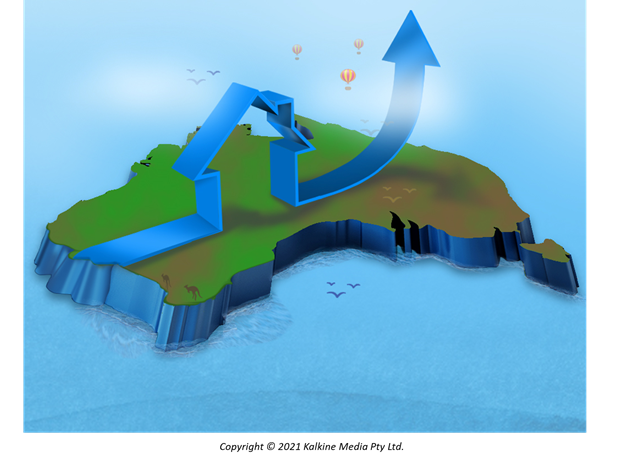
The Australian property market has exhibited an impressive pace of recovery, defying the conservative expectations which grew rampant following the COVID-19 pandemic. Contrary to the estimates, the Australian home value index recorded the fastest growth in 32 years in March 2021 as house prices hit the roof in both the cities and regional areas.
ALSO READ: Is the Australian property market moving out of control?
However, the upbeat trend has become the potential cause of worry, especially for first-time homebuyers. The runaway market has triggered speculations if the Morrison Government would follow suit of New Zealand, which recently slapped taxes to dodge off the housing bubble.
Investors in NZ must now hold the property for at least ten years if they are looking forward to evading taxes. The property deductions would be scaled down for future investors, which is expected to boost property supply and ensure housing availability for Kiwis.
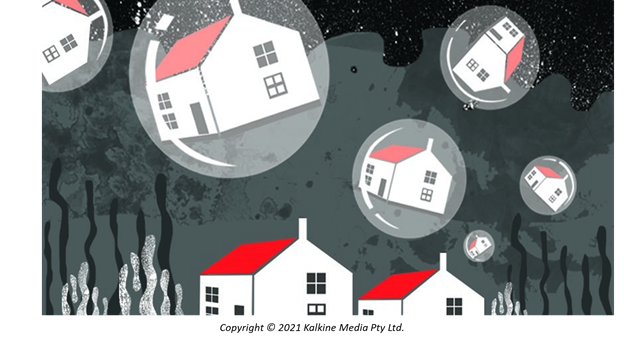
However, as of now, Australian real estate is showing no signs of slowing down, thanks to the record low interest rates, RBA’s monetary policy response and government support programs such as First Home Buyer and the HomeBuilder schemes.
A Bubble or Property Overvaluation?
Many analysts hint that the rising housing values may not be indicative of a bubble, albeit the investors may overvalue the property prices. Urbanised areas, which have grown to be significant economic powerhouses, have witnessed a steep rise in property prices. Australia is observing the trend that is rampant across the globe and has become an integral component of property market dynamics.
ALSO READ: Melbourne housing market on fire, median price crosses record AU$1 million mark
Meanwhile, the International Monetary Fund (IMF) has warned that such overpriced assets like Austrian property could “unwind” haphazardly when the United States increases the interest rates. US policymakers have indicated that the nation may witness a rise in inflation over the coming months. However, the US government shows no sign of slowing quantitative easing or increasing interest rate in the near term.
ALSO READ: Here’s why RBA hasn’t changed the interest rates
Is it too early for regulators to intervene?
Amidst the escalating housing price scenario, the Australian Prudential Regulation Authority (APRA) has signalled that it may not step in this year. However, one cannot neglect that the country is reeling from a critical issue of elevated household debt levels.
ALSO READ: Will Australian Property Market Bubble Pop Anytime Soon?
The country’s financial system regulator has indicated that it is more focused on financial system stability and does not target housing prices unless it becomes a ‘risk factor’ to the system stability.
Furthermore, APRA indicated the property scenario does not cause “immediate alarm”, and the authority is tracking recent developments. It is worth noting that APRA can control the runaway price boom by using regulatory tools such as tightening mortgage lending norms and slowing household debt growth.
How Severe is Australian Mortgage Credit Risk?
Over the past few years, Australia has witnessed significant mortgage credit growth, which can increase the chances of loan default if income growth is unable to level up.
APRA Chair Mr Byres indicated that there are signs that rising housing credit growth could outpace income growth in the future. On the other stand, the recent statistics from the Australian Bureau of Statistics (ABS) highlight the housing-debt-to-income ratio declined 0.2 points in the December quarter despite the property surge. While the household income grew by 1.2%, housing debt increased by just 1%. Significantly, the rise in Australia’s household wealth was typically led by property price escalation.
ALSO READ: Australia’s unemployment sinks further in March; what it means for economy
