
 AUS
AUS
 NZ
NZ
 UK
UK
 CA
CA
 USA
USA
 IND
IND





Highlights
- The Fed has decided to reduce its bond purchase by US$15 billion per month
- Emerging market economies have not reacted to the news, and Canada’s benchmark index is also up
- Any eventual rate hike by the Fed is likely to have very limited impact on investors’ spirits
The Fed is one of the most formidable central banks in the world. It’s monetary policy decisions shape the opinion of central bank officials in both developed and emerging economies.
The Fed’s early 2020 decision to lower the benchmark interest rate triggered similar moves in nearly all economies. This came in the wake of the pandemic that closed down cities and disrupted cross-border trade. Supply chain bottlenecks have still refused to subside, and the Fed has acknowledged this in its latest policy decision.
Also read: How are low interest rates helping Canada & US?
Fed tapers bond purchase
On November 3, the Fed announced something that many had assumed could bring a wide-ranging, even knee-jerking, correction to the global stock market. The ‘taper tantrum’ by the Fed, which means pulling back by the Fed on its asset purchase program, triggered a panic in the markets in 2013.
What the Fed has done last week is announcing a reduction in its bond buying, referred to as Quantitative Easing (QE), but with multiple other mentions.
The Fed was buying US$120 billion worth of Treasuries and mortgage-backed securities every month to infuse liquidity and create demand in the economy. Now, it will reduce the quantum by US$15 billion per month and the QE is likely to end by the mid of next year.
Also read: How to save for a house? Hint – Pick the right stock
What else has the Fed said?
The Fed’s decision was accompanied by other mentions that worked toward calming the nerves of investors. This included a statement that the inflation is ‘expected to be transitory’. It reflects a slight shift from the Fed’s previous reading of inflation, where it was always considered ‘transitory’.
The Fed has also pinned the price rise in the world’s largest economy on ‘supply and demand imbalances’ and the ‘reopening of the economy’. It expects supply chain constraints to ease.
Also read: Businesses post better-than-expected growth in Britain
Has the Fed QE shift moved the markets?
In 2013, a similar move negatively impacted emerging economies like Indonesia and India, with their currencies losing value against the US dollar.
Last week, however, wasn’t even close to that. The global stock market steered clear of any correction, let alone crash, which many analysts feared could follow the announcement. In Canada, the benchmark S&P/ TSX Composite Index closed on a higher note after the Fed’s QE announcement. It is notable that the Bank of Canada has already marked an end to Canada’s bond purchase program.
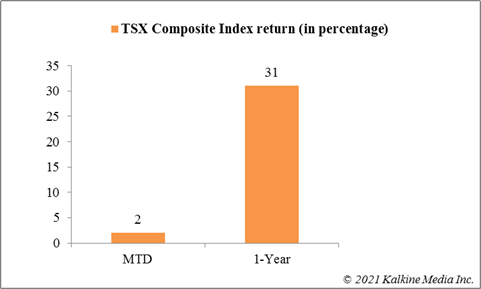
As of now, the month-to-date return of the TSX Composite Index is nearly 2 per cent. The one-year return is a whopping 31 per cent. These developments reflect that the global stock market did not react negatively to the Fed’s decision.
Retail investors on the driver seat
Much can be attributed to the inflow of funds in markets from retail investors. Across the globe, these investors have joined in record numbers over the past one and a half years. This owes to the proliferation of online discount brokerages like Robinhood and Questrade.
Also read: Best saving strategy while preparing for any natural disaster
Bottom line
The global stock market seems to have enough cushioning and the Fed’s taper decision was not enough to dent the spirits of investors. It is likely that any rate hike will have a muted impact on the market.
