
 AUS
AUS
 NZ
NZ
 UK
UK
 CA
CA
 USA
USA
 IND
IND








Highlights
- Predictive analytics is used in the healthcare industry to detect early signs of deterioration of patient condition in an intensive care unit (ICU) or a general ward.
- It can also help in a more definitive patient diagnosis, followed by the suitable treatment of the identified indication(s).
- Predictive analytics aims to inform clinicians and caregivers of the probability of events and outcomes in advance.
Predictive analytics is a part of advanced analytics with applications to predict future events that are not known. In healthcare, predictive analytics is used to detect early signs of deteriorating health conditions of a patient in an intensive care unit (ICU) or a general ward. It is also used to identify at-risk patients in their homes to prevent hospital readmissions and ward off avoidable downtime of medical equipment.
Healthcare service providers can use predictive analytics tools to enhance healthcare by improving patient outcomes, assisting in decision-making, and providing relief for the healthcare staff.
ALSO READ: Digitalisation in healthcare space: A look at the pros and cons

Source: © Wrightstudio | Megapixl.com
Moreover, with modelling and forecasting techniques, predictive analytics helps determine the high probability of events occurring in the future. Doctors, scientists, pharmaceutical players, medical speciality societies, and healthcare stakeholders can use these predictions to offer the best possible care for individual patients.
The technology aims to inform clinicians and caregivers of the probability of events and outcomes in advance. This will help in the prevention and cure of diseases. Predictive analytics is helping the healthcare industry in shifting from treating a patient as an average to treating a patient as an individual. The process can improve overall patient care in terms of cost, efficiency, quality, and patient satisfaction. Predictive analytics also helps in a more definitive patient diagnosis, followed by the suitable treatment of the identified indication(s).
DO READ: Virtual care is booming amid pandemic: A glance at the pros and cons of telehealth
Role of predictive analytics in healthcare
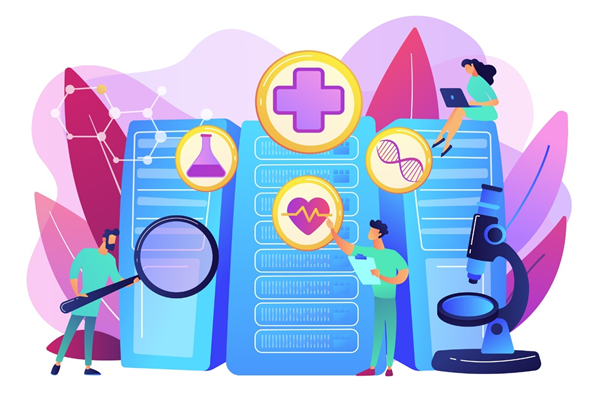
Source: © Rastudio | Megapixl.com
- Developing precision medicine and innovative therapies
As the precision medicine and genomics in the healthcare sector is coming into force, healthcare providers and scientists are turning to analytics to supplement traditional clinical studies and drug discovery techniques.
Moreover, in silico testing (experimentation performed by the computer) is a promising way to reduce the requirement of patient recruitment for complex and expensive clinical trials while accelerating the evaluation of innovative therapies.
- Bolstering patient engagement and satisfaction
In addition to supporting the management of chronic disease strategies, cutting wait times, and targeting therapies, predictive analytics can also keep patients engaged in other care features. Furthermore, customer relationship management has become a crucial skill for both providers as well as insurance companies that are looking to encourage wellness and lessen long-term spending.
- Strong data protection
Predictive analytics and artificial intelligence (AI) are also expected to play a vital role in cybersecurity, especially as the sophistication of attacks continues to rise. With the use of analytics tools to monitor patterns in data access, sharing, and utilisation, organisations can get an early warning if something unusual happens, especially when those variations show that an intruder may have penetrated the network.

Copyright © 2021 Kalkine Media
RELATED ARTICLE: Important steps to safeguard your business from cyber attacks
- Supply chain management
The supply chain is one of a provider’s largest cost centres and signifies one of the most significant opportunities for healthcare companies to reduce unnecessary spending and improve efficiency. The predictive tools are in great demand among hospital administrators considering lower variation and obtaining more actionable insights into the supply utilisation.
- Prediction of patient utilisation patterns
Predictive analytics can also give providers the information when the clinic is about to get over busy. The care sites operating without fixed schedules, like emergency departments and urgent care centres, must alter their staffing levels to account for fluctuations in patient flow.
Moreover, inpatient wards must have the availability of beds for patients who need to be admitted. At the same time, outpatient clinics and physician offices are responsible for keeping wait times low for patients. The use of analytics to foresee the utilisation patterns can help ensure optimal staffing levels while minimising waiting periods and increasing patient satisfaction.
- Identification of at-risk patient cohorts
Predictive analytics can help identify the specific risk factors for several populations. For instance, it can identify diabetic patients with the greatest likelihood of hospitalisation based on age, coexisting chronic indications, medication adherence, and past patterns of care. Based on this analysis, predictions on the disease probability and chronic illness can produce early interventions aiming to decrease emergency room visits and reduce hospital readmission rates.
MUST READ: Why WHO wants rich nations to defer COVID-19 booster jabs
