
 AUS
AUS
 NZ
NZ
 UK
UK
 CA
CA
 USA
USA
 IND
IND






Highlights
- Earth’s spin is accelerating due to lunar influence
- July 9 marks a historic short day
- Potential leap second adjustment by 2029
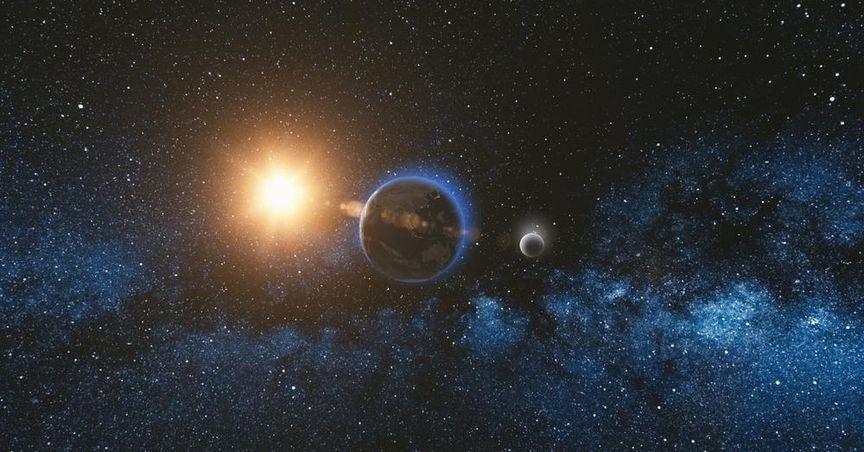
Earth is on the verge of setting new timekeeping records, as July 9, 2025, is expected to register one of the shortest days ever recorded. Scientists are closely monitoring this phenomenon, driven by a unique interplay of celestial forces that’s speeding up the planet’s rotation by milliseconds.
A Surprising Lunar Effect on Time
Researchers attribute this shift to the Moon’s current orbital position. On July 9, and again on July 22 and August 5, 2025, the Moon will move farther from the Earth’s equator and closer to its poles. This configuration exerts a gravitational effect that slightly accelerates Earth’s spin, shortening the day by approximately 1.3 to 1.51 milliseconds.
Although these differences may seem minor, they are significant enough to be detected by ultra-precise atomic clocks and satellite technology. These changes have sparked renewed scientific focus on Earth’s rotational behavior, which is typically very stable but not entirely constant.
The Role of Timekeepers and Possible Adjustments
The International Earth Rotation and Reference Systems Service (IERS), which oversees global timekeeping standards, is tracking these developments closely. Should the shorter days continue, the IERS might introduce a “negative leap second” — a rare correction in official timekeeping where a second is subtracted rather than added. If confirmed, this would be the first negative leap second in history and is tentatively planned for 2029.
The leap second concept exists to keep Coordinated Universal Time (UTC) in sync with Earth’s rotation. As the planet speeds up, however slightly, these adjustments ensure that our clocks don’t drift too far from the actual solar time.
A Broader View of Earth’s Spin History
Earth’s rotation has slowed over billions of years due to tidal interactions with the Moon. Around 1 to 2 billion years ago, a day lasted just 19 hours. As the Moon gradually moved away from Earth, the spin slowed, resulting in longer days.
Yet in recent years, the trend has taken a surprising turn. In 2020, scientists observed that Earth began spinning faster than any time since precision measurements began in the 1970s. The fastest rotation on record occurred on July 5, 2024, when the planet completed its rotation 1.66 milliseconds quicker than the usual 24-hour cycle.
This trend continues to intrigue scientists and may have implications across sectors — from satellite systems and global positioning technologies like those used by Xero (ASX:XRO), to industries relying on synchronized trading platforms such as seen in companies like WiseTech Global (ASX:WTC) and Computershare (ASX:CPU).
As July 9 approaches, researchers and technologists alike are watching closely. While the Earth's quickening pace isn’t disruptive in daily life, it presents a fascinating glimpse into the complex forces shaping our planet’s rhythm — and a reminder that even time itself isn’t set in stone.
