
 AUS
AUS
 NZ
NZ
 UK
UK
 CA
CA
 USA
USA
 IND
IND








Summary
- Global vaccine inequity has prompted the WHO to call wealthy nations to stop inoculation of COVID-19 vaccine booster doses for at least two months.
- With 4.28 billion doses administered globally, only 1.1% of people in low-income countries have received the first shot.
- To end the chain of infections, our response to the pandemic needs to be even-handed and vaccination must reach population across countries.
The outbreak of the COVID-19 pandemic saw no bounds. The virus did not discriminate on the basis of gender, religion, or riches. By the same token, our response to the pandemic too needs to be even-handed if we wish to end it. However, the present scenario reflects a different story.
With 4.28 billion doses administered, globally, only 1.1% of people in low-income countries have received the first shot, as per ‘Our World in Data’ reports. The widening difference in vaccination rates among the rich and poor countries has prompted the World Health Organization (WHO) to call for a halt to inoculation of COVID-19 vaccine booster doses for at least two months.
Related article: COVID-19 vaccine booster shots: do we really need them?
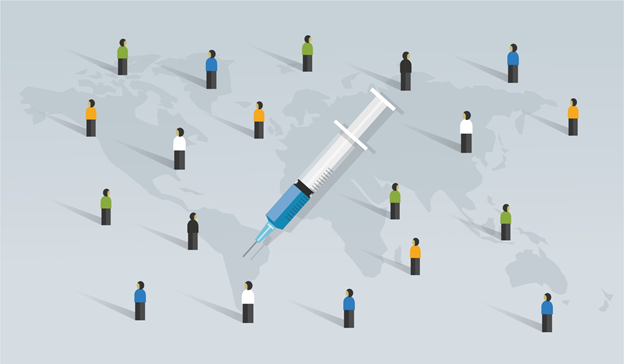
Image source: © Bakhtiarzein | Megapixl.com
Why does global vaccine inequity matter?
“We cannot accept countries that have already used most of the global supply of vaccines using even more of it, while the world’s most vulnerable people remain unprotected,” said Tedros Adhanom Ghebreyesus, the Director-General of the World Health Organization.
The concern of wealthy nations to protect their people against the virus does not hold much weight when pitted against the fact that some poor countries are struggling to provide even the first dose to their citizens. The moratorium on booster shots for rich nations seems to be a much-needed step to avert epidemical risks, which threaten not just poor nations but the entire world.
Related article: COVID-19: Which are three worst-hit geographical sub-regions?
How will the moratorium on boosters help low-income nations?
The global agency wants high-income nations to donate their stock of surplus doses to the countries which are facing dearth of vaccines and are unable to buy shots for their population. This measure must be taken in order to facilitate the vaccination of at least 10% of the population of every country by the end of September.
The suspension will give a fair chance to governments across the globe to have access to at least the first vaccine shot, as currently, rapid vaccination drives are concentrated in a handful of wealthy nations.

Image source: © Geminiprostudio | Megapixl.com
The ultimate goal of vaccination for all
After fighting the battle against the invisible enemy for one and a half years, studies by several health organisations have clearly demonstrated that vaccination is the most effective weapon to defeat the monster virus. But to make it successful, vaccination must be made available to all. Maximum population needs to be immune to the infection, else the virus will continue to spread the infection.
There have been more than 199 million confirmed cases and nearly 4.2 million deaths across nearly 200 countries, according to the latest WHO data. In response, over 29% of the global population has been inoculated with at least one dose of the vaccine. And 14.9% has been fully vaccinated. Still a long way to go!
Also read: COVID-19 Vaccine Development: A Glance at the Latest Updates around the World
