
 AUS
AUS
 NZ
NZ
 UK
UK
 CA
CA
 USA
USA
 IND
IND





Summary
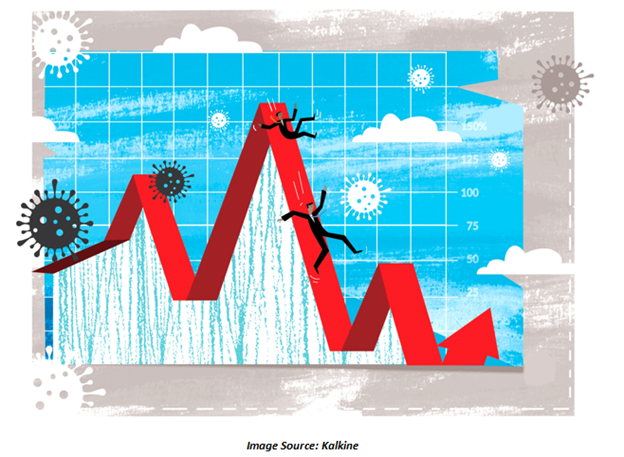
- Most stocks were affected by the impact of the coronavirus pandemic, with airline stocks among the most severely impacted.
- Several governments are currently in significant debt, suggesting the economic recovery will be a bumpy road.
- However, there are some encouraging indications as the economy seems to be opening up, and investors are advised to keep their portfolios diversified with several investment strategies.
- For Australia, a drop in the unemployment rate last month was one of the bright spots and shows that the economy is on the road to recovery.
As most countries decided to close their borders and put the economy on hold to focus on containment of the virus spread, the stock markets experienced the biggest impact due to the halt in business activities.
Now that lockdowns in Australia and other nations have eased, the market seems to be in a slow recovery. Investors are holding on to medium and long-term investments in their portfolios, which could be the biggest benefit in case of any market volatility in the future.
DO READ: Impact of Coronavirus on Australian Economy and Way Forward
The economies were boosted by several stimulus packages that helped both people and the economy. Further, several companies across the globe are attempting to develop a vaccine or cure that would put an end to the coronavirus pandemic.
For Australia, another positive thing is that unemployment rates are shrinking, with more jobs created every month and underemployment hours falling to 12.2%, according to the latest report.
Australia experienced a less severe health and economic impact than it was expected at the beginning of this year. Financial markets usually depend on where the economy is in an economic cycle. However, the current cycle cannot be considered as a real one as the main focus was not the economy but safeguarding public health.
Even though stimulus packages helped Australians in need, it is far from expected that they will carry on for as long as they were announced to be. The decision cost the country a lot of money and might scar it long-term, mainly because supply chains and employment levels were disrupted due to the movement restrictions.
ALSO READ: COVID-19 Pandemic Impacts Big Four Australian Banks: CBA, WBC, ANZ, & NAB
Bigger government debt
Due to bigger investments in the stimulus packages, governments went into a huge debt. The economic aid by the government is nearly 10% of the country’s GDP. For the US, the financial support is even bigger and close to 19% of the US GDP. A similar situation has not been seen in a while and has been considered as a global phenomenon. Europe is leading the way here with a considerably high debt-to-GDP ratio.
Significant amounts of government debt can cause an economy to feel the effect for a long time after the crisis is over. That said, nations need to define strategies for economic recovery and be careful about what they spend money on.
Also read: ABS: Businesses Expect COVID-19 Financial Impact to Continue
Low inflation
The ongoing pandemic will most likely show a considerable impact on both supply and demand, so it is hard to limit the effects based on inflation. Some of the things that are certain are a decrease in energy prices, as well as a significant fall in services and vacation. These impacts have been seen on a short-term basis.
Long term, a lot of things will turn out depending on merging in the private sector, because the smallest businesses, or maybe even middle-sized ones, might not survive if operating by themselves. Immense growth, in general, will probably not be seen for a while.
The low growth that most countries are experiencing now is very similar to the GFC. The growth companies will be offered help and will attract investments (as they provide growth), while value players are more likely to struggle, as they do not promise as much during these unprecedented times.
Big enterprises within the US and Europe are expected to put the financial market on a more positive scale, because they are more likely to operate better if they have lower profits, compared to smaller conglomerates.
What stocks were affected the most?
When talking about the Australian economy, banks and consumer industries suffered the biggest fall in share prices initially. Overall, the hospitality industry has been hit the hardest.
Banks are susceptible if government debt is massive, which is the current situation in Australia. Australia And New Zealand Banking Group Limited (ASX:ANZ), Westpac Banking Corporation (ASX:WBC), National Australia Bank Limited (ASX:NAB) and Commonwealth Bank Of Australia (ASX:CBA) have experienced a big plunge, but the situation seems to be better since March.
Qantas Airways (ASX:QAN) and Flight Centre Travel Group (ASX:FLT) are among the hardest hit companies during this pandemic. There were substantial falls within the airline sector, and complete salvation will probably take years.
The property sector was mostly hit because international students were not allowed to enter the country since earlier this year. It is no surprise that its prices experienced a drastic fall, with the situation likely to worsen in the near-term.
DO READ: How did travel ban for international students affect property market in Australia?
On a positive note, healthcare shares have been doing a lot better than expected, with stocks such as Starpharma Holdings (ASX:SPL), Mesoblast (ASX:MSB), and Telix Pharmaceuticals (ASX:TLX) looking promising for portfolios.
MUST READ: 5 ASX Healthcare Stocks to Protect Your Portfolio Drawdown – SPL, MSB, RCE, AGH, TLX
Positive Signs
However, as the unemployment rate was already noted as lower than previous months, the confidence should proportionally rise, and the economy should open up for sectors that are still not allowed to work properly.
The smartest thing for investors should probably be to have a diversified portfolio with several investment strategies.
