
 AUS
AUS
 NZ
NZ
 UK
UK
 CA
CA
 USA
USA
 IND
IND





Highlights
- The overall sales of EVs across the globe have almost doubled in 2021 against the previous year.
- With the advancement in battery technology, the energy density of batteries has increased significantly.
- EV giants are inculcating advanced battery technology in their vehicles, which can even offer a 1,000 km range with a single charge.
The year 2021 proved to be an incredible year for electric vehicles (EVs). The overall sales of EVs across the globe almost doubled in 2021. Remarkably, this was the first time when EVs surpassed hybrid car sales.
The significant rise in EV sales has been underpinned by two primary factors including higher demand for battery EVs and the availability of battery EVs with longer ranges at economical prices.
Related read: Are electric vehicles really eco-friendly?
Lithium-ion batteries (LIBs) are at the heart of EVs as they provide power and range to them. Most commonly, a combination of Nickel, Manganese, and Cobalt (NMC) is used in LIBs which provide energy to battery cells. The concentration of nickel can be changed to manipulate the energy density of cells with NMC cathodes.
Improvements in lithium-ion batteries’ energy density
With the advancement in battery technology, the energy density of batteries has increased significantly. LIB technology has achieved tremendous progress in the last decade in terms of cost, energy density, and battery life cycle.

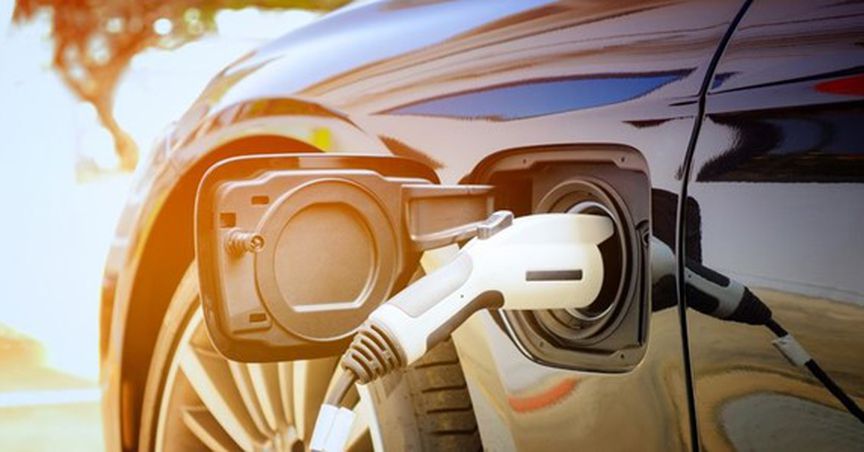
Source: © Malpetr | Megapixl.com
As per the International Energy Agency’s (IEA) 2020 Global EV Outlook Report, the average battery pack size in EVs increased from 37 kWh in 2018 to 44 kWh in 2020. At the same time, electric cars in most countries were having battery packs in the range of 50-70 kWh.
Related read: From Toyota to Audi: How leading carmakers are planning to go 100% electric
Furthermore, the next-generation LIB technology is geared up to enter the market in the next 5-10 years. This could enable a cell density of up to 325 Watt-hours per kilogram (Wh/kg) and pack level densities of 75 Wh/kg in the EVs.
Current trends in the EV range
The range of electric vehicles has got a significant boost. Gone are the days when automakers across the globe were struggling to offer a range of a few hundred kilometers. Currently, EV giants like Tesla, Mercedes, and Volkswagen are inculcating advanced battery technology in their vehicles, which can offer even a 1,000 km range with a single charge.
Recently, Mercedes-Benz successfully celebrated the test drive of its EQXX prototype vehicle that completed more than 1,000 km distance from Sindelfingen in Germany to the Cote d'Azur on a single charge.
Also Read: Bentley all set to go electric!

Image source: © Larashpineva | Megapixl.com
Earlier, the German automaker, Volkswagen, stated that it has been planning some good improvements to its MEB platform which will help its vehicle to offer a range of up to 700 km.
Lately, American electric vehicle manufacturer, Lucid Motors, launched its Air luxury sedan edition, which is capable of offering a 446-mile range on a single charge.
Bottom Line
The range of electric vehicles has evolved tremendously over time, and this has become one of the most significant reasons for the overwhelming growth in the sales of EVs during the last year.
