
 AUS
AUS
 NZ
NZ
 UK
UK
 CA
CA
 USA
USA
 IND
IND




_07_03_2026_03_50_21_133108.jpg)



Ask ten teams how they chose their proxy provider and most will give you the same answer: they sorted a comparison table by price and picked something near the top. It's an understandable instinct. Price is the one number every provider shows you plainly, so it becomes the axis the whole decision turns on.
But price alone answers the wrong question. It tells you what you'll pay, not what you'll getand the gap between those two things is where most proxy budgets succeed or quietly fail. The providers worth your money aren't the cheapest or the most expensive; they're the ones that deliver the most value per dollar. That's the real definition of affordable proxies, and it's a more useful lens than sticker price for almost every buyer.
The Value-Per-Dollar Equation Most Buyers Skip
Value for money isn't a vague slogan; it's a ratio. On one side is everything you actually receivesuccess rate, IP quality, geographic reach, control features, support. On the other is what you pay. A proxy is a good deal when the top of that fraction is large relative to the bottom, and a bad deal when a low price sits above an even lower pile of value. Two providers can charge the same per gigabyte and offer wildly different value, because one hands you clean IPs that work and real tools to manage them, while the other gives you a number and little else.
This is why sorting by price misleads so consistently. It measures only the denominator and ignores the numerator entirely. A pool at a rock-bottom rate looks like a bargain until you factor in that half its requests fail, its coverage is thin, and there's no way to see what your traffic is doing. Suddenly the "cheap" option is delivering very little value for its low price, while a slightly costlier one delivers far more. Once you start evaluating the whole ratio instead of just the bottom of it, the rankings you'd draw up flip almost entirelyand the genuinely economical choice is rarely the one with the smallest headline number.
What Actually Sits on the Value Side of the Ledger
If price is easy to see, value takes a little more attention to read. It's worth being concrete about what fills the top of that equation, because these are the things a low price can quietly hollow out.
IP Quality and Success Rate
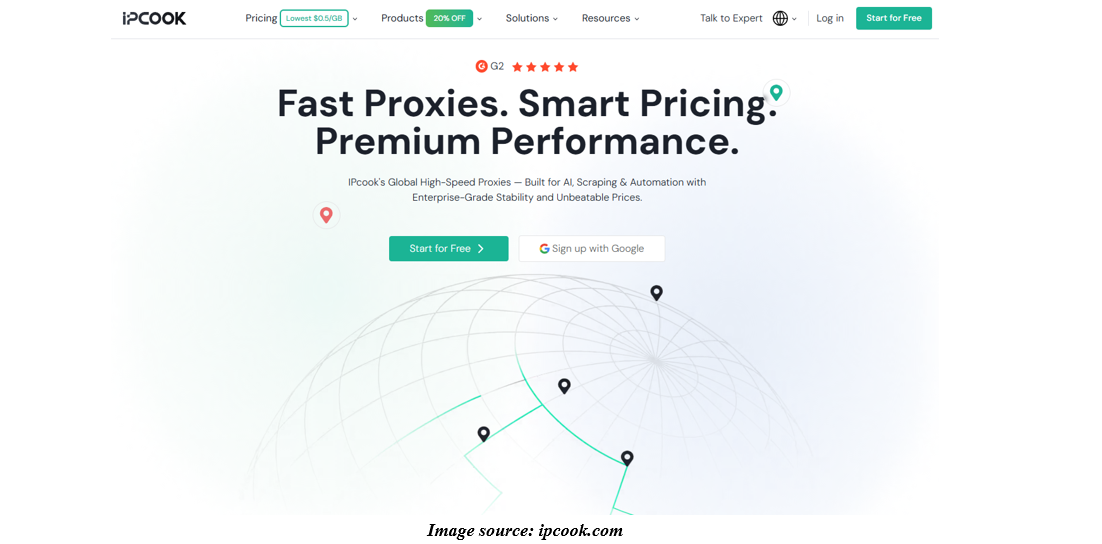
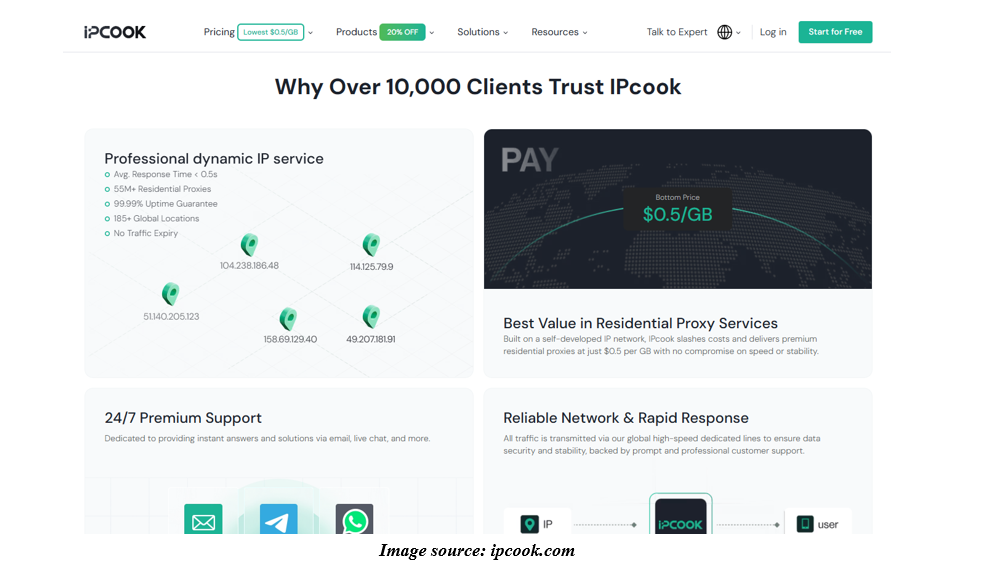
The most important form of value is also the least visible on a pricing page: whether the IPs work. A residential pool sourced from genuine households slips past defenses that instantly catch recycled datacenter ranges, which means more of your requests land on the first try. That reliability is worth real money, because every failure you avoid is traffic you don't waste and time you don't lose. When IPcook pairs ethically sourced residential IPs with a stated 99.99% uptime and sub-0.5-second response times, that's value accruing at the top of the ratiovalue a bare price comparison never shows.
Reach You Can Actually Use
Coverage only counts when it lands where you operate. A pool of more than 55 million IPs across 185+ countries is impressive, but the useful detail is the published breakdownroughly 18.4 million in the Americas, 4.7 million in Europe, and 22.5 million across Asia and Oceaniabecause it lets you confirm the network reaches your specific targets before you pay. Reach you can verify is worth more than a bigger number you have to take on faith.
Control That Prevents Waste
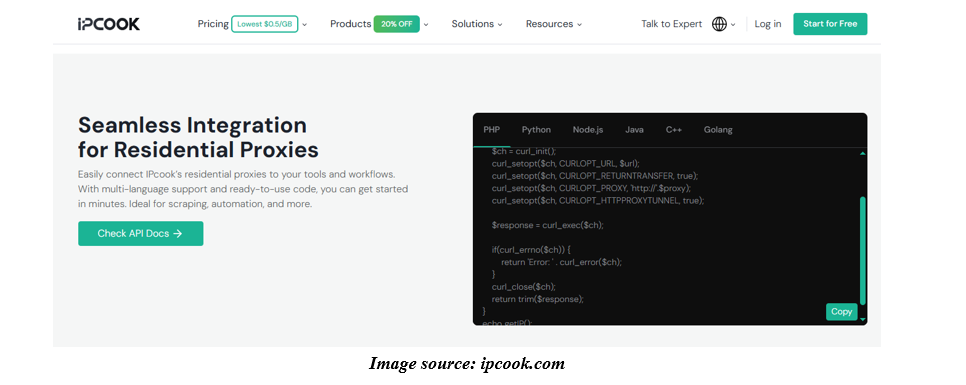
Features aren't just conveniences; they're value that protects your budget. Sticky sessions that hold an IP for up to 24 hours keep logged-in tasks from breaking. Country- and city-level targeting keeps your data accurate. And up to ten free sub-accounts let you hand each task its own traffic quota, so one job can't quietly drain another's allocation. Each of these turns into money saved, which is exactly why they belong on the value side of the ledger rather than being dismissed as extras.
Where Affordability and Quality Actually Meet
The trap in this market runs in both directions. Chase the lowest price and you usually sacrifice the quality that makes a proxy worth using at all. Chase the biggest brand name and you often pay a premium for capacity and polish a lean operation will never touch. The sweet spottrue affordabilityis the provider that holds quality high while keeping price reasonable, so the ratio comes out in your favor without forcing a compromise at either extreme.
That balance is easier to judge when a provider's pricing is transparent about how it scales. IPcook's residential traffic starts at $3.2/GB and comes down toward $0.5/GB at the highest volumes, and just as importantly, purchased traffic never expires. That combination is what tips the value equation: you're not overpaying at entry, you're rewarded for scale when you're ready for it, and you never forfeit traffic to a monthly reset. A free tier of 100MB with no time limit sits underneath all of it, letting you verify the value on your own targets before spending a centwhich is the most honest way to confirm a ratio actually holds up in practice rather than just on paper.
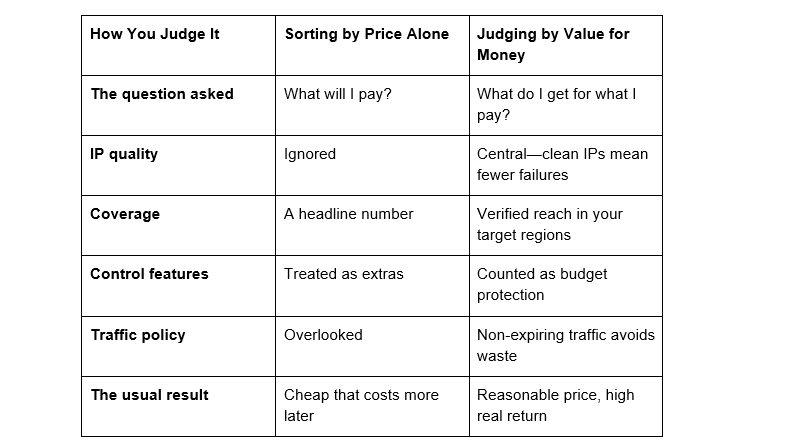
The reason value-per-dollar beats price-per-gigabyte is that it adapts to you. The same provider can be a brilliant deal for one team and a mediocre one for another, depending on what each actually needs from the numerator. A high-volume scraper values success rate and pool size above all; a regional price monitor values accurate geo-targeting; a small team juggling several projects values non-expiring traffic and per-task budgets. Affordability isn't a fixed point on a chartit's whichever provider maximizes the value that matters to your particular work.
So the better way to shop is to define your own numerator first. Decide which forms of value your project truly depends on, then ask which provider delivers the most of those for the least money. When you evaluate affordable proxies that wayleading with the value you need and letting price be the tiebreaker rather than the headlineyou consistently end up with a service that does more for your budget than the cheapest option ever could. You also stop the expensive habit of re-buying: a provider chosen on real value tends to keep serving you as your needs grow, instead of revealing its limits the moment the work gets serious.
The Bottom Line: Buy the Ratio, Not the Rate
Price will always be the easiest number to compare, which is exactly why it's so misleading on its own. The proxies actually worth your money are the ones that stack real valueclean IPs, verifiable reach, waste-preventing controls, and traffic that doesn't expireon top of a price that stays reasonable. Judge the whole ratio rather than the rate at the bottom of it, define the value your own project needs, and affordability stops being about spending as little as possible. It becomes about getting the most for what you spend, which is the only measure of a proxy that has ever really mattered.
The content has been authored in collaboration with our guest contributor, Leah.
