
 AUS
AUS
 NZ
NZ
 UK
UK
 CA
CA
 USA
USA
 IND
IND


_07_03_2026_03_50_21_133108.jpg)




Source: Evgeny_V, Shutterstock
Summary
- Currently, over 440 nuclear power plants are operational globally.
- The US has rejoined the Paris climate change, and economies across the globe have been gearing up to transition to cleaner power sources.
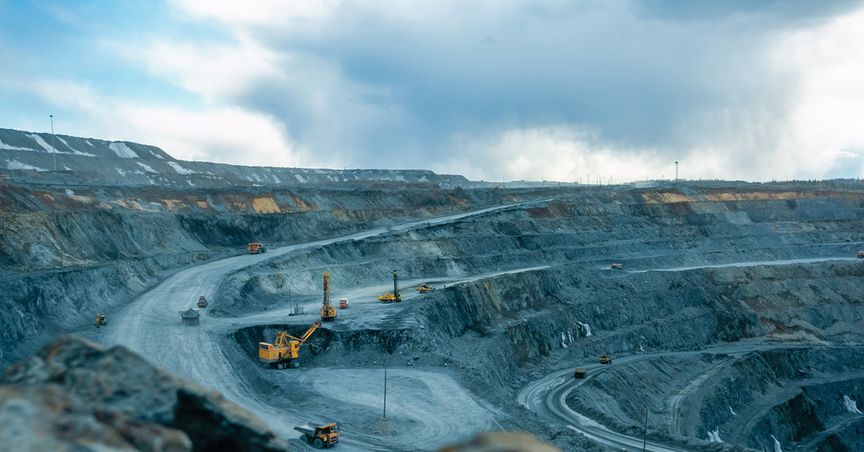
- Australia holds almost one-third of the global uranium resources and plans to phase out substantial thermal power generation capacity.
Ever since the Fukushima nuclear power plant's meltdown on 11 March 2011, nuclear energy prospects were shadowed by health, safety, and environmental concerns. While the sector faces a major challenge on the account of very high capital expenditure and extreme vetting in uranium supply, nuclear power ranks among the cleaner and scalable sources of energy.
The recent COVID-19 pandemic broke out in China’s Wuhan and later spread out to almost every corner of the world. So far, the pandemic has claimed the lives of 2,753,125 people and continues to wreak havoc. While economies went under global lockdown, mobility came to screeching halt across the globe, resulting in a major decline in the pollution levels in Australia and other nations. Some of the most polluted cities, including Beijing and New Delhi, witnessed a significant improvement in the air quality index (AQI). One of the major aftereffects of such a major transformation was the widespread pledge to transition to cleaner energy and fuel solutions.
Sustainable and Clean energy solutions to feed the burgeoning demand
Source: © Kcphotos | Megapixl.com
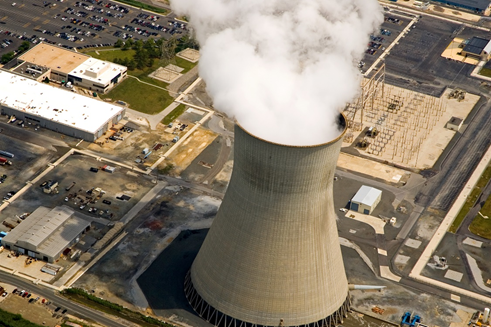
Nuclear energy, which has been synonymous with the weapons of mass destruction and was blamed for one of the most devastating and cataclysmic incidents at Hiroshima and Nagasaki, has now emerged as the saviour, being labelled as the leader of the clean energy revolution. While a major spike in electric mobility has also been witnessed, the demand for electricity is anticipated to increase as global mobility shifts from internal combustion engine (ICE) vehicles to electric vehicles.
What does future hold for Nuclear Power?
Over 440 nuclear reactors are currently operating worldwide and have produced over 20% of the total electricity in the past two decades. The growing need for application of clean and environment-friendly sources is refocusing the spotlight on nuclear energy.
The US has rejoined the Paris climate agreement and envisions to grow nuclear energy share in their fuel mix to attain the ambitious goal of carbon pollution-free electricity by the year 2035.
In the 2020 Energy White Paper, the UK identifies nuclear power as one of the critical contributors to achieve a multi-fold increase in clean energy generation. The country targets to achieve a carbon-neutral economy by 2050. It is to be noted that the country will be hosting the next UN Climate Change Conference of Parties (COP 26) in November 2021.
China has already activated the world's first nuclear fusion reactor known as the HL-2M Tokamak reactor. The country plans to ramp up its nuclear fusion and fission technologies to fuel its ambitious energy plans in the future.
Australian connection to the Nuclear Energy
Uranium Ore Source: © Vladvitek | Megapixl.com
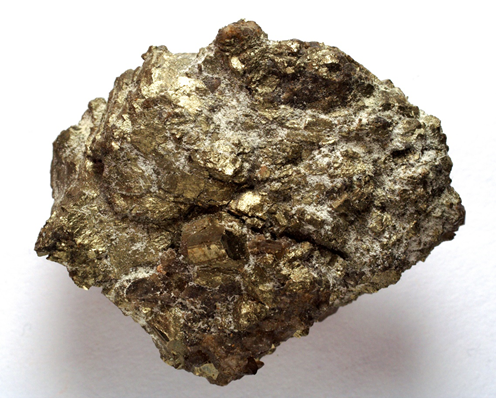
As per the World Nuclear Association, Australia is home to the world’s largest resource of uranium. In fact, Australia holds almost one third of the global uranium resources.
As per the Australian Energy Market Operator (AEMO) statement in Late 2019, Australia had planned to phase out the thermal power generation capacity by the year 2040. The phasing out of such large power generation capacities needs to be complemented by new sustainable and cleaner power generation source in the upcoming years.
Just weeks ago, Victoria had imposed a permanent ban on fracking activities and also included it in its constitution. Many veteran politicians, including Senator Matt Canavan, have been vocal about keeping nuclear power on the table in future.
Read Here: Australian Uranium Industry and Rise of Nuclear Energy Generation
Australia and other nations' carbon-neutral economy dream may be actualised using sustainable and carbon-free nuclear power generation. Further, the home advantage of extensive mining experience and mineral resources of uranium could be the trump card for Australia in the upcoming future.
