
 AUS
AUS
 NZ
NZ
 UK
UK
 CA
CA
 USA
USA
 IND
IND







Summary
- Governments in cricket-playing nations worldwide have relaxed restrictions, somewhat allowing smaller crowds into stadiums worldwide. But the hit to the bottom line for every national cricket association is crushingly undeniable.
- The Chief Financial Officer of the ECB, Scott Smith, said in a statement that if not for these series, which were made possible by decisive action by the ECB early in the pandemic, the financial woes would have been far more devastating.
- Last Tuesday, ECB Chairman Ian Watmore talked about cricket as an ecosystem, which includes the elite teams (both men’s and woman’s), the game’s accessibility through ever-changing digital, as well as traditional forms of media.
- Watmore emphasises the importance of transforming cricket into a truly gender-neutral sport by evolving the woman’s game and appealing to young girls to play and support the game.
- Australian cricket administrators hope to get the Australian IPL group back home soon with deals currently being worked out with the federal government and NSW state government.
It is 2 PM on 8 July 2020 in Southampton, England. The towering lights at The Ageas Bowl – home of Hampshire cricket – flood the green field, contouring a bright oval of light enveloped within an otherwise gloomy landscape.
Rain has been steadily teeming down for half the day’s play, but now it seems to have receded, and the first day of the First Test between England and the West Indies is finally permitted to commence.
Source: © Albund | Megapixl.com
Just before the first ball is delivered, players and coaching staff emerge from the dressing rooms and form a line, of sorts, behind the boundary rope. Then, both teams take a knee in support of African American George Floyd, who had been murdered by a cop just six weeks ago. Each West Indian raises one fist in the air in a display of solidarity, reminiscent of the iconic image of the black power salute at the 1968 Olympics. It is indeed a sombre minute or so but there is also something outré about the configuration of the kneeling players behind the rope. The players are several feet apart from one another. Six feet, to be exact.
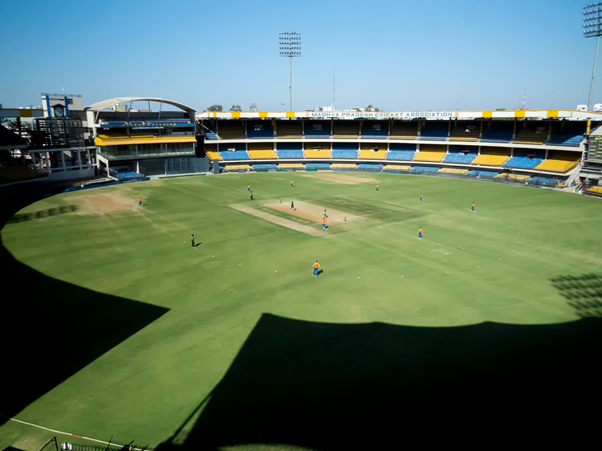
The moment is made eerier, because apart from the players, umpires, and camera crew, lies a 15,000-seat capacity ground – all empty and silent. This is the first cricket game in over one hundred days since the COVID-19 pandemic shut down the planet.
For much of the second half of 2020, the sound of the crack of oak on leather ricocheting from one empty grandstand to the other would be the new norm. Cricket broadcasters would add the low buzzing ambience of a crowd despite nobody being in attendance.
Since then, governments in cricket playing nations around the world have relaxed restrictions, somewhat allowing smaller crowds into stadiums worldwide. But the hit to the bottom line for every national cricket association is crushingly undeniable.
Source: © Gulrez | Megapixl.com
The ECB Takes a Massive Hit
Back to the present day.
On Wednesday, the England & Wales Cricket Board (ECB) reported a loss of GBP16.1 million for the past year due to both cancelled tours and zero to limited crowd attendance.
The newly developed English cricket league, The Hundred, in which the ECB invested a fortune, had to be postponed due to COVID-19, causing the financial turnover to fall by GBP21 million. The complete loss of revenue for the ECB, including first-class counties, amounted to over GBP100 million.
Source: © Alonesdj | Megapixl.com
The ECB’s saving grace was the fact that it managed to successfully host an entire programme of cricket over the summer. The programme included test series with the West Indies and Pakistan and an ODI series with Ireland, followed by an ODI and T20 series against Australia. Although bio-safe crowd restrictions encumbered these series, the series experienced some phenomenal television ratings in the UK, with Sky Sports and the BBC delivering numbers higher than the previous Ashes series in 2019.
The Chief Financial Officer of the ECB, Scott Smith, said in a statement that if not for these series, which were made possible by decisive action by the ECB early in the pandemic, the financial woes would have been far more devastating.
How Can Cricket Recover?
To state the obvious: there’s no doubt cricket’s financial plight has been aggravated by COVID-19. However, the proposed action to get English Cricket out of the hole it currently finds itself in, suggests that although COVID-19 has had a devastating effect on its bottom line, the pandemic has also revealed the underlying problems which have existed for so many years. As Warren Buffet once said, it is “only when the tide goes out do you discover who’s been swimming naked” and it would appear the ECB has been skinny dipping for some time and now it seems that chickens have come home to roost, figuratively speaking.
Last Tuesday, ECB Chairman Ian Watmore, talked about the game of cricket in terms of it being an eco-system, which includes the elite teams (both men’s and woman’s), the game’s accessibility through ever-changing digital media as well as traditional forms of media. Most importantly though, he emphasised investing in grassroots levels of cricket and engaging younger generations to inspire them to pick up a bat and a ball and start playing.
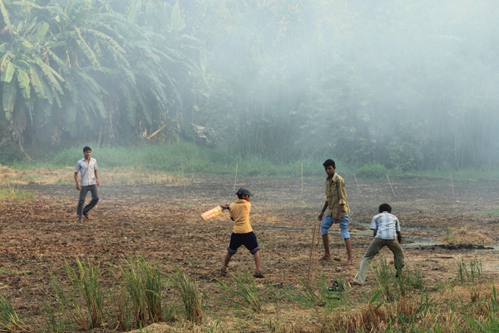
The challenge of engaging children and teenagers in the game of cricket is nothing new in England. While in countries like India, where in some places you only have to walk a couple of hundred meters in any given direction until you find yourself in the middle of a bunch of youngsters playing a pickup game, cricket in England seems to be associated with class – a game for private school boys and the financially well-off. Changing this perception in England is no small feat, but it is undeniably imperative moving forward.

Source: © Ajijchan | Megapixl.com; © Tonyd| Megapixl.com
In combatting this problem, Watmore has proposed what he calls a “whole game” approach, which involves strategies across all levels and components of the game; the national sides (Test, ODI and T20) and county sides as well as all levels of women’s cricket. He emphasises the importance of transforming the sport into a genuinely gender-neutral sport by evolving the woman’s game and appealing to young girls to get involved in playing and supporting the game.
Moreover, the “whole game” tactical approach will include a symbiotic relationship with the media and broadcasting entities. Finally, and perhaps most pertinent to its current commercial challenges, the ECB must create financing and investment strategies, including remedying unsustainable debt levels. As such, they have created a ten-year financial model which aims to cover all levels of cricket currently being played in England and Wales.
India’s Devastation
Meanwhile, India is facing far graver problems than cricket – and that is no light statement given the nation’s obsession with the game.
Over the past few weeks, India has recorded close to or even more than 4,000 COVID-19 related fatalities daily, bringing their total deaths to around 278,000 people. However, some experts believe the officially reported numbers may not represent the actual devastation the SARS-CoV-2 virus has caused. In April, journalists of one local Indian newspaper visited 21 cremation grounds in Ahmedabad – one of the most densely populated cities in India, located on the banks of the Sabarmati River in the country’s western region. There, the journalists had the grim task of counting body bags whilst determining how many had died from COVID-19. By the end, the journalists had counted over 200 COVID-19-related deaths. Ahmedabad officials, however, only reported 25 deaths.
RELATED: COVID-19 continues to hammer India; global cases decline
It is difficult to absorb the extent of what is happening in India given that it is still in progress with no real end in sight, which is unfortunate indeed.
A few days back, the Board for Control of Cricket in India (BCCI) indefinitely postponed the hugely popular and lucrative Indian Premier League (IPL) following the news that three of its franchises – the Kolkata Knight Riders, the Bangalore Royal Challengers, and the Chennai Super Kings – had returned positive COVID-19 tests.
Several Australian players, including Steve Smith, David Warner, and Pat Cummins, as well as Australian support staff, are currently quarantined in the Maldives, having fled India amidst the violent upsurge of Coronavirus cases. There are currently 38 Australian players, coaches, and commentators in India.
The nation’s escalating crisis has resulted in the Australian coalition government enforcing a travel ban, which has seen more than 9,000 Australians – many of whom had fled from Australia to visit sick and dying relatives – left stranded in India – unable to return home.
Despite this, Australian cricket administrators hope to get the Australian IPL group back home soon with deals currently being worked out with the federal government and NSW state government.
To say that the operation to get the Australian cricketers out of India has been met with some criticism would be an understatement, with many people calling the discrepancy in treatment a glaring double standard.
Amidst all this, BCCI President Sourav Ganguly is considering alternate venues to play out the IPL’s remaining games. Amongst these are the UAE, Sri Lanka, and the UK. Financially and logistically, Sri Lanka would be the best choice of the three. In last year’s IPL - held in the UAE - the BCCI forked out over INR100 crore (one billion) to play there. Considering the extra costs (paying for expensive hotel quarantines amongst regular testing of players, coaches, and officials) the BCCI has incurred so far this year, avoiding another set of exorbitant costs of the UAE will be a high priority. To add to that, Sri Lanka has the same time zone as India, which means players will not have to adjust to the time difference they would be forced to deal with if they played in the UK. Finally, Sri Lanka will require minimal travel for the teams, thus reducing the risk of infection.
Regardless, given the amount of money IPL generates, the BCCI will not cancel the tournament until all options have been exhausted. Considering the media rights, ticket sales and sponsorship, the IPL makes around INR12 billion.
The saving grace of cricket - and the entire world at this point – is the COVID-19 vaccine, which has begun its rollout across the world, although some countries have been quicker to execute their vaccine plan than others. Australians are now moving into Phase Two of the country’s strategic plan, and it cannot come quick enough.

Source: © Silverv| Megapixl.com
Australians are now moving into Phase Two of its strategic plan, and it cannot come quick enough.
The T20 World Cup is scheduled to begin in India in October this year. Sixteen teams from around the world. Packed venues full of cheering fans. Batters and bowlers fiercely competing without this dreaded, gloomy backdrop which has persisted since that day in Hampshire on 8 July 2020.
Now, that will be a great beginning to cricket’s resurgence. If it happens.
