
 AUS
AUS
 NZ
NZ
 UK
UK
 CA
CA
 USA
USA
 IND
IND







Summary
- Industry could witness a potential loss of €110 billion in trade along with a production loss of 3 million vehicles during the course of the next five years in case of a no-deal Brexit
- Coronavirus pandemic has already led to a production loss of worth €100 billion so far for the industry
- UK must act quickly to strike a deal with the EU as managing divergence and deciding upon an agreement can take some time
The coronavirus pandemic has devastated the automobile sector. The lockdown induced by the coronavirus led to a steep decline in sales of cars. Though as soon as the lockdown was lifted by the British government, the sector witnessed the release of pent up demand. Also, the demand for cars has risen as people are looking for safer commuting options with respect to the novel coronavirus as they are considered more at risk using public transport.
The carnage in the already battered sector, which saw mass redundancies and manufacturing sites closure, is likely to continue if UK is unable to strike a deal with the European Union before Brexit, according to a recent release by SMMT (Society of Motor Manufacturers and Traders).
European automotive industry leaders have reportedly joined forces to secure an ambitious free trade agreement (FTA) between the EU and UK before the end of Brexit transition period (31 December 2020) as they believe that this is in the best interest of the sector.
The European and UK market synergies
European and UK markets are closely linked when it comes to the automobile sector. Manufacturing, supply chain, technology sharing, there is a huge network of operations spanning across both the markets. According to an estimate, a ‘no deal’ or ‘hard’ Brexit could put several jobs at risk and cost the automotive sector (pan-European) around €110 billion loss in trade along with a production loss of 3 million vehicles during the course of next five years.
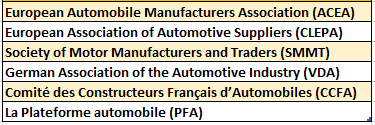
The lead organisations include more than 20 national associations, which represent vehicle and parts makers across the European Union, have warned that the sector could face severe repercussions. The coronavirus pandemic has already led to a production loss of worth €100 billion so far. A ‘no deal’ Brexit would add insult to injury in terms of impact on economy and job losses.
Do read: Brexit Updates: UK Contemplates A New Bill, British Logistics Sector Looks to Avoid Chaos
What lies ahead for the sector if the UK is not able to strike a deal with EU?
If UK is not able to negotiate a trade deal with the EU before the Brexit deadline, the manufacturers and suppliers on both sides would be governed by trade rules enforced by the World Trade Organisation (WTO).
This would directly impact the cost structure of the automobiles. For instance, a tariff of 10 per cent would be imposed on cars; up to 22 per cent on trucks and vans. The automobile business thrives upon volumes and not margins. Higher tariffs would lead to lesser margins for manufacturers, and there would be less incentive for them to continue doing business. In addition, the coronavirus has forced a lot of people out of work, and they are very concerned with their expenses. Higher tariffs would be certainly passed on to car buyers, which means that the cars would get expensive, consequently impacting the demand. Moreover, companies would be eager to launch limited models due to higher tariffs which would mean a lesser choice for consumers.
Alternatively, the splitting of the automobile industry over two regions could also lead up to trade imbalances between the UK and the EU. The businesses might also look to relocate in anticipation of the supply chain being affected due to a hard Brexit. The automobile industry could witness labour issues in case of a ‘no deal’ Brexit.
The catastrophe would not be just limited to car manufacturers. The automotive parts and their suppliers would be severely impacted by the new tariffs imposed by the WTO. This would not just impact the pricing of the final product but would also lead to the rise in after-sales service costs and the overall maintenance costs. This additional burden of tariffs would eventually fall upon the car buyers.
Notably, the UK has been a major exporter of cars. As the production becomes more expensive, the world would look up to other countries for buying cars as it is a competitive industry. This could be another blow for the British automotive industry.
From a strategy point of view, it is imperative for the European-UK automotive industry to negotiate upon an ambitious trade agreement with specific provisions pertaining to the automotive sector. The trade agreement would help in protecting the industry and millions of jobs.
The outlook for the automobile sector remains glum despite the removal of the lockdown restrictions. The new passenger car registrations in the UK dropped by 49 per cent in the first half of 2020 in comparison to the same period last year. While in the EU the new passenger car registrations dropped by 38 per cent in the first half of 2020, slightly lower in comparison to the UK. Notably, the UK has recently closed a trade deal with Japan emphasising on technology and processed food items.
UK-EU have evolved together in the automobile sector. The technologies and supply chains are closely interlinked. This is a very critical moment; a hard deal Brexit could disrupt the integrated automotive supply chain and hit the sector hard. UK must act quickly to strike a deal with the EU as managing divergence and deciding upon an agreement can take some time.
