
 AUS
AUS
 NZ
NZ
 UK
UK
 CA
CA
 USA
USA
 IND
IND







Summary
- The federal budget for the period of 2020-21 pledged a total of $98 billion as COVID relief fund, including $25 billion under the COVID-19 Response Package and $74 billion under the JobMaker Plan.
- On the fiscal side, a two-phase plan of action has been adopted.
- First stage involves generating employment, while the second stage involves reducing the fiscal debt.
- The JobMaker initiative was amended to focus on private sector job creation and providing tax relief.
- The economy needs a stable policy that restructures the fiscal accounts in a way that is sustainable and durable.
- The true level of effectiveness of this relief package can only be judged by how well it is executed.
Australian economy, which started on a recovery journey after a contracting June quarter, is experiencing a slowdown post Victorian lockdown. While RBA kept the interest rates unchanged in its latest meet, rollout of Budget 2020-21 remained the key highlight of the week.
Treasurer Josh Frydenberg recently released the much-awaited federal budget for the period 2020-21 Since the outbreak of COVID, there has been a constant need for countries to adapt to the evolving scenarios. While monetary authorities have been on their toes, economic relief packages by the governments are being meticulously rolled out by the nations to fight the adversities.
ALSO READ: Australian Economy: RBA toes the line, keep the rates unchanged at an all-time low
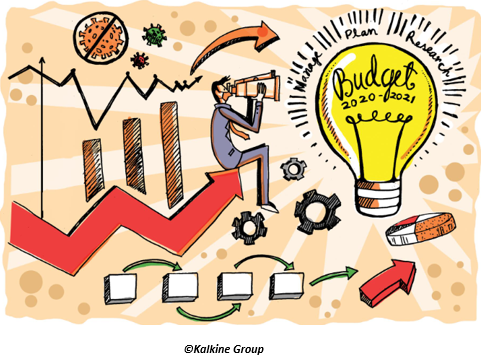
The Australian Treasury’s plan to combat the instability includes a two-stage fiscal policy reform. The first stage involves focusing on the unemployment rate by pulling it down and maintaining it below 6%. This comes in light of the unparalleled unemployment rates observed since the Victorian lockdown started in March 2020. While the second stage involves reducing the debt levels and stabilising the economy. The key thing to note here is that priority is given to employment generation as it is the first step towards recovery.
INTERESTING READ: Government extends JobKeeper, should you rejoice? Cuts are coming
Key Budget Highlights
The ongoing JobMaker initiative was altered to incorporate faster recovery measures. Some of these include:
- More than $50 billion to be offered in tax relief to small businesses and households
- Infrastructure investment to be increased by $10 billion in ten years.
- $ 4billion to be offered as JobMaker Hiring Credit to hire employees between the ages of 16 to 35 years.
- $1.2 billion for hiring new employees and apprentices with a 50% wage subsidy.
- Women’s Economic Security Statement to be funded with $240.4 million.
Alongside the JobKeeper initiative, the government has added a COVID response package promising a sum of $98 billion, which totals the government’s contribution towards COVID relief to about $507 billion.
Some of the key features of the COVID response package include:
- $15.6 million spending towards the JobKeeper Payment initiative.
- Additional payments of $250 to pensioners out of a total of $ 2.6 billion pledged towards Economic Support Payments.
- $1.7 billion pledged towards 84.8 million doses of potential vaccine candidates developed by University of Oxford and University of Queensland.
These initiatives are in-line with the main issues covered under the budget of 2020-21, namely employment generation, healthcare and tax relief. Huge tax cuts have been offered which boost consumer spending as people would be left with more disposable income.
Lens Through the Intended Budget Implications
The expected fall in real GDP for the year 2020 is roughly 3.75%. But with the economy bouncing back, it is expected that real GDP would increase by 4.25% in 2021. It is also anticipated that the package would improve the economic activity by 4.25% in the year 2021-22.
Job creation has been targeted in the private sector in order to promote a sustainable means for employment generation. This done to ensure that employment generation is quicker and thus the economy gets back to normal as soon as possible.
ALSO READ: Unemployment rate slips to 6.8% in August, Beacon of Hope on Economic Charter?
Need for a Robust Policy
The pandemic has brought along an adverse situation in economies worldwide. The Australian economy has been battling issues of unemployment, trade surplus depletion and over-supply of property due to lockdown imposed restrictions. Almost a million Australians have lost their jobs since the pandemic started. At the peak of unemployment curve post lockdown, 10% of labour force lost their jobs.
Australian economy has fallen by 7% in the June quarter. Easing of lockdown restrictions led to some improvement in economic activities. However, with containment measures being implemented in Victoria, there is again a slowdown in the economy.
RELATED READ: Impact of Coronavirus on Australian Economy and Way Forward
The economy needs a stable policy that restructures the fiscal accounts in a way that is sustainable and durable. The budget deficit can be utilised to improve on the current situation of the economy. It is estimated that the budget would improve the economic activity by 4.5% in 2021-22.
The peak of the unemployment rate would be lower by 5 percentage points than what it would have been otherwise. The budget report also states that without the extension of these policies, unemployment would have surged to 12% in the same period.
Thus a good policy is a reflection of good decision making and sustainable payment allocation. If implemented rightly, the current policy might fetch the desired results.
Is There a Room for Improvement?
The current policy has focused majorly on areas of unemployment and tax cuts, both of these may prove effective in reviving the economy. As unemployment rates fall down, businesses would start realising profits and eventually demand would get back to normal.
Similarly, tax cuts would enable households to increase on their consumption expenditure and would push demand forward.
Many other countries have raised huge packages, particularly in Europe. With countries like Japan and US raising relief packages equal to approximately 14% and 20% of their respective GDPs, question has to arise whether the size of the relief package makes a difference or not. If implemented correctly, a modest relief package that is just enough to cover the deficits might give the desired results.
The effectiveness of a policy depends on how well administered it is. In terms of size, the relief package is generous, now the entire chain of events depends on whether or not these funds reach the sub sectors they are intended for.
Another area of concern is the wage subsidy. If it persists too long then it might not be as effective. Thus a wage subsidy makes sense if the lockdowns are short. However, with the re-implementation of lockdown in Victoria, it is difficult to say when it will end completely.
It is best to maintain faith in the government regarding the budget. With several integral changes being integrated into the Australian economy, a positive outcome is highly anticipated.
