
 AUS
AUS
 NZ
NZ
 UK
UK
 CA
CA
 USA
USA
 IND
IND




_06_15_2026_08_31_29_563066.jpg)

Summary
- The Australian economy went into its first official recession in three decades after the pandemic hit globally last year.
- RBA adopted stringent policy measures, while the government prioritised job creation and provided relief packages.
- Since the September 2020 quarter, the Australian economy embarked upon a recovery path and came out of recession.
The global economy saw many firsts in the year 2020. The world saw historically low growth levels, high unemployment, ultra-low interest rate regime and shaky share markets.
The bushfire severity made the first few months of the pandemic extremely difficult for the Australian economy. The government struggled to control the business, property and economic loss, and provided medical relief and economic remedies.
Furthermore, the pandemic led Australia into its first recession in 30 years. Besides, the lockdown in Victoria and second wave restrictions in other parts of the nation led to business shutdowns, with soaring joblessness.
For an economy that showed resistance even during the 2008 crisis, a fall in GDP by 7% in the April-to-June quarter presented as an unforeseen challenge to the government. Notably, with stringent and quick policy response by the RBA and government, the Australian economy managed to come out of recession during the last quarter of 2020.
ALSO READ: Reasons and forecasts of Australian economy’s recovery
The Government Reforms
The policies introduced by the RBA have been aimed at encouraging investment and spending in the economy. Over the later stages of the recovery process, the government prioritised job creation in the relief measures.
While the first few stages of the recovery measures involved the RBA opting for lower interest rates, tax cuts, fiscal packages as well as unemployment benefits. The JobSeeker Payment initiative offered financial support to people looking for jobs. While the JobKeeper Payment initiative extended wage subsidies to businesses severely hit by the pandemic.
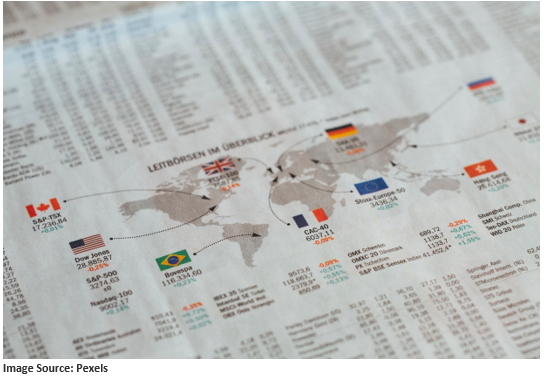
A fiscal stimulus complemented by stringent monetary policy measures helped the economy get back on its feet.
The Recovery
An easing of the lockdown restrictions helped improve the GDP growth during the September quarter. A GDP growth of 3.3% was recorded for the September quarter, the first upward movement of growth rates since March.
The employment rate also started showing signs of recovery in the month of November 2020, when the workforce increased by 90,000 people over the last month. This meant an increase in employed people by 0.7% from October to November.
The unemployment rate dipped to 6.8% in November 2020. Full time jobs also increased by a far greater value than the increase in part time jobs. This was highly unanticipated as ABS forecasts predicted unemployment to peak at 10% in December.

Housing prices also saw an uptick as markets reopened and people migrated back to the capital cities. In the initial stages, real estate prices plunged, however, they recovered by the month of November.
ALSO READ: What will Australia’s housing prices look like in 2021?
The Future Ahead
The Australian economy has come out of recession; however, the future growth path is still cloudy and is expected to be uneven across regions. While the GDP growth is anticipated to be positive for the December quarter as well. Besides, the forecast GDP growth is 5% in 2021 and 4% in 2022.
The interest rates may not bounce back in near to mid term. The RBA aims to achieve the inflation rate target of 2-3% before it can increase interest rates, which may not happen before 2023.
Undoubtedly, the current positive scenario has opened the possibility of the economy recovering quicker than expected. However, even in the best-case scenario, that pre-pandemic levels would not be achieved before the end of 2021.
