
 AUS
AUS
 NZ
NZ
 UK
UK
 CA
CA
 USA
USA
 IND
IND


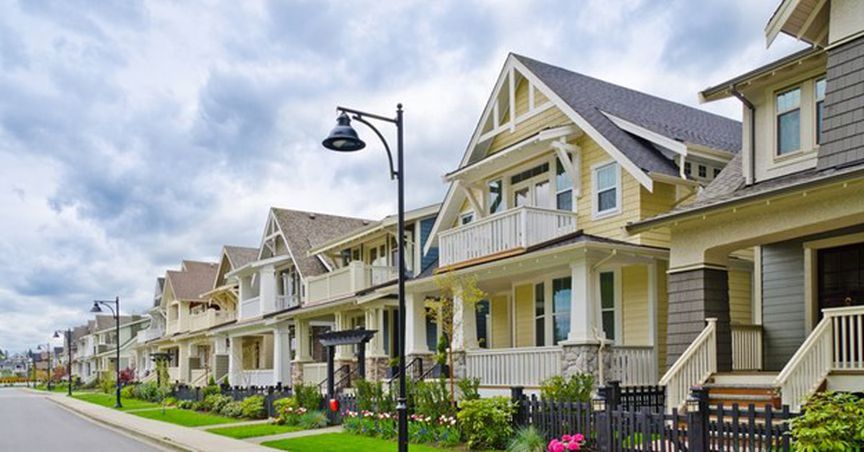




Image Source: Shutterstock
Summary
- Some economists have falsely predicted a significant decline in the housing market, as the current recession saw housing prices zoom by 0.8 per cent in November.
- CoreLogic’s national index has shown that Australians are more confident about buying a property in regional areas, while inner-city suburbs are not seeing as many property sales.
- The rental market is, however, going through a significant decline due to fewer international students being allowed to the country.
With November marking another record-breaking month for higher house prices, the nation’s real estate market may exceed pre-coronavirus levels.
Initially, property experts predicted a significant decline in housing prices – 10 and 20 per cent to be precise. However, these forecasts are no longer relevant, as Australia proved to be highly effective in the COVID-19 battle.
CoreLogic national index documented the second uninterrupted rise of property prices in November, with dwelling values up 0.8 per cent. Overall costs are showing a 3.1 per cent boost since the year’s start.
DO READ: Residential real estate regains its shine as house approvals hit a 20-year high
Previously, dwelling values were down 2.1 per cent between April and September, due to the pandemic.
In accordance with the data showing significant growth in real estate prices, some experts believe that houses could easily be more expensive next year than they were in pre-COVID times.
CoreLogic’s Head of Research Tom Lawless forecast recovery levels as quick as January or February next year if the national index keeps recording the trend growth.
CoreLogic’s Head of Residential Research Eliza Owen said that urban areas like Brisbane, Melbourne, and Sydney had reported only a small increase in property prices (less than one per cent), while rural areas saw a larger boom in prices higher than one per cent.
However, Ms Owen was not surprised that the Australian property market became even more expensive during the worst recession country has seen in decades.
ALSO READ: House prices rise for the first time since COVID-19, CoreLogic Index Back in Green
It is not uncommon for the Reserve Bank (RBA) to lower interest rates during the financial recession so as to encourage more people to buy new or first homes. The RBA’s Tuesday statement confirmed this theory, as the bank plans to maintain record-low interest rates for first home buyers.

Image Source: Shutterstock
RELATED: Why is RBA keeping interest rates at a record-low?
On the contrary, a separate report delivered by S&P Global Ratings stated that more individuals are likely to fail to meet mortgage debts by next year, as the RBA has allowed loan deferrals due to the pandemic.
Why are apartment prices falling?
While house prices are continuously seeing an increase, apartment prices are not as high, especially in urban areas.
One of the reasons why that might be happening is a lack of international students. Rental real estate relies heavily on international students, who are now banned from coming to the country.
For that reason, most units in central Sydney and Melbourne are experiencing a 0.6 per cent downfall, according to the national index. However, the Melbournian real estate sector has an optimistic turnout, as initial predictions were a lot worse than 0.6 per cent.
In inner Melbourne suburbia, units are now 8 per cent more affordable, while units in Sydney are 7 per cent cheaper to rent than usual. This situation will most likely change once the government decides to let more international students into the continent.
The overall market recovery will largely depend on many factors, such as vaccine development, trade relationship with China, the number of COVID-19 cases, and the employment scenario.
