
 AUS
AUS
 NZ
NZ
 UK
UK
 CA
CA
 USA
USA
 IND
IND






Highlights
- Australia’s energy crisis has worsened at a time when the cold climate is disrupting the gas supply.
- Authorities have brought up talks of pulling the gas trigger, but many believe that it would not be a long-term solution.
- Long outages at coal-fired power stations have compelled operators to turn to gas-powered stations.
Australia’s energy crisis has taken another turn as gas prices continue to soar, closely following the increasing power bills and rising costs of living. The gas crisis is being termed the “perfect storm” confronting the Australian economy, as the country faces international supply-side pressures. Additionally, domestic pressures have not eased, and a new government has been tasked with handling a barrage of economic adversities.
Several worrying factors have taken shape in the electricity and gas industry, with the primary issue arising in the form of the Russia-Ukraine war. One can say that Chris Bowen has a fresh issue to solve soon after taking up the role of the Minister for Climate Change and Energy. Minister Bowen has recently claimed that he is open to considering all measures that can help lower the cost of gas.
The geopolitical situation arising globally has affected multiple aspects of the world economy. While countries struggle to maintain the supply of goods, the demand for goods and services has not slowed down. As the newly elected government makes shining promises, the real solution to rising energy prices might be farther away than envisioned.
ALSO READ: Australia set for 3rd year of bumper wheat harvests, easing world supply woes
What is happening in the gas industry?
The Australian Energy Market Operator (AEMO) has recently identified a potential shortfall of gas supplies in Victoria, South Australia and Tasmania as the Australian winter takes a severe turn. The supply has been hampered due to low reserve conditions linked to pipeline capacity or market conditions and generators running on liquid fuel due to gas supply shortage.
Australia’s cold weather has come at an extremely crucial time when the pace of economic growth is slowing down. Australia’s economic growth during the first three months of 2022 was much slower than the previous quarter’s at a mere 0.8%. These pressures have translated into a series of unfavourable events at power stations.
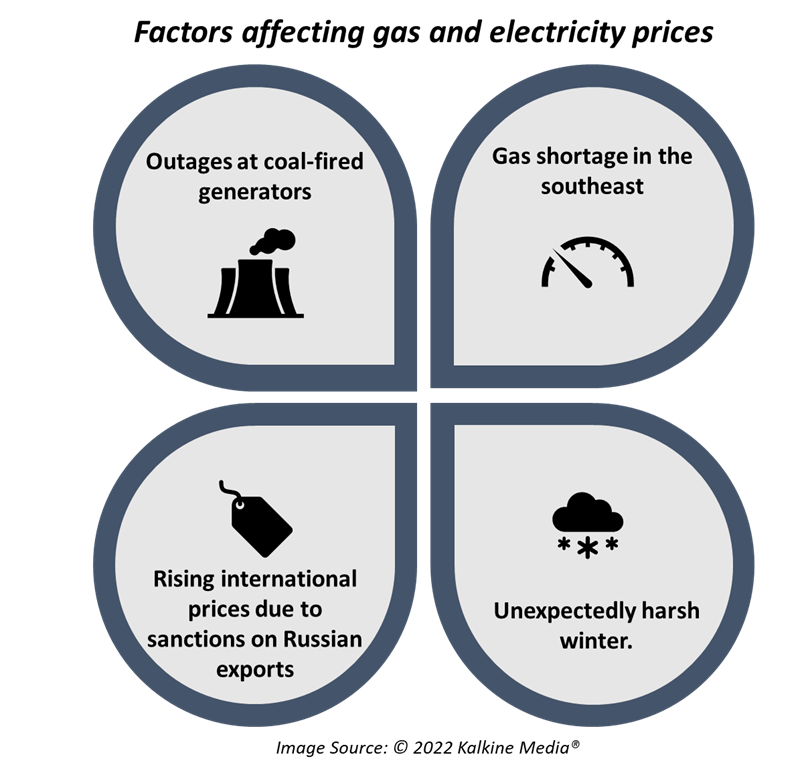
Outages at coal-fired power stations have become increasingly prevalent, which has led to an increased demand for gas. Over a quarter of coal-fired plants have been offline for much of the year, which has prompted operators to turn to an alternative powered by gas. Additionally, conducting onshore gas developments has become increasingly due to state government decisions and rejections over environmental concerns.
Price pressures in the gas industry have further worsened due to the rising gas demand from European countries. Higher demand from European nations has increased the price of liquified natural gas, affecting Australian prices in the process.
ALSO READ: Will Aussies see higher minimum wages as new government takes charge?
Can Bowen solve the gas supply problem?
Mr Bowen believes that even if he were to use his Ministerial power and pull the “trigger”, no immediate relief would arise out of it. The trigger here refers to forcing exporters to keep additional gas onshore for domestic use. This trigger may not be as effective majorly because the factors that have caused gas prices to shoot up are largely beyond the control of the government. Mr Bowen believes that the “trigger” would take time to show effect and could not come into effect until 1 January.
Notably, the Labor government has time and again expressed its concerns over climate change and how the government needs to be more proactive in this sphere. Minister Bowen has also promised to act against climate change and offer a long-term solution to such issues. However, living up to the public’s expectations will not be an easy ride, especially when the government debt is piling up.
Even Treasurer Jim Chalmers believes that no simple medicine can immediately take the pressure off Australia. He believes that the current scenario reflects the costs and consequences of a decade of a government with 22 different energy policies.
Experts fear that once debt-related struggles take centre stage in Australia, all other agendas presented by the government may prove to be ineffective. Usually, political parties lose their vigour with time, with issues becoming somewhat stagnated at the same level.
RELATED READ: Australia trade surplus widens in April on LNG exports
