
 AUS
AUS
 NZ
NZ
 UK
UK
 CA
CA
 USA
USA
 IND
IND






Highlights
- Investors across the globe resort to several strategies to maximise their gains.
- Aggressive investing is an investment approach employed by young investors with a relatively high risk appetite.
- The primary focus of aggressive investing is capital appreciation rather than capital preservation or generation of regular cash flows.
There are several investing strategies followed by global investors to maximise their gains. While some believe in approaching the markets in a defensive way, others take relatively high risks to get the best out of their investment portfolio. One such strategy is aggressive investing. Generally, this approach is employed by young investors with a relatively high risk appetite, who employ a high-risk, high-reward approach to investing.
The primary focus of aggressive investing is capital appreciation rather than capital preservation or generation of regular cash flows. Thus, this investment approach believes in an asset allocation with a substantial weightage on stocks and probably little or no allocation to debt or cash.

Source: © Ptlee | Megapixl.com
On that note, let us discuss aggressive investment strategy and how it works for investors.
The aggressiveness of a portfolio depends on the relative weight of asset classes, including stocks and commodities, within the portfolio.
Consider two investment portfolios A and B. While one has an asset allocation of 75% equities, 15% fixed income, and 10% commodities, the other has 85% stocks and 15% commodities. Between the two, portfolio B would be considered more aggressive than portfolio A.
Not only this, the composition of equities also decides the risk profile. For instance, a portfolio with just blue-chip stocks would be less aggressive than the one which only holds small-cap stocks.
Similarly, an investment strategy, which simply divides all available money equally into 20 different stocks, is said to be an aggressive strategy. However, dividing the available money equally into just five different stocks would be more aggressive.
What to keep in mind while following an aggressive investment strategy
Investors should know that an aggressive investment strategy needs more active management compared to a traditional ‘buy-and-hold’ strategy. It is so because such a portfolio can be more volatile and would need frequent adjustments or rebalancing, based on market scenario.
There can be times when volatility may lead allocations to deviate from their original weights in the portfolio. Thus, investors need to pay higher fees for the efforts put in by the portfolio manager.
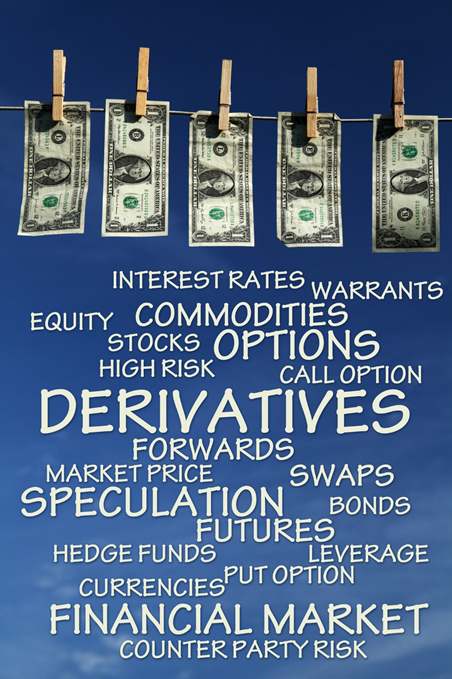
Source: © Icefields | Megapixl.com
Bottom Line
As already discussed, aggressive investment strategy is for investors with high risk tolerance. In addition, an aggressive portfolio requires investors to pay higher fees to portfolio managers, which can be a major concern. However, proper management can also promise attractive returns to investors. Thus, investors should resort to this strategy only after they have properly weighed the pros and cons.
READ MORE: How do I start trading penny stocks in Australia?
READ MORE: How do I invest in ASX?
