
 AUS
AUS
 NZ
NZ
 UK
UK
 CA
CA
 USA
USA
 IND
IND








A country’s capital market functions as a crucial economic unit that contributes to growth and development of the economy and facilitates allocation of funds between demanders and suppliers of financial resources.
An economy is said to function efficiently on the basis of its ability to link investment and saving between various economic agents, government, consumers, firms and other institutions.
What is capital market?
Financial market and capital market are often used interchangeably but there is a significant difference between the two. Capital Market is one of the four components of a wider financial market, others being stock market, money market, and hedging market.
The capital market comprises several institutions like banks, pension funds, insurance firms, etc., which usually offer long-term financial contracts, typically ranging from one year to 25 years. The money market caters to short-term financial needs where loanable funds are traded from overnight borrowing and lending to 365 days.
The stock market, however, represents a trading platform for investors to exchange shares of a company. The largest stock exchange in Canada is the Toronto Stock Exchange. Alternative financial instruments like option, swap, forward contracts, and futures are traded in the hedging market.
Most Canadians usually participate in some form of financial market in the nation. The people who prefer savings can be invest in bonds, real estate, T-bills, stocks, mutual funds, etc. Some people prefer depositing their savings in the Canadian financial institutions like trust companies, banks, pension funds, mutual funds, or life insurance policies.
The capital market thus channelizes these savings into investments, which further contribute to the economic development. From telecom firms, utilities, manufacturing to high-tech companies, many industries and sectors also benefit from the Canadian capital market.
Why invest in Canadian markets?
Investing in simple term means parking your fund somewhere where it can grow and multiply. Investing in Canadian stock markets can provide exposure to a wide range of commodities, as more than 45 per cent of the world’s mining firms are listed on the Toronto Stock Exchange and TSX Venture Exchange.
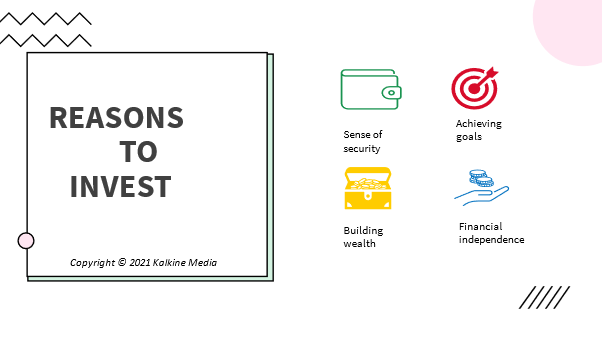
In addition, investing acts as a safety vault post retirement, for buying home, or to pay off a personal financial obligation. Investments offer cash flows like dividends, interest, or coupons. The investors can earn higher returns by re-investing profits.
Things to consider before investing
Just like differences in taste and preference, investment decisions also differ from person to person. One should also know understand how investment works, including any associated fees, the financial goal, and the risk appetite.
Usually, it is said that higher the risk, higher the potential return. The investors also have to consider how investment could be taxed as dividend, capital gains, interest, etc., are treated differently for tax purposes.
Also Read: How trading differs from investing: Here are three deciding factors
Know what you are investing in
In Canada, there are various asset classes available for investing from stocks, ETFs, mutual funds, cannabis stocks, commodities, closed-end funds, to cryptocurrencies, etc.
- Cash and cash equivalents
Refers to cash-like instruments such as T-bills, money market funds or simply money in a bank account. These are generally considered safe and offers great liquidity but offers relatively low rates of return in comparison to other types of investments.
- Fixed income securities
These refers to bonds and other fixed income securities that are usually based on debt. Bond is a debt instrument, wherein government borrows money from individuals for a certain period of time. In return, the government pays an interest on the money and to repay the face value at maturity.
- Alternative investments
Investment in foreign currencies like US dollar, options, futures, hedge funds, real estate, or commodities like gold are clubbed as alternative investments. Investors who can afford to take higher risks prefer alternative investments as they offer usually offer great returns.
Also Read: 7 best ways to maximise profit using a diversified portfolio
- Equities
Investing in stocks or equities is the most sought-after investment, even for a beginner. Investment in stocks simply means share in the firm’s business, entitlement to vote at shareholders’ meeting and dividend payments.
The stock’s value keeps changing throughout the intraday trading, which means the company’s onus to pay dividend will vary accordingly.
In addition, the value of stock depends on several factors like financial performance of the company, its stability and profitability, size and scale, competition, and general economic conditions prevailing.
If an investor sells the stock at a value more than he paid for, he will earn capital gain, but if he sells it for less, the investor can suffer capital loss.
How stock markets work?
Stocks are marketable security listed for trading on a stock exchange platform like TSX and TSXV in Canada. In addition to well known stock exchanges, the shares can be traded through dealer network, commonly called as OTC markets, or on alternative trading systems.
Here are some types of shares:
- Common shares
- Restricted voting shares
- Preferred share
- Rights and warrants
- Flow-through share
What are investment funds and how do they work?
Investments funds represents a basket of one or more asset classes, each focused on specific investments, large-cap stocks, government bonds or a mix of bonds and stocks.
If an investor is buying an investment fund, he/she is pooling the money with several investors having a similar financial objective. Investment funds facilitate the investor buy different investment instrument for a relatively low cost and the investment decisions is usually taken by professional manager, like mutual fund manager.
Investment funds can be set up as corporations, trusts, or partnerships, and are issued in units or shares. Investment funds include mutual funds, ETFs, segregated funds, commodity pool, etc.
What are Exchange Traded Funds (ETF)?
The Toronto Stock Exchange has over 700 ETFs listed for trading. ETFs refer to a basket of several investments that is usually created to track individual commodity or a diverse class of securities.
In Canada, six financial institutions act as designated brokers and ETF distributors, including RBC Capital Markets, Scotia Capital Markets, BMO Capital Markets, etc.
Things to consider while setting financial goals
Some investment may suit you better than your peer as each investment has its own unique characteristics.
One’s ability to take on risk is key to investment decisions. The risk tolerance may depend on the following areas:
- Is keeping money safe important or seeking higher growth?
- What is the financial timeline and when do you need the money?
- Do you prefer staying invested or engage in bull-bear market spree?
- Your reaction to market’s highs and lows
- Any financial obligation
- Alternative source of income as a safeguard during uncertain times
Also Read: Decoding the difference between investing and speculating
Apart from the basics, an investor should also have decent knowledge on how stock markets work, what are the tax-benefits and risk factors, understanding of portfolio, etc. Investors can also seek the services of a professional financial adviser in investment decisions to have a better understanding.
Organizations like the Investment Industry Regulatory Organization of Canada (IIROC) and Mutual Fund Dealers Association of Canada (MFDA) provides information about registered member firms offering different securities.
In addition, the investors may seek profession help from the Financial Planners Standards Council (FPSC), Investment Counsel Association of Canada (ICAC), or the Institut québécois de planification financière (IQPF).
Bottom Line
Canadian capital markets are deemed as efficient in many several aspects, including size, exposure, investment avenues, etc. Market efficiency could be achieved developing and enhancing access to newer markets, pools of capital and investment instruments.
In addition, the authorities may look at reducing transactions costs and strive for developing world-class codes of conduct in the Canadian capital markets.
The Canadian capital market is generally transparent as the equities are mostly traded on centralized exchanges with the terms of trade publicly available. However, Canadian market can seek improvement in secondary markets by taking measured steps to increase transparency in the fixed-income markets.
The market is constantly growing and innovating to best serve the interests of borrowers and investors in the 21st century.
Also read: 10 best Canadian blue-chip stocks to buy & hold forever
