
 AUS
AUS
 NZ
NZ
 UK
UK
 CA
CA
 USA
USA
 IND
IND








Summary
- Options contract allows investors to buy or sell instruments at a pre-defined price over a specific period.
- Options trading is done for speculation and hedging risk.
- Options trading can help in making bigger profits than stock trading if the price of the share rises.
- Options can prove to be risky investments.
Options trading permits an individual to buy and sell stocks, ETFs at a particular price in the future. This kind of trading also allows buyers the option of not buying the securities at the stated price or date.
The options market works similarly to the stock market, in which it trades options. A call option is when an individual purchases an option that allows him/her to buy a stock at a later period. Buying an option that permits an individual to sell shares later is called as a put option.
How does options trading work?
When a trader or investor buys or sells options, they have the ability to use them at any time before the expiration date. Options are categorised as derivative securities due to their composition.
ALSO READ: Is options trading better than stocks?
When it comes to pricing option contracts, it all boils down to calculating the likelihood of future price events. The more probable something is to happen, the more costly a profit-generating option will be. Time is another factor in options valuation. An option will be of lesser value, the closer it is to its expiry.
What can you trade with options?
A call option permits traders to buy a specific number of shares of either stock, bonds, commodities or others like ETFs or indices in the future.
Is options trading better than stock trading?
Stock trading can be a good choice if an individual wants to invest for a long-term like retirement, etc. Options trading have a shorter-time period for investment, which is more tempting to traders who buy and sell frequently.
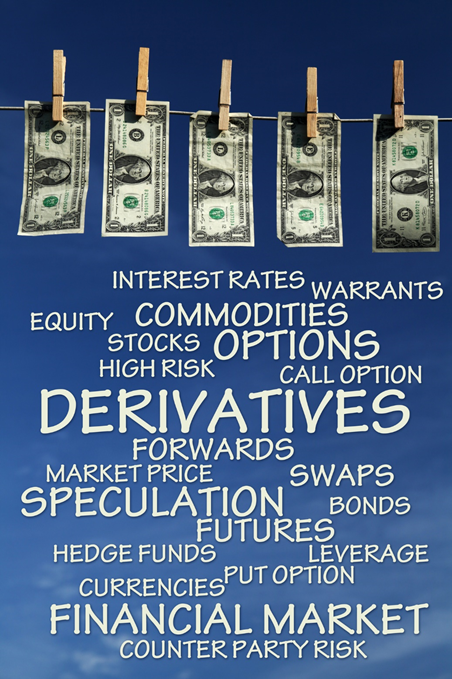
Source: © Icefields | Megapixl.com
While options trading can be risky, it has the capability to be more profitable than conventional stock investing as an individual does not have to pay the full price for the security in an options contract.
Options can be used as:
Leverage-
Option trading with leverage allows an individual to profit from changes in share prices without having to put down the entire amount of the share. He/she can gain control over the shares without purchasing the shares completely.
ALSO READ: How diversified portfolio helps investors in assessing best NZX options
Hedging-
Hedging can also be used to hedge against share price volatility by allowing an individual to purchase or sell shares at a pre-defined price for a set time period. Financial planning is an important component of insuring an individual against market volatility.
What are the risks in trading options?
Many investors are drawn to options trading because of the leverage it provides, which allows them to make larger returns with less inputs.
However, the alternatives are a little difficult to comprehend. As a result, before diving into options trading, investors should spend some time learning everything there is to know about options.
Short-term investments, such as options, are made for a period of a few months. Shorter duration allows for less price recovery. As a result, risks of losing money is as high as the possibility of making money.
Source: © Adiruch | Megapixl.com
Because options are a derivative of stocks, indices, and other financial instruments, even little changes in the underlying stock or index price can generate significant changes in the options pricing.
DO READ: Equity Options: 5 reasons These can Bring a Change to your Investment Strategy
An options holder carries the risk of losing the entire premium paid as options have no guarantee attached to them.
What are the benefits of options trading?
Trading in options can be done safely and profitably if done with correct knowledge and methods.
Some of the advantages of options trading include:
- Risk reduction
Options are useful for managing risk.
Because options do not require as much financial contribution as shares, they can minimise risk. As a result, they are generally resistant to severe repercussions from gap openings, providing that person with a level of security unavailable with many other assets.
- Increased cost efficiency
A lot more can be saved with options trading than stocks. Options possess substantial leverage capability with huge savings in costs.
- Possibility of higher returns
Trading options enable investors to make the same return as if they had traded a different asset, but with a smaller initial investment. This implies that if an investor makes the proper selection, the potential profits from options trading might be much larger.
