
 AUS
AUS
 NZ
NZ
 UK
UK
 CA
CA
 USA
USA
 IND
IND







Summary
- The agriculture, fisheries and forestry industries form an essential component of Australia’s economy and will play a vital role in its recovery.
- The government has taken steps by ensuring that aquaculture methods are sustainable, encouraging investment in aquaculture and lessening the risk of exotic pest fish and disease.
- Australian fisheries exports are controlled by high-value products like rock lobster, premium tuna species and abalone.
- Angel Seafood reported a growth of 5% in its sales with 2.1 million oysters sold.
- New Zealand Coastal Seafoods Limited completed the acquisition of nutraceutical company, Kiwi Dreams International Limited.
Aquaculture business includes farming aquatic animals and plants under varying degrees of controlled parameters in marine as well as freshwater environments. In Australia, Queensland is known as the best location for the development of a diverse aquaculture industry. On this front, the Australian government is taking steps by ensuring that aquaculture methods are sustainable, encouraging investment in aquaculture and lessening the risk of exotic pest fish and disease.
To know more about ASX-listed aquaculture companies, click here.
As per a report released by the Australian government, Department of Agriculture, Water and the Environment, this industry also experienced challenges amid COVID-19. The pandemic changed the way the people from this industry used to live and work.
The agriculture, fisheries and forestry industries form an essential component of the country’s recovery, economic prosperity, and food security. Keeping this in mind, the Australian government, Department of Agriculture, Water, and the Environment is working closely with industry and other governments and the community via the Industry Engagement Team to make sure that these industries stay strong.
Some Quick Facts About Australia’s Seafood Business:
- Australia’s seafood comes from wild capture & aquaculture sources.
- The amount of seafood produced in Australia remained stable over the last two decades at around 230,000 tonnes per year.
- Australian fisheries exports are controlled by high-value products like rock lobster, premium tuna species and abalone.
- Australian imports mostly comprise of lower value products like canned fish & frozen fillets.
- There is more potential to grow Australia’s fisheries exports into new and growing markets, which in turn will secure a more varied market base for the fisheries products.
- Australia imports ~70% of the consumed edible seafood from Asia.
Popular Oceanian Seafood Dishes:
- 'Ota 'ika
- Fafaru
- Barramundi cod
- Salt and Pepper Calamari
- Fish Lolo
- Kokoda
- Poisson cru
- Prawn Cocktail
- Whitebait fritters
- New Zealand Fish and Chips.
DO READ: Seafood Industry Impacted by the COVID-19 Disruptions
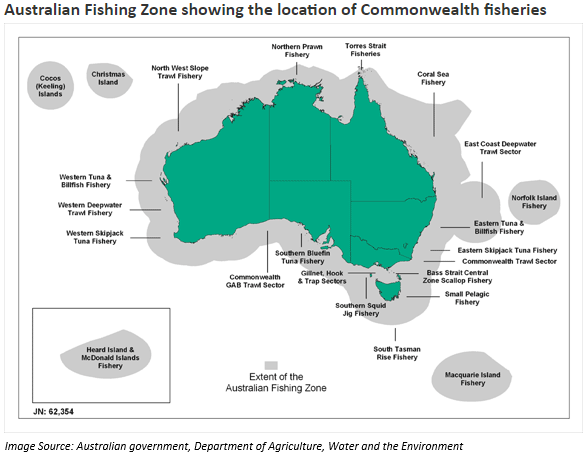
A peek into Australian Fishing zone:
On 1 August 1994, Australia declared an Exclusive Economic Zone which extends from 12 nautical miles to 200 nautical miles from its coastline. Within this Exclusive Economic Zone, Australia has sovereign rights to explore and exploit, conserve and manage the natural resource. It includes both living and non-living resources. The living resources include fisheries and genetic material while non-living resources comprise of oil, gas, minerals.
On that note, let us look at two Australian companies in the seafood business.
Angel Seafood Holdings Ltd (ASX:AS1)
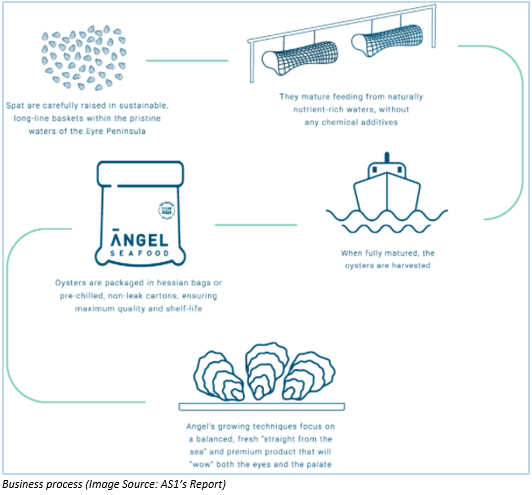
Angel Seafood Holdings Ltd is the only certified sustainable and organic oyster producer in the world. The Company offers premium products and does not compromise when it comes to the environment. As a certified Friend of the Sea, the Company is one amongst two sustainable Oyster growers in the world.
AS1’s oysters have to undertake annual audits via the South Australian Shellfish Quality Assurance Program. The infrastructure innovation has resulted in increased water flow across its farm. As a result, the Company faces a marginal impact on its seabeds. This, in turn, helps seabed to regrow and rejuvenate. The Business process:
Q4 Results:
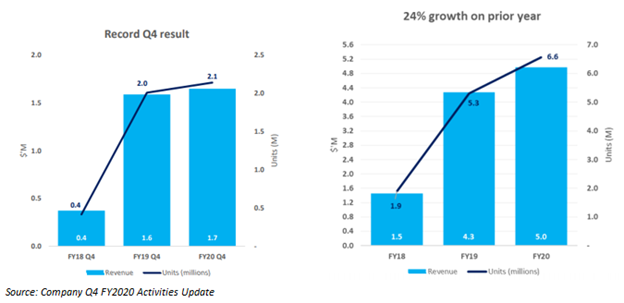
In Q4 FY2020 ended 30 June 2020, the Company was able to achieve record sales in an unprecedented trading environment. Below are some critical Q4 FY2020 metrics.
- Oyster sales volume increased by 5% to 2.1 million.
- Strong growth attained through the retail channel.
- Revenue up by 4% at A$1.7 million, a record figure.
The full-year sales increased by 25% to 6.6 million oysters. Angel Seafood achieved a positive cash flow for the quarter and in the full year.
Cash Flow Highlights:
- Net cash from operating activities: A$0.462 million.
- Net cash used in investing activities: A$0.369 million.
- Net cash from activities from financing activities: A$0.686 million.
- Cash and cash equivalent by 30 June 2020: A$1.345 million.
Stock Information:
By the end of the day’s trade on ASX, AS1 share price stood at A$0.145, up 3.571% from the previous close.
New Zealand Coastal Seafoods Limited (ASX:NZS)
Christchurch-based New Zealand Coastal Seafoods is an ASX-listed secondary producer of nutraceutical, seafood products & premium marine ingredients. The Company’s products include Abalone, Maw, and Nutraceutical ingredients.
From NZ’s pure, spotless waters, New Zealand Coastal Seafoods obtains the cleanest, wild-caught seafood, to provide clean, healthy, superior seafood products to its customers' table.
Q4 FY2020 Highlights:
- Completed the acquisition of nutraceutical company, Kiwi Dreams International Limited. The purchase would provide the Company with immediate access to the high-value nutraceutical market.
- Cash receipts from customers soared ~200% from NZ$219,849 during the March 2020 quarter to NZ$660,000 in the June 2020 quarter.
- Obtained EU Listing Consent for the export of marine products to Europe. It also got US Food and Drug Administration Listing Approval for the export of products to the US.
- Obtained export order from BuyNatural for the initial shipment of products from the NZCS branded ready to eat range.
Cash Flow Highlights:
- Net cash used in operating activities: A$0.555 million.
- Net cash used in investing activities: A$0.472 million.
- Net cash from financing activities: A$1.595 million.
- Net cash and cash equivalents at the end of the period: A$1.930 million.
Stock Information:
By the end of the day’s trade on the ASX, NZS share price stood at A$0.064, up 1.587% from the previous close.
