
 AUS
AUS
 NZ
NZ
 UK
UK
 CA
CA
 USA
USA
 IND
IND






Highlights
- Rio Tinto lifted Pilbara iron ore output toward its strongest run in years.
- A monthly production update kept the market's attention firmly on the miner.
- Steady Chinese steel demand framed the backdrop for the bulk commodity.
Iron ore remains the lifeblood of Australia's resources story, and this week the spotlight fell on Rio Tinto (ASX:RIO), the global mining heavyweight whose Pilbara operations rank among the most productive on the planet. The group flagged one of its strongest production runs in years from the iron-rich region of Western Australia, reinforcing its place as a bellwether of the ASX 200 and of the broader bulk commodity trade. With a monthly output update in view and steady Chinese steel demand framing the backdrop, the miner offered the market a fresh read on the health of the sector that underpins so much of the national economy.
Pilbara firing on all cylinders
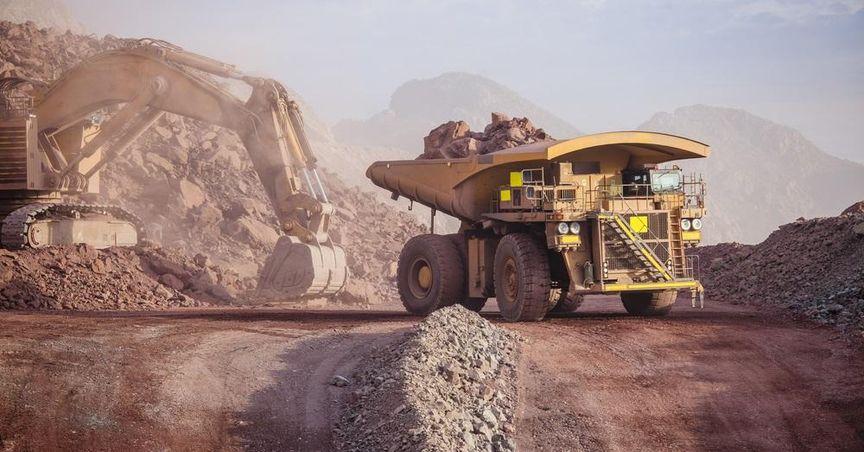
The Pilbara is the beating heart of the global iron ore trade, a sprawling network of mines, rail lines and ports that funnels vast quantities of ore toward export markets. Rio Tinto signalled that its operations there have been running at their strongest pace in years, with sales climbing as the group squeezed more throughput from its mines and infrastructure. Lifting production from an already colossal base is no small feat, requiring finely tuned logistics and reliable equipment, and the achievement underscored the operational muscle that sets the largest miners apart from smaller rivals.
Why the output update matters
Monthly and quarterly production figures carry outsized weight in the iron ore world, offering a rare hard read on how the majors are performing. A strong showing signals that the group is capturing full value from robust demand, while any stumble in output can quickly sour sentiment. The market has been watching Rio Tinto's cadence closely, parsing shipment volumes and the premium its higher-grade ore commands. Those figures feed directly into expectations for cash generation, making the humble output report one of the most closely scrutinised moments in the mining calendar.
China sets the demand tone
No conversation about iron ore is complete without China, the destination for the lion's share of Australia's exports and the engine of global steel production. The pace of Chinese construction, manufacturing and infrastructure spending shapes appetite for the ore, and shifts in that demand ripple straight through to prices. Recent signals from the world's second-largest economy have been mixed, with policy support cushioning some of the softness in property. That balance of forces sets the tone for the whole sector, lending the majors' output a demand backdrop that is never far from the headlines.
Grades, premiums and the quality edge
Not all iron ore is created equal, and the quality of the product matters greatly. Higher-grade ore commands a premium because it allows steel mills to run more efficiently and with fewer emissions, an advantage that has grown as environmental standards tighten. Those following ASX Iron Ore Stocks will note how the majors emphasise the grade of their output, since a quality edge can translate into stronger realised prices even when the benchmark itself is treading water.
Smaller producers in the mix
Beyond the giants, a cast of smaller miners rounds out the iron ore landscape. Champion Iron (ASX:CIA), a producer focused on high-grade concentrate from operations in Canada, offers a contrasting angle, its emphasis on premium product aligning with the market's growing appetite for cleaner steelmaking inputs. Comparing such names with the Pilbara majors highlights the different scales and strategies at play, from the sheer volume of the established heavyweights to the niche, quality-led positioning that smaller producers can carve out for themselves.
The cost advantage
One reason the Australian majors loom so large is their remarkably low cost of production. Decades of investment in efficient mines, automated equipment and integrated rail and port systems have driven the cost of digging and shipping each tonne down to levels few rivals can match. That advantage means the big producers can stay profitable even when prices soften, a resilience that becomes especially valuable during the inevitable downturns in the commodity cycle. It is a moat built not on any single asset but on the relentless pursuit of operational efficiency at scale.
What to watch next
Attention now turns to the detail of the group's output update and any read it offers on shipments and grade premiums. Beyond the company itself, the direction of Chinese steel demand and the balance of global supply will steer where iron ore prices head next. For now, a powerful production run from the Pilbara has reaffirmed Rio Tinto's status as a barometer for the sector, and the market will be watching keenly to see whether that operational momentum can be sustained.
