
 AUS
AUS
 NZ
NZ
 UK
UK
 CA
CA
 USA
USA
 IND
IND






Highlights
- ASX iron ore stocks are shaped by Pilbara cost advantage, China steel demand, and shipment volumes.
- Rio Tinto (ASX:RIO), Fortescue (ASX:FMG), Mineral Resources (ASX:MIN), and Champion Iron (ASX:CIA) illustrate varied operational models.
- Cost efficiency and operational discipline provide a cleaner lens for assessing the sector.
ASX iron ore stocks are under focus as Pilbara cost advantage, China steel demand, and operational execution shape cash flow and earnings across key resource names in 2026.
Iron ore companies in Australia are central to both domestic and global supply chains, contributing significantly to the ASX 100, and ASX 300 benchmarks. The sector includes diversified mining operations, high-capacity Pilbara production, and integrated logistics networks that influence margins, cash flow, and operational execution.
Key players include Rio Tinto (ASX:RIO), Fortescue (ASX:FMG), Mineral Resources, and Champion Iron. Each has distinct operational models, ranging from large-scale mining and shipping to integrated extraction and processing. The Pilbara region remains central, offering low-cost production advantages that influence operational discipline, shipment efficiency, and earnings visibility.
Pilbara iron ore provides a practical lens to examine operational performance without assuming uniform conditions across all iron ore companies. Cost advantage, infrastructure efficiency, and production scalability influence sector interpretation.
Why Pilbara Iron Ore Remains Central to Sector Attention
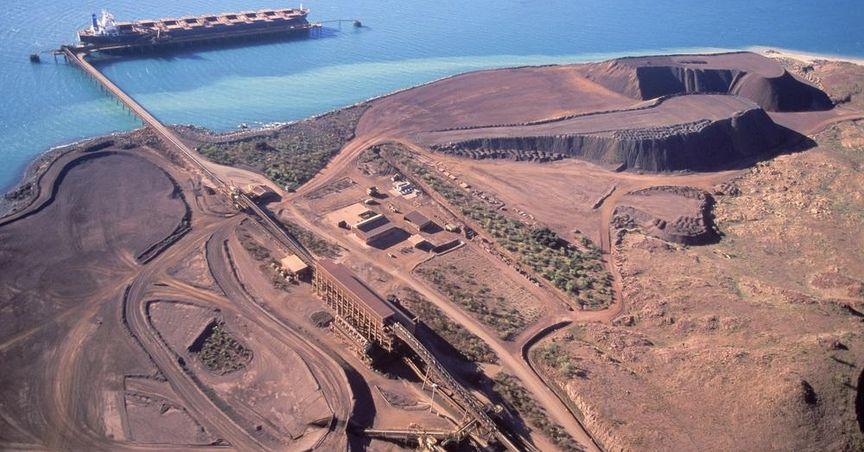
Iron ore operations depend on cost efficiency, production scale, and shipment capabilities. Pilbara operations benefit from low-cost ore extraction, proximity to ports, and high-capacity rail networks. Companies with optimised cost structures can maintain margins even when macro conditions, such as steel demand or currency fluctuations, change.
China steel demand remains a key driver for iron ore flows. Consumption trends, urbanisation, and construction activity in China influence operational planning and shipment schedules for Australian producers. Companies capable of sustaining production and shipping under varying demand conditions demonstrate operational resilience.
Macro conditions, including inflation, energy costs, and interest rates, interact with operational outcomes. Exchange rate shifts affect translated earnings, while fuel and freight costs directly influence operating margins. Pilbara cost advantage mitigates some of these pressures, providing clearer signals of operational efficiency.
Infrastructure efficiency and integrated logistics are central to interpreting sector performance. Rail networks, port operations, and shipment scheduling ensure ore reaches international customers efficiently. Operational disruptions or changes in utilisation can influence cash flow and provide insight into performance discipline.
Key ASX Iron Ore Companies Shaping the Sector
Rio Tinto operates one of the world’s largest iron ore portfolios. Pilbara operations, shipping logistics, and cost structures define operational outcomes. Efficient rail transport, port throughput, and production scheduling illustrate how infrastructure scale and cost advantage influence the sector.
Fortescue Metals provides large-scale Pilbara iron ore operations with integrated shipping. Production discipline, energy efficiency, and operational throughput contribute to cash flow visibility. Mining, processing, and export capacity define how cost advantage translates to operational metrics.
Mineral Resources focuses on integrated extraction, processing, and logistics operations. Operational flexibility, contract execution, and Pilbara-based production efficiency offer measurable performance signals across industrial and bulk shipping segments.
Champion Iron represents a second-tier iron ore operator, contributing insights into risk appetite, operational scalability, and Pilbara efficiency. Smaller producers highlight how cost structures, mining flexibility, and logistics impact sector reading relative to market leaders.
Operational evidence across these companies focuses on production efficiency, shipment throughput, cost management, and contract execution. Differences in asset scale, infrastructure access, and operational discipline provide a nuanced understanding of the sector.
Earnings, Cash Flow, and Cost Advantage
Operational cash flow is central for iron ore companies, reflecting production efficiency, shipment capability, and cost management. Pilbara cost advantage ensures lower extraction and logistics costs, enhancing operational visibility.
Margins are influenced by ore quality, transport efficiency, energy inputs, and labour. Companies with disciplined mining operations and efficient infrastructure use demonstrate clearer operational performance signals.
Capital allocation focuses on mine development, logistics infrastructure, and processing enhancements. Investment prioritisation, combined with cost efficiency, defines operational outcomes and cash flow reliability.
Operational discipline also extends to shipment scheduling and logistics management. Rail utilisation, port capacity, and fleet deployment determine how Pilbara operations convert production into cash flow and operational evidence.
Infrastructure and logistics integration allow iron ore companies to optimise delivery, reduce operational variability, and provide clearer insight into sector dynamics. Companies with predictable shipment cycles and efficient production schedules offer measurable operational outcomes.
Market Drivers and Sector Signals
China steel demand, Pilbara production efficiency, and operational infrastructure underpin sector interpretation. Changes in shipping costs, freight availability, and macroeconomic conditions influence operational and financial metrics.
Cost advantage in the Pilbara remains a key lens for reading sector performance. Companies able to sustain margins, production efficiency, and operational throughput provide measurable signals across ASX 200 and ASX 300.
Comparative reading across iron ore producers highlights operational discipline, infrastructure efficiency, and cash flow visibility. Leaders like Rio Tinto and Fortescue illustrate high-scale operations, while Mineral Resources and Champion Iron provide secondary indicators of sector performance.
Operational evidence in the sector interacts with market indices such as asx all ords and occasionally intersects with ASX dividend stocks due to recurring cash flow from high-efficiency production and shipping operations.
By focusing on Pilbara cost advantage, operational discipline, and infrastructure integration, the iron ore sector provides a practical framework for assessing company-level performance while considering broader macro and market factors.
