
 AUS
AUS
 NZ
NZ
 UK
UK
 CA
CA
 USA
USA
 IND
IND







Summary
- Rolls Royce is restructuring itself to effectively sail through the pandemic-led crisis
- It has rolled out a long-awaited financial plan to raise capital and resolve its cash crunch
- The company will also lay off staff and focus on power and defence segments, as part of its strategic planning
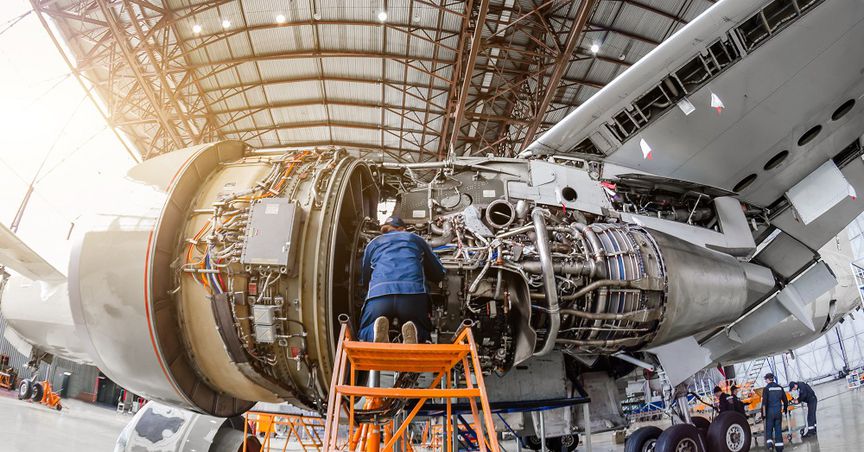
Rolls-Royce Holdings plc plans to push up its finances by £5 billion by raising funds via a mix of rights issue, bonds, and loans. The engine manufacturing giant will also lay off a total of 9800 workers by the end of December 2020, as part of its restructuring plan. The company is experiencing a severe demand slump as a result of the coronavirus pandemic.
Existing shareholders will be tapped for about £2 billion with a rights issue. The rest of the funds would be raised via a loans and bonds program. Unfortunately, the company does not foresee a good cash inflow before the end of 2022. The company is meaning to satisfy its anxious investors though this capital raising plan, which is a good move.
Moreover, the liquidity raised would give the company enough room to carry out its strategic plan of focusing on power and defence segments, and reducing its bankability on making the aircraft engines for the private airlines segment. Wide body planes also use the turbines manufactured by the firm, but the demand for the same had been absolutely flat throughout the year 2020 till now.
Market experts said that the company should have acted sooner on this financing plan. However, the company spokesperson told that this was the right time for it, in alignment with its wider restructuring exercise. Expert analysis also reported that this fund raiser will put the company’s total debt to a figure of £16 billion. The good news is that the company does not have any plans to seek a government bailout.
If this fundraising program gets through, the company’s cash position will strengthen and some experts do predict that it is an important milestone towards its strong long-term prospects.
Financials
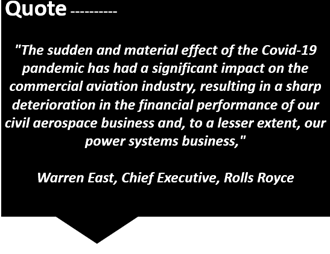
In its latest released results for H1 2020, Rolls Royce reported a record loss of £5.4 billion for the period. The aircraft maker said that it did not expect the new orders to resume to pre-Covid levels anytime before the year 2025. The aviation industry was badly hit across the world due to the coronavirus pandemic, which resulted in a demand slump for products of the company.
Initially, Rolls Royce had planned for manufacturing 450 aircraft engines at the beginning of 2020. However, the company had lowered this target by almost half to 250 in its H1 2020 financial update. Having burnt cash by around £4 billion, the company was looking out for additional sources of funds.
The company informed that it was undertaking a huge financial restructuring exercise ever done in its entire history. It could result in consolidation and closure of few production sites. The restructuring could also lead to a pre-tax savings of £1.3 billion by end-2020, it said. The delivery of its large-sized engines would not increase before the end of 2022, it forecasted.
Rolls Royce’s defence business segment had been resilient during H1 2020, reported the company.
Stock performance: The company stock (LON: RR.) was trading at a value of GBX 113.85 on 1 October 2020 at 2.40 PM, down by 12.42 per cent from its previous day’s close. The stock has been steadily going down since the pre-pandemic month of February 2020. It traded at its highest value for the year 2020 at GBX 699 points on 12 February. Since then it has been on a downhill and was trading at a minus 80 per cent value on 1 October at the recorded time.
The stock’s 52 week low/high range had a wide variation of GBX 130.00 / 779.60. Its market capitalisation was recorded as £2,510.29 million with a negative YTD (year to date) return of 80.92 per cent.
Also Read: Rolls-Royce Stock In Focus With Progress On Artificial Intelligence
Finally, the company’s much-awaited plan to boost finance by billions of pounds is out and it should raise investor sentiments in a crisis-hit market, at least briefly. The pandemic had significantly impacted the earnings of Rolls Royce, and made it tighter on liquidity as well. It is now working on a major restructuring plan, which could be good for the long-term prospects of the engine maker.
