
 AUS
AUS
 NZ
NZ
 UK
UK
 CA
CA
 USA
USA
 IND
IND







Highlights
- The global community is currently facing two major crises- COVID-19 and the raging war between Russia and Ukraine.
- The Russian ruble has shown great strength against the mighty US dollar.
- The International Monetary Fund has lowered the global growth forecast for 2022 and 2023.
The year 2020 was scarred by the onset of the deadly COVID-19 pandemic. The global health crisis made the future of the world seem bleak.
Lives were turned upside down and the global economy was pushed several years back.
The year 2021 continued to reel under the aftereffects of the pandemic, which haven’t completely died down even today. The year 2022 started with the ominous Omicron threat, a COVID-19 variant, and was further worsened by the war between Russia and Ukraine.
The ripples of economic consequences due to the disturbance in Eastern Europe spread worldwide very quickly. Inflation has been skyrocketing across several countries, including developed as well as developing economies. Hunger is another consequence the world is facing. Also, an acute shortage of food grains has erupted due to Ukraine’s inability to export its wheat and other important supplies.
Related read: What’s causing inflation globally?
Is the Russia-Ukraine war changing trade rules?
The double crisis due to the pandemic and the war is further being complicated by the growing risk of the fragmentation of the world economy into geopolitical blocs. The sanctions and embargoes on Russia may lead to different trade and payment standards.
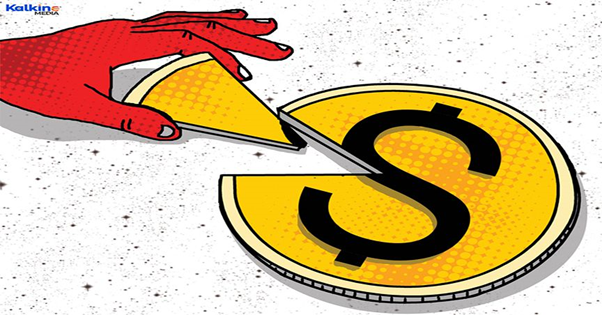
The countries interested in trade with Russia could come out with an alternative to the dollar and the ‘Swift’ payment system. The Russian ruble seems to be winning the war against the dollar right now. Prior to the war, the ruble’s exchange rate was around ~RUB78 for USD1. However, as the war started and European nations and the US bombarded Russia with a series of sanctions, the exchange rate hit an all-time high of RUB135.809/USD.
Copyright © 2022 Kalkine Media ®
The energy-starved European countries could not resist the temptation of Russian oil & gas and other energy exports. In the absence of an immediate alternative, they are still importing Russian energy commodities and making payments in ruble. According to reports, 10 European buyers opened ruble accounts in April 2022.
As a result, the ruble bounced back and has an exchange rate of RUB 61.5/USD, as of 7 June 2022. The ruble seems to be gaining strength against the mighty dollar.
Does the ruble’s rise indicate the world is getting ready to trade using alternative currency or without the ‘Swift’ system? Only the future holds the answers to this question. But if the answer is yes, this would impact the global economy to a great extent.
Such tectonic shift would come with painful adjustment costs. This fragmentation of global governance will be the most serious challenge to the framework that has existed for more than 75 years.
It is already impairing the world’s capacity to work together on the two crises it is facing right now. Prolonged exposure to these two could leave the world unable to meet another critical challenge that is posing a threat to our very existence— climate change.
Slowdown expected in global growth
Today, we are standing at a consequential moment in international history. Notably, the global recovery was losing momentum way before the war in Ukraine started, having been triggered due to the onset of the Omicron variant.
In January 2022, the International Monetary Fund (IMF) cut the global growth forecast to 4.4% for 2022. Since then, the outlook has deteriorated substantially. It is largely because of the war and its consequences.
Inflation, financial tightening, and frequent lockdowns in China are causing new headwinds in the global supply chains.
The IMF is projecting a further downgrade in global growth for 2022 and 2023. For most countries, growth is expected to be in a positive territory, but the war will impact the growth forecast for 143 countries, which account for 86% of the global GDP.
