
 AUS
AUS
 NZ
NZ
 UK
UK
 CA
CA
 USA
USA
 IND
IND







China, over the last couple of decades, has quickly climbed up the ladder in the power league of the global nations. The world’s second largest economy now competes directly with the US – which claims itself to be world’s “superpower” – in terms of global influence.
While China now extends its influence on the South American neighbours of the US, the country has become more and more important in its immediate neighbourhood, which seems to be in turmoil right now.
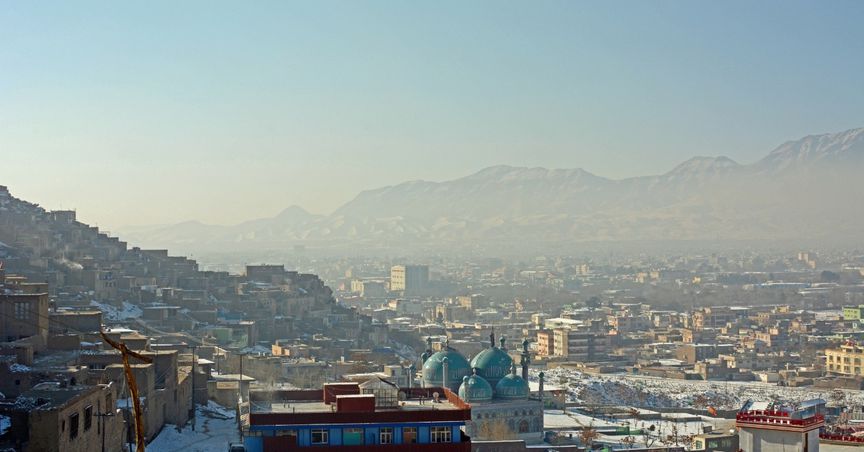
Next door, across the border from China’s Xinjiang province, Afghanistan – long known as “graveyard of the empires” – is seeing a tectonic shift.
The US, which had waged a war to overthrow Afghanistan’s fundamentalist Islamist regime of Taliban 20 years back, is withdrawing from the country after spending US$2 trillion on the war. Net result: the US was able to replace Taliban with Taliban. As soon as the US started withdrawing its troops, the Taliban launched a massive offensive against the Western-backed Afghan government in May. The fighters made sweeping gains across the rural Afghanistan at a lightening speed. By 15 August, the 300,000-strong Afghan army – on which the US had spent over US$80 billion – ended up waving the white flag without putting up a fight. The capital, Kabul, fell to Taliban insurgents, and President Ashraf Ghani fled the country.
With Taliban recapturing power in Afghanistan, fault lines in the politically volatile Central and South Asian countries are back in news.
Naturally, with China sharing the border with Afghanistan, it is likely to fill in the vacuum left by the US in the region. And China is wasting no time in doing so.
In late July, before the Taliban’s latest blitz across Afghanistan, China’s Foreign Minister Wang Yi met a delegation led by Mullah Abdul Ghani Baradar, the head of the Afghan Taliban political committee. Remarkably, Baradar has now ascended to the role of Deputy Vice Emir of Islamic Emirate of Afghanistan. The meeting, which took place in Tianjin, seemed to end on a happy note. Afterall, Taliban has learnt some diplomatic skills of late. Taliban assured Beijing that it won’t allow Muslim-majority Uighurs to use the Afghan territory against China.
China on its part has rubbished the claims of sending troops to Afghanistan.
However, China may have its eyes on the economic side of the game. First in the line could be the Belt and Road Initiative – a mammoth infrastructure investment plan to build rail, road, sea and other routes stretching from China to Central Asia, Africa and Europe – of China.
The Chinese desire for Afghan participation in BRI was out in open after the state-run tabloid stated out that the country can “contribute to post-war reconstruction and development, pushing forward projects under the China-proposed Belt and Road Initiative.”
That is not the end of it. About 35% of rare earth global reserves are in China – the highest in the world. The country is also mining them fast: it produced 120,000 metric tonnes – 70% of total rare earths in 2018 – eight times more than 15,000 metric tonnes produced by the US.
Afghanistan, on its part, is blessed with rare earth elements such as lanthanum, cerium, neodymium, and veins of aluminium, gold, silver, zinc, mercury, and lithium. Reports suggest that China might have its eyes set on that as well.
