
 AUS
AUS
 NZ
NZ
 UK
UK
 CA
CA
 USA
USA
 IND
IND








Summary
- Inspite of COVID-19 pandemic, 2020 was a good year for NZ farmers, who did well in production, as well as export to international markets.
- 2020 proved to be a good year for dairy production as well, despite a drop in the number of cows.
- However, farmers were facing shortage of farm labour, so they moved towards technology for doing the same tasks.
Despite initial predictions that global trade was heading for a slowdown, New Zealand farmers had a good year in 2020. For an exporting country like New Zealand, the factor that caused fears in the farmers was that the demand would slow down, and their bottom line would be affected. However, the fears were unfounded as the exports from New Zealand did not suffer due to the COVID-19-induced restrictions.
Drought of 2020 dampened the spirit of farmers
Domestically, the year 2020 started off on a poor note for the farmers as there was a drought in the first part of the year in north and east of the North Island. The drought did have some impact on the production, but it was offset by other bumper crops impacting the production.
Despite all restrictions, New Zealand produce continued to find favour in international markets. Eventually, the year 2020 proved to be a strong one for farmers.
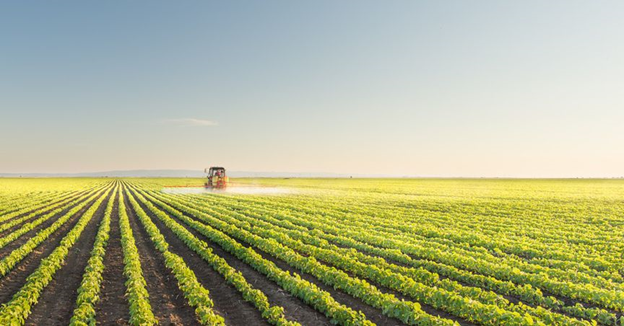
Image Source: Shutterstock
NZ produce continued to find favour in international markets
It was a strong year for commodities. Food and fibre producers had a good year with a 2% overall increase in production. Maize production, which was 11.38 metric tons for 2019, increased in 2020.
Exports of kiwis and apples were at the same level as the previous year. Kiwifruit, red and golden production was expected to be around 155 million trays compared to 147 million trays in 2019. Apple exports also held their value across the 6 months to September 2020 over the same period in 2019. Global demand for both the fruits remained strong even during COVID-19.
However, one challenge that the farmers faced was to get farm labour. With a small population of just 5 million, several New Zealand industries, including horticulture and farming, rely on migrant labour.
2020 – A very good year for dairy production
Even though, as compared to 2019, sheep and beef exports showed a downward trend, it could have been much worst due to the COVID-19-imposed restrictions in Europe and other countries. However, demand from China increased a great deal.
Hence, for dairy production, it was a very good year despite a drop in the number of cows.
Data from DairyNZ and Livestock Improvement Corp (LIC) indicated that the dairy companies of New Zealand treated 21.1 billion liters of milk comprising of 1.90 billion kg of milksolids (kgMS). This showed an upward trend by 0.6 per cent over the last season. The higher production also meant higher prices for farmers.
By the above-mentioned, New Zealand becomes the eighth largest milk producer, clocking almost 3% of the world production. Farmers had a major gain as increase in demand also led to increase in prices of milk. Milk prices increased from NZ$6.80 kgMS to NZ$7.00 per kgMS.
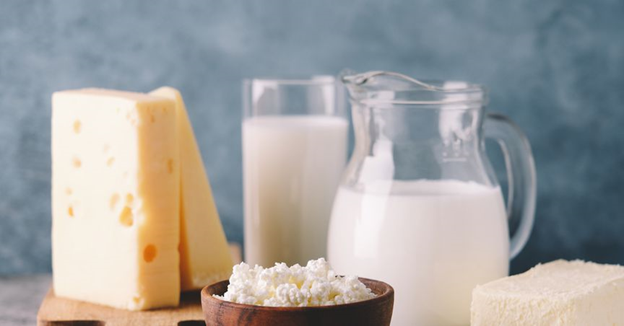
Image Source: Shutterstock
Tim Mackle, DairyNZ chief executive, confirmed that the year 2020 saw record milksolids production through each cow, even though the number of cows had reduced. This was a result of the fact that farmers emphasised on more productivity per cow than the number of cows.
Also, environmental efficiency was a great focal point. Dairy farmers are also looking at using several tools to ensure their cows are more productive.
The dairy sector hires 50k individuals and makes approximately NZ$20 billion in exports every year.
