
 AUS
AUS
 NZ
NZ
 UK
UK
 CA
CA
 USA
USA
 IND
IND







Summary
- NZ is the world's largest exporter of dairy products and sheep meat. The country is well known for its food, forestry, and agriculture sectors.
- Prices of many agricultural commodities shrugged off their early falls of 2020, with few commodities touching 2019 levels, but the gains are unevenly distributed.
- Export revenue for primary industry business is likely to fall 1% to $47.5 billion, as per NZ's Ministry of Primary Industry report, amid considerable uncertainty faced by businesses, global trade, and economy.
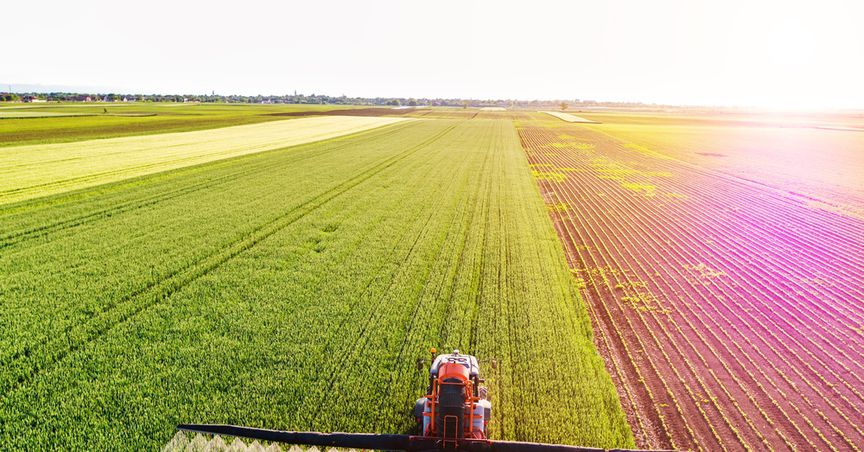
New Zealand is popular for its agriculture, food, and forestry sectors, which generate more than 60% of its merchandise export earnings and employ 11% of the total workforce.
NZ is among the largest exporters of sheep meat and dairy goods in the world. All practices that add to the nation’s livestock industry are beef, cattle breeding, sheep farming, and dairying.

Source: Shutterstock
Jacinda Ardern, NZ PM, had placed the country in a strict lockdown on 26 March, when people were not allowed to get out of their homes unless they had to buy medicines, groceries, or go for exercise for an hour.
Multiple lockdowns and strict border controls pushed NZ economy into one of the deepest recessions with the economy contracting 12.2% in the June quarter.
Let's have a look at how the various sectors within NZ's Primary industries fared in 2020 and their response to COVID-19.
Primary industries performance amid COVID-19
Primary industry production and exports fared better than expected amid COVID-19 pandemic. However, the situation varied among sectors as some of them had to face more impact than others due to COVID-19-induced lockdowns in the country.
As per the Ministry of Primary Industries report named Situation and Outlook on Primary industries, primary industry exports increased 3.6% to $48 billion in the end of June 2020 due to the strong start to 2020 before coronavirus.

Source: Shutterstock
This came despite the forestry, poultry, and meat sectors being the most significantly affected by coronavirus-induced lockdowns, both in NZ and overseas.
The prices of agricultural commodities have shrugged off significant lows in early 2020, but the advances witnessed have not been evenly distributed with supply factors and exports playing a major role in the prices.
The progress of NZ agricultural commodities till now
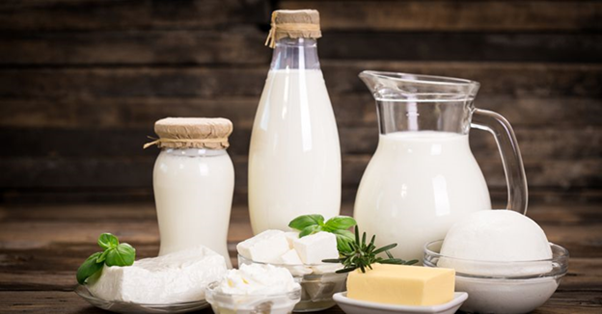
The dairy sector adds more than $15 billion to the New Zealand economy in export dollars.
As at 30 June 2020, dairy cattle stood at 6.1 million and sheep at 26.2 million, down by 2% each from 2019, as per Stats NZ. However, the number of beef cattle rose 2% compared to 2019 to 4 million by the end of June 2020.
ALSO READ: NZ dairy farmers can rejoice as dairy auction prices jump by 4.3 per cent
The dairy and meat product manufacturing withstood the burden of COVID-19 amid their high international dairy prices and exports in June, as per the September update of Stats NZ.
Source: Shutterstock
However, prices paid to dairy product manufacturers fell sharply in the September 2020 quarter, reversing gains in the March and June quarters. This came on the backdrop of falling global demand, higher freight costs, and business disturbances due to COVID-19.
As per the ASB November report, meat prices have steadied since their crash in early 2020 but stayed down by double digits compared to a year ago. Lamb and beef prices were also tracking behind with annual prices down by about 19% and 14% by October-end, respectively.
Fruit exports have stayed buoyant with apple export values have stood firm for 6 months to September 2020 compared to the same period in 2019. Kiwifruit export volumes were up by whopping 19.5% on a season to date basis after a bumper crop, as per the report.

Source: Shutterstock
In the September quarter, producers earned less for goods in the forestry and logging, poultry, and textile industries. The value of dairy exports also declined in September 2020 compared to the same month in 2019.
The dairy industry demonstrated more strength than anticipated and gained from the robust demand from China.
ASB pushed up its forecast of farmgate milk price to $6.75 per kg of milk solids (kgMS) in its November report, while Fonterra lifted the lower end of 2020-2021 farmgate milk price forecast in December between the range of $6.7 and $7.3 per kgMS from earlier $6.3 and $7.3 per kgMS.
DO READ: Fonterra Increases Farmgate Milk Prices as Demand from China Rises
The Road ahead
The export revenue for primary industries is projected to decline by 1% to $47.5 billion, as per the NZ Ministry of Primary Industries report. This is due to the considerable uncertainty faced by businesses in transporting products, labour supply, and logistics.
As per the NZ Ministry of Primary Industries report, dairy export revenue is projected to decline by 4.6% to $19.2 billion for the year ending June 2021. Weaker global dairy prices could lead to reduced farmgate milk prices for the current season.
However, robust demand from China, NZ's largest trading partner, could help in the medium-term profitability of the sector.
Meat and wool exports are forecasted to fall by 8.2% to $9.8 billion by the end of June 2021, led by receding export prices since the early 2020s amid uncertainty and shutting down food services, triggered by COVID-19 as well as competition from poultry.
However, forestry and horticulture are likely to rise by 8.1% and 9.1% to $6 billion and $7.1 billion for the year ending June 2021. Consumer demand for fresh fruit and wine has remained strong in spite of coronavirus-induced disruptions and is expected to continue.
Many countries are experiencing record levels of infection in November and December and are reinforcing public health initiatives, even after the vaccine news. Labour and skill challenges, deteriorating global trade outlook, labour and skill challenges, and logistical problems, can pose downside risks to the commodity prices.
(NOTE: Currency is reported in NZ Dollar unless stated otherwise)
