
 AUS
AUS
 NZ
NZ
 UK
UK
 CA
CA
 USA
USA
 IND
IND







Summary
- Artificial Intelligence has become the buzzword in all facets of life.
- Its use in the fitness space is increasing day by day. It is not just helping track physical fitness but uses for mental well-being are also getting explored.
- In the recent past, AI has aided in mental health diagnosis; its predictive capabilities are still under scrutiny.
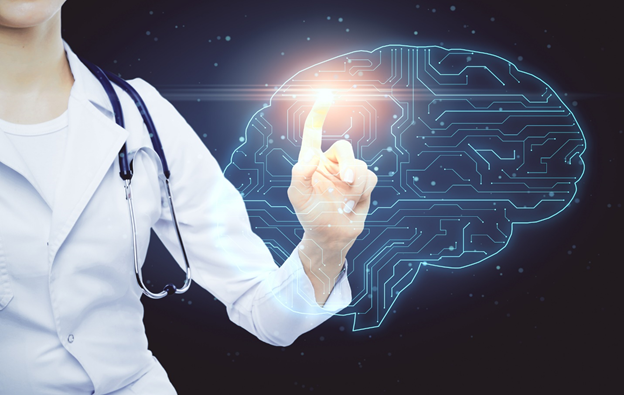
Image source: © Peshkov | Megapixl.com
Artificial Intelligence (AI) is the upcoming solution for all of the world's problems. AI is being used by everyone, right from kids speaking to Amazon's Alexa (Voice AI) to businesses using it for process automation. However, it is not a cure-all and is still just a speeding up process that reduces redundancies. It has huge unexplored potential in all sectors. Especially, health-related applications of AI have shown promising results. Exploring AI capabilities in health-care will lift up service capacities even more.
How is AI used in the fitness space?
There has been a boom in the demand and supply of AI-enabled fitness devices. Wearables with sensors to monitor heart rate, blood pressure, etc., popularly known as fit-bits, have been quite popular. Recently, companies have come up with wearable temperature monitors as well. With improved cognitive technologies, the wellness market keeps coming up with new artificial intelligence (AI) interfaces and applications. Intangible, tangible and embedded AI technologies are being used in this space. Improved data sets are making AI applicability better each day. It is not just physical fitness; rather, healthcare professionals are now exploring AI capacities, to assess mental well-being.
Do watch: What is artificial intelligence?
How is AI being used to study mental health?
Given the speed of AI, clinical researchers have started to explore the utility of AI, to identify, diagnose, prevent and manage, mental health issues. Using AI Algorithms, researchers can extract behaviour indicative words or actions of a potentially ill patient under observation. Psychiatrists often work with patient post-diagnosis, but researchers are now finding ways to help find symptoms much earlier. AI technologies are being used to allow early detection and prevention of worsened mental illnesses.
Also read: How can technology help tackle the burgeoning mental health crisis?
How is AI gaining ground in the mental health space?
In a recent study, published in BMJ Open, researchers from the University of Tsukuba, Japan, have revealed the uses of AI systems in predicting psychological distress and depression amongst workers. The study was conducted to detect psychological distress in a large population. Factors from sociodemographic, lifestyle, and sleep patterns, were studied. Office workers were told to fill in an online survey, and the data obtained were used to develop an AI model that could predict psychological distress. The results were quite accurate for severely distressed participants.
Source:
In January 2021, an ASX listed Mental health technology company Medibio Limited (ASX:MEB) started clinical trials for a unique biometric functionality to match heart rate variability during sleep. It was developing the app to address the increased demand for mobile mental health services using its consumer App. Medibio’s app could be used to measure, monitor, and manage stress levels and improve them over time.
Before this, in December 2020, a group of researchers used Facebook data to predict mental illnesses. Researchers used the content generated by participants on their social media handles to mine clues for mood and other mental health disorders. The study focused on adding social media data to the existing patient behaviour data to help clinicians bolster their patient hours per week.
Can AI be completely relied on for Diagnosis?
Although data analytics and AI algorithms can speed up diagnosis, they cannot provide a contextual understanding of the patient's life. Using data collected at a large scale for individual diagnosis can be tricky. Though data could improve the accuracy, diagnosing mental illness purely based on it seems risky. Diagnosing mental illness is an art and not just an exact science. Doctors can use AI technologies to flag people at risk, but additional care and contact from the clinician is still needed. AI can be as a critical tool for early diagnosis and treatment, which will benefit both individuals and society.
Suggested Read: How is Artificial Intelligence helping in dealing with the COVID-19 crisis?
How is AI lifting mental well- being?
Summary
- Artificial Intelligence has become the buzzword in all facets of life.
- Its use in the fitness space is increasing day by day. It is not just helping track physical fitness but uses for mental well-being are also getting explored.
- In the recent past, AI has aided in mental health diagnosis; its predictive capabilities are still under scrutiny.
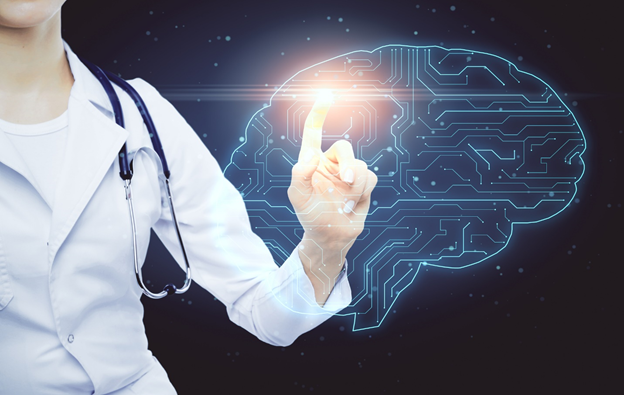
Image source: © Peshkov | Megapixl.com
Artificial Intelligence (AI) is the upcoming solution for all of the world's problems. AI is being used by everyone, right from kids speaking to Amazon's Alexa (Voice AI) to businesses using it for process automation. However, it is not a cure-all and is still just a speeding up process that reduces redundancies. It has huge unexplored potential in all sectors. Especially, health-related applications of AI have shown promising results. Exploring AI capabilities in health-care will lift up service capacities even more.
How is AI used in the fitness space?
There has been a boom in the demand and supply of AI-enabled fitness devices. Wearables with sensors to monitor heart rate, blood pressure, etc., popularly known as fit-bits, have been quite popular. Recently, companies have come up with wearable temperature monitors as well. With improved cognitive technologies, the wellness market keeps coming up with new artificial intelligence (AI) interfaces and applications. Intangible, tangible and embedded AI technologies are being used in this space. Improved data sets are making AI applicability better each day. It is not just physical fitness; rather, healthcare professionals are now exploring AI capacities, to assess mental well-being.
Do watch: What is artificial intelligence?
How is AI being used to study mental health?
Given the speed of AI, clinical researchers have started to explore the utility of AI, to identify, diagnose, prevent and manage, mental health issues. Using AI Algorithms, researchers can extract behaviour indicative words or actions of a potentially ill patient under observation. Psychiatrists often work with patient post-diagnosis, but researchers are now finding ways to help find symptoms much earlier. AI technologies are being used to allow early detection and prevention of worsened mental illnesses.
Also read: How can technology help tackle the burgeoning mental health crisis?
How is AI gaining ground in the mental health space?
In a recent study, published in BMJ Open, researchers from the University of Tsukuba, Japan, have revealed the uses of AI systems in predicting psychological distress and depression amongst workers. The study was conducted to detect psychological distress in a large population. Factors from sociodemographic, lifestyle, and sleep patterns, were studied. Office workers were told to fill in an online survey, and the data obtained were used to develop an AI model that could predict psychological distress. The results were quite accurate for severely distressed participants.
Source:
In January 2021, an ASX listed Mental health technology company Medibio Limited (ASX:MEB) started clinical trials for a unique biometric functionality to match heart rate variability during sleep. It was developing the app to address the increased demand for mobile mental health services using its consumer App. Medibio’s app could be used to measure, monitor, and manage stress levels and improve them over time.
Before this, in December 2020, a group of researchers used Facebook data to predict mental illnesses. Researchers used the content generated by participants on their social media handles to mine clues for mood and other mental health disorders. The study focused on adding social media data to the existing patient behaviour data to help clinicians bolster their patient hours per week.
Can AI be completely relied on for Diagnosis?
Although data analytics and AI algorithms can speed up diagnosis, they cannot provide a contextual understanding of the patient's life. Using data collected at a large scale for individual diagnosis can be tricky. Though data could improve the accuracy, diagnosing mental illness purely based on it seems risky. Diagnosing mental illness is an art and not just an exact science. Doctors can use AI technologies to flag people at risk, but additional care and contact from the clinician is still needed. AI can be as a critical tool for early diagnosis and treatment, which will benefit both individuals and society.
Suggested Read: How is Artificial Intelligence helping in dealing with the COVID-19 crisis?
