
 AUS
AUS
 NZ
NZ
 UK
UK
 CA
CA
 USA
USA
 IND
IND






Summary
- India reports 412,373 fresh infections and 3,979 fatalities, on the deadliest day of the pandemic.
- The urban unemployment in the country has gone up to 9.9%, just shy of double-digit mark.
- The pandemic has pushed 230 million Indians below poverty line, says study.
India has been reeling under the horror of the deadly second wave of the pandemic since last few weeks now. However, this Wednesday saw the country grappling with a new low, weighed down by a gloomy set of statistics on two additional fronts. On 5 May 2021, India was hit by a triple whammy – it was the deadliest day since the onset of COVID-19; a report said 230 million people were now below the poverty line; and urban unemployment sat pretty high on the brink of a double-digit-mark. All this happened in one day.
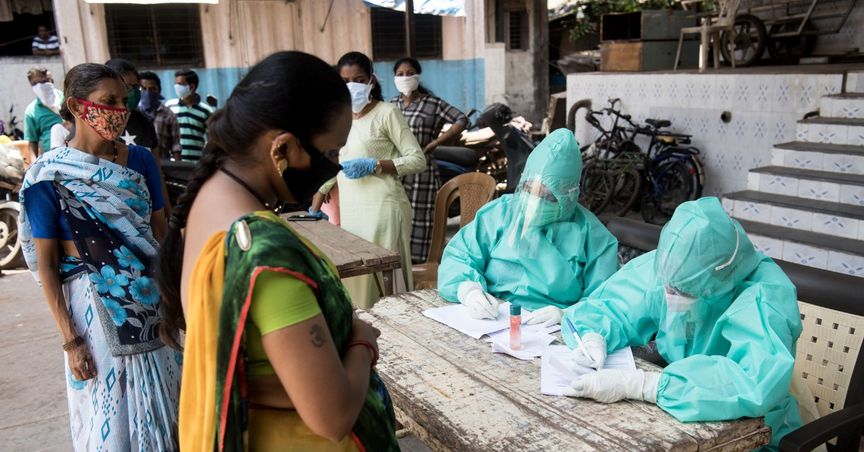
After a hiatus of almost three days, the COVID-19 pandemic in India has resurged with vengeance – the country reported record 412,373 fresh infections and record 3,979 fatalities. India is now reporting 50% of the fresh infections reported in the world.
This time, the surge has not come from capital New Delhi or industrial hub of Maharashtra. The spike is driven by southern part of the country -- Karnataka (which is driving India’s digital transition), Kerala, Tamil Nadu and Andhra Pradesh.
While Karnataka recorded a high 50,112 fresh cases and 348 fatalities, Kerala reported closed to 42,000 cases and the other two states reported cases in the range of 20,000 – 25,000.
The situation is especially terrible in the capital of Karnataka, Bengaluru – which is also called as India’s IT capital or Silicon Valley of east. The city, as of today, recorded 313,314 active COVID-19 cases – almost 4% of its 8.4 million people. The positivity rate – the percentage of positive cases among total people tested – is almost 33% in Karnataka, far higher than Delhi and Maharashtra. In simpler terms, of every three people that are being testing in the state, one is turning out to be positive.
Such is the magnitude of devastation that independent volunteers in the city are feeling helpless, although the situation is underreported in the media when compared with other cities like Mumbai and Delhi.
In what shows the extent of corruption rampant even in the face of a horrific crisis, two officials from Bengaluru’s municipal committee Bruhat Bengaluru Mahanagara Palike (BBMP) were arrested on the charge of artificially escalating prices of intensive care unit (ICU) beds at one facility in southern end of the city. The things became uglier when Tejasvi Surya, a firebrand youth leader from ruling Bharatiya Janata Party, unsuccessfully tried to give a communal angle to the scam.
Also Read: COVID-19: World comes to rescue as oxygen shortage chokes India
Many of the 29 odd states in the country have imposed provincial lockdowns, in a bid to somehow plug the raging second wave of the pandemic. The lockdowns have led to a massive surge in the urban unemployment – which now stands near the double-digit-mark at 9.9%. This has happened in the wake of the labour force participation coming down drastically as more migrant workers are migrating towards their villages amid lockdowns.
To make matters worse, one of the premier educational institutes in the country, Bengaluru-based Azim Premji University, in its annual study on employment, stated that 230 million Indians have been pushed below the official poverty line due to COVID-19 pandemic. The official minimum wage for the poverty line in the country stands at INR375 per day (US$5.08 a day) as recommended by Anoop Satpathy committee. The worst-hit, according to the study, are the bottom rung of people.
Meanwhile the country’s cricket governing body – Board for Control of Cricket in India (BCCI) – has suspended this year’s cash-rich Twenty20 extravaganza – Indian Premier League (IPL) – after COVID-19 breached the bio-bubble of players. This has left many Australian cricketers stranded in the COVID-19-hit country, in the wake of Australian PM Scott Morrison banning travel with India. Mr Morrison had also criminalised travel from India, only to backtrack on it days later after he faced allegations of “being racist’.
