
 AUS
AUS
 NZ
NZ
 UK
UK
 CA
CA
 USA
USA
 IND
IND







Summary
- NSW health authorities are working on war footing to curb rising cases in the region
- Sydney residents are facing “no entry” from other states and other restrictions.
According to the Australian Government’s Department of Health, a total of 28,198 COVID-19 cases have been registered in the country so far. The count includes 908 deaths, and about 135 estimated active cases as on 22 December 2020 11:55 AM AEDT.
After a sudden surge of cases in the country's most famous city Sydney, the Australian government is on the alert and taking every possible precaution. However, on Monday, New South Wales reported the lowest one-day rise in the number of cases in three days. The news has brought some optimism in the face of the emerging crisis in the country. Most of the cases were found in Sydney’s northern beach suburb areas.
According to the media reports, the authorities have managed to contain the outbreak in the latest cluster. The Department of Health has stated that the average cases found per day were about 20, for the past one week. COVID-19 infections can be traced in almost all ages of people out of which the median age for all cases is 37 years. The median age for death from virus is 86 years.
Other states limit Sydneysiders’ visit
The Australian Capital Territory (ACT) have sent a strict message to the residents of Sydney to not visit. The residents will have to undergo 14 days of quarantine if they visit the ACT region and South Australia state. The state of Tasmania has also imposed similar rules. Other states such as Victoria and Queensland have banned the people of Sydney from visiting. The Northern Territory too, has levied similar restrictions. Also, the state of Western Australia has closed the borders for the people coming from Sydney.
NSW’s excruciating efforts
The health department said that after hitting the peak in March end, the number of cases reported each day had lowered substantially. However, from June the cases started to resurge and the number intensified till August, after which it again started to fall. The month of September and following months saw a lower number of new cases in the country. With new NSW clusters and rising cases in the region, the authorities initiated increased testing and implemented restrictions. Out of all the cases reported, 79 per cent of the cases was transmitted locally in the country.
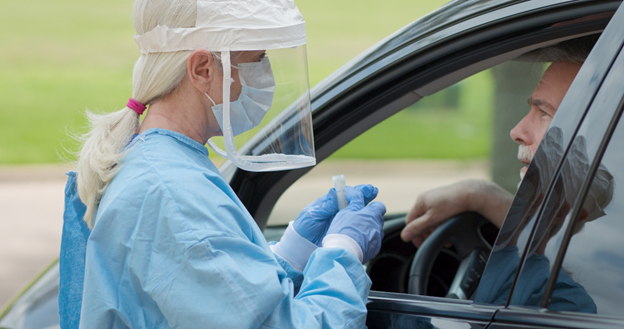
Image Source: Shutterstock
The authorities claim that identifying the cases and contract tracing is being conducted in a very uncompromising way. These public health actions have resulted in lowering the coronavirus cases in the city. Till now, Australia has performed more than 10,649,443 tests nationwide. Out of millions of tests, 0.3 per cent tests have come positive.
When the new cluster was found in New South Wales, 26 cases were being reported each day. However, in the last 24 hours, this has now reduced to 15 people being tested positive for coronavirus. The total cases in Sydney's northern beachside areas are now 87.
Last week, NSW Premier Gladys Berejiklian had warned the residents, requesting them to follow the guidelines and take strict precautions. Berejiklian had said that the next few days will be crucial for the state to bring down the numbers to be able to celebrate a normal Christmas. The authorities then implemented a five-day lockdown in the northeastern suburbs where the new cluster was found.
As the number of cases has fallen in Sydney, the authorities have managed to contain the growth, however coronavirus infections are volatile and any lapse in the current environment can again lead to the rise. Having taken an overview of the situation the government will provide an update by Wednesday.
Because of the unexpected resurgence of COVID-19 in NSW, the state’s Christmas celebrations are hanging by thread. More than 80 locations have been identified by the authorities which were visited by the coronavirus positive people. Those who have visited these places such as cafes, gyms, supermarkets, have been asked to take the COVID-19 test straightaway and self-isolate themselves.
