
 AUS
AUS
 NZ
NZ
 UK
UK
 CA
CA
 USA
USA
 IND
IND







Summary
- A study conducted by CDC found that PFAS compounds were present in varying degrees in almost every individual who participated in the survey.
- Given the serious harm PFAS can cause to human health, the Michigan Air Quality Division plans to develop mechanisms to monitor such pollutions.
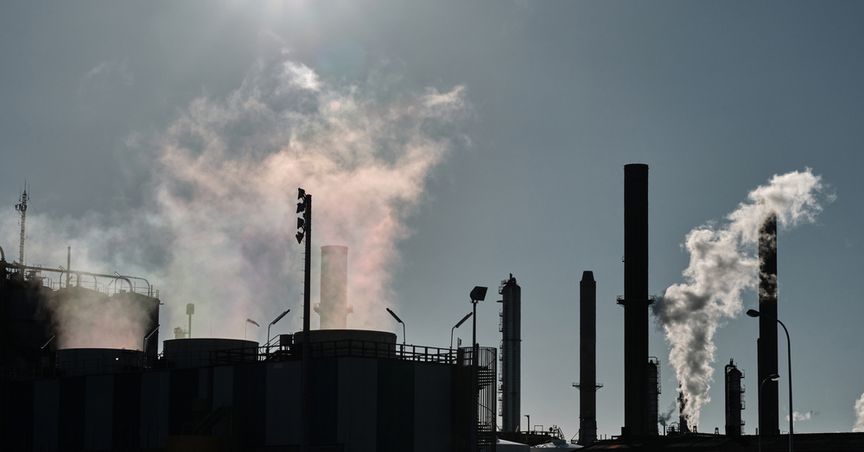
The US Environmental Protection Agency (EPA) has recognized air pollution from industrial activities is a significant threat to public health and the environment. Some industries emit harmful PFAS (per- and polyfluoroalkyl) that contains synthetic chemicals.
A study conducted by the Centers for Disease Control and Prevention (CDC) found that PFAS compounds were present in varying degrees in almost every individual who participated in the survey. Another joint research by the International Agency for Research on Cancer (IARC) and EPA found that Perfluorooctanoic acid (PFOA) and Perfluorooctane Sulfonate (PFOS) in PFAS can harm the reproductive and immune systems.
Given the serious risk posed by PFAS to human health, the Michigan Air Quality Division plans to develop mechanisms to monitor such pollutions. For example, they are applying standards to identify whether only one or multiple substances in a combined form are present in the air.
Taking a cue from the pollution control agency, the New York State Department of Environmental Conservation has proposed an Annual Guideline Concentration (AGC), which will show allowable concentration in the air. Additionally, the document will provide guidelines to assess contaminants.
Source: Pixabay.
Also Read: Will EV market recover?
Efforts to curb industrial air pollution
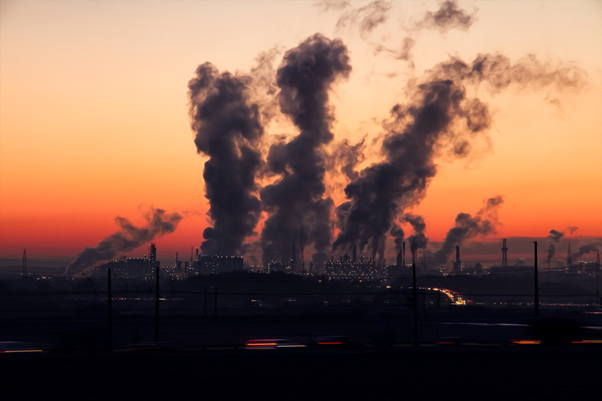
PFAS emissions from industrial houses are a significant source of chemicals in the environment. For instance, industries engaged in painting and coating business may release PFAS compounds. Hence, such industrial activities are subject to government permission under the federal Clean Air Act (CAA).
Although there are ways to remove PFAS from the environment, the government, the industry, and other stakeholders must find a way to stop activities that cause pollution for a long-lasting solution.
Meanwhile, it is hoped businesses would develop better systems that will help address the health risk. However, it will not be easy, given the high cost and technology needed for such a transition.
The impacted companies, hence, must closely track air emission and develop corporate compliance programs, complete with a range of mandatory restrictions and new reporting processes.
The EPA coordinates with other state and federal agencies to develop testing standards and monitor PFAS emissions in US industries. Simultaneously, they are focusing on the health and environment.
