
 AUS
AUS
 NZ
NZ
 UK
UK
 CA
CA
 USA
USA
 IND
IND






Highlights
- People around the world have woken up to the news of Russian President Vladimir Putin ordering a “full-scale invasion” of Ukraine — a move that could mark the inception of a war in Europe.
- The so-called "special military operation" targeted south-eastern Ukraine came after Canada, along with other NATO allies, placed economic sanctions against Russia and pledged more troops to strengthen NATO forces to support Ukraine.
- Canadian Prime Minister Justin Trudeau, while extending his support for Ukraine, has condemned Russia for the "egregious attack", adding that the "unprovoked" actions are a clear violation of Ukraine's sovereignty and integrity.
People around the world have woken up to the news of Russian President Vladimir Putin ordering a “full-scale invasion” of Ukraine — a move that could mark the inception of a war in Europe.
The so-called "special military operation" targeted south-eastern Ukraine came after Canada, along with other NATO allies, placed economic sanctions against Russia and pledged more troops to strengthen NATO forces to support Ukraine.
Trudeau's response to explosion booms over Ukraine
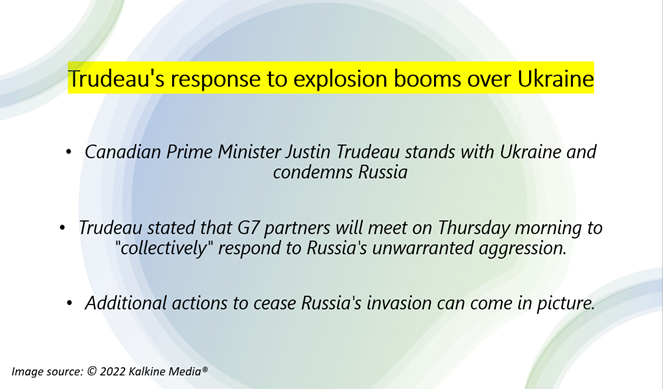
Canadian Prime Minister Justin Trudeau, while extending his support for Ukraine, has condemned Russia for the "egregious attack", adding that the "unprovoked" actions are a clear violation of Ukraine's sovereignty and integrity.
PM Trudeau said that G7 partners are set to meet on Thursday to "collectively" respond to Russia's unwarranted aggression, including looking into additional "significant sanctions".
Further, he term Russia’s "hostile" military actions are “reckless and dangerous”, noting that Russia will face "severe consequences" with Canada taking additional actions to cease Russia's invasion.
Also read: Russia declares war on Ukraine: How Biden & other world leaders are reacting
Can Russia’s invasion of Ukraine rock the economy?
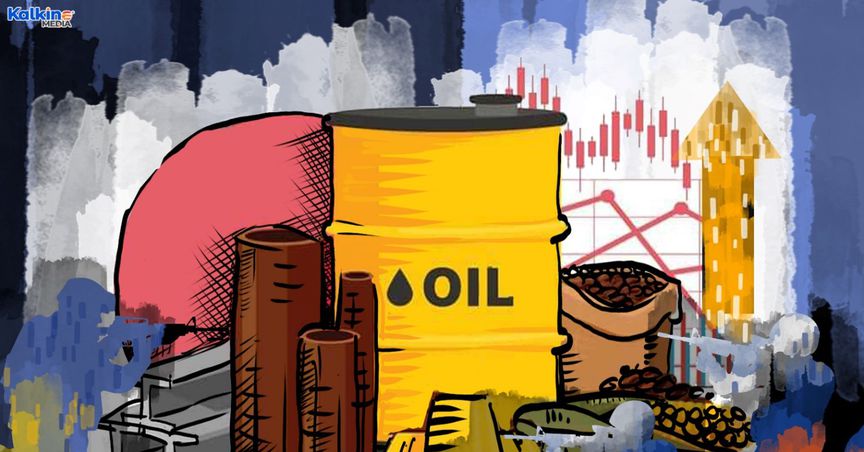
As the Russia-Ukraine crisis deepened on Thursday morning, Brent crude oil prices crossed US$ 100 per barrel at the time of writing this. West Texas Intermediate (WTI) crude oil price was also heading towards the US$ 100 mark amid this geopolitical turmoil.
Being a major fuel exporter, Russia could halt the oil and natural gas supply, which could further elevate its energy prices, a problem that Europeans have been already dealing with.
Inflated oil and gas prices, for that matter, can have a significant impact on the economic environment as it can push up input prices and lead to inflation.
Some experts believe that apart from oil and natural gas, other essential products, such as wheat, can see soaring prices as both countries are key exporters to the world.
Equities, on the other hand, may continue to take a beating with the increased geopolitical tensions as investors worldwide are switching sides to safe havens like gold and other metals in order to safeguard their interests.
How could this affect trade relations?
In November 2021, Canada reportedly exported goods worth C$ 29.4 million (gas turbines, soil preparation machinery, etc.) to Russia and that of C$ 38.5 million (mainly frozen fish and other food products) to Ukraine.
On the other hand, the country is said to have imported materials worth C$ 197 million (mainly nitrogen fertilizers, petroleum, etc.) from Russia and that of C$ 11.2 million (electric heaters, seed oils, etc) from Ukraine in November 2021.
With Russia launching an invasion on Ukraine and Canada issuing several sanctions against Russia as a response, Canada’s trade relationships with these countries could be hampered.
Also read: Here’s why Ukraine is so important for Russia and the West
