
 AUS
AUS
 NZ
NZ
 UK
UK
 CA
CA
 USA
USA
 IND
IND







Summary
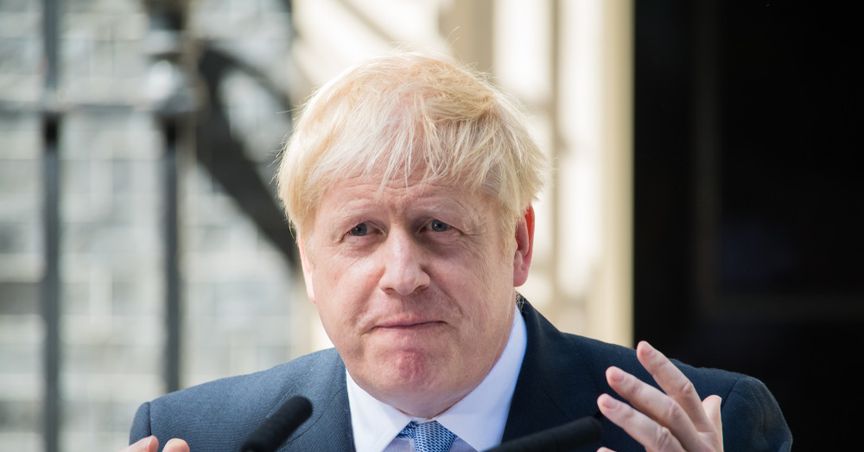
- PM Boris Johnson has recently said that a trade agreement with the EU is very much on the cards
- The talks have been going on since the last few months and both the parties had been struggling to reach a favourable agreement
- Johnson’s government has introduced the Internal Market Bill, which has infuriated the EU. The UK through this bill can override sections of the agreement dealing with Northern Ireland trade.
The Brexit negotiations are at the most crucial and difficult stage at this moment. The United Kingdom had left the European Union on 31 January 2020 ending the membership of 47 years. The EU now has 27 economic and political partners. The transition period for Brexit will end on 31 December 2020. From 1 January 2021, the new trade policy will be implemented, if both the parties are successful in reaching an agreement.
Major changes are set to take place in terms of the trading arrangements as bilateral trade is big for both the parties. If no agreement is arrived at, trade between the two parties would default to the World Trade Organization (WTO) rules.
PM Boris Johnson emphasised that a trade agreement with the EU is his priority. By mid-November a deal needs to be agreed so that there’s time for other formalities before things get rolling in January. Talks related to the trade deal will resume in London this week between Michel Barnier from the EU and David Frost from the UK. Barnier on his arrival had said that they continue to work towards securing a deal. The talks are stuck particularly on two points -- a level playing field and fisheries.
Though fishing accounts for only a small fraction for both the parties, access to British waters is the main point of contention. British waters are a rich source of fishes like mackerel, sole herring and shellfish, which are in huge demand in Europe.
Annually, more than 700,000 tonnes of fish are caught by the EU fishermen in British waters. Since the UK still needs to follow the EU rules till 31 December, boats from the EU can have access to British waters under the Common Fisheries Policy. Where the fish can be sold is also a question.
In the Brexit drama, both the parties have put forward their priorities. The UK has been advocating that “no deal is better than a bad deal”. On the other hand, the EU has expressed that “they want a deal but not at any price” as experts feel a deal will be beneficial for the EU as Britain is financially stable and robust. Many issues have cropped up in the last four years such as citizens’ rights, the financial bill, the Irish border, etc.
Talks regarding the deal have begun and Chancellor Rishi Sunak said that both the sides have been making remarkable progress in talks about a post-Brexit trade deal and it is quite apparent that it can be done, but the UK and the EU are required to continue to act in a constructive way.
No Trade Deal, Then What
The UK will be legally observed as a third country by the EU if there is no mutual accord. Following which, trade between the EU and the UK would take place on the provisions of the WTO, making way for non-tariff and tariffs barriers.
Under the WTO terms, goods will be undergoing full border checks, which could result in traffic at ports and delays. The service sector of the UK could also lose its access to European markets, affecting many sectors, like banks, hotels, and restaurants.
The absence of a trade deal would aggravate the friction. The UK's economy would take a hit and would also impact its trading partners, such as Ireland and France. Education, science, and cooperation on security and terrorism will also suffer. This calls for international cooperation and action amid the pandemic, which would help in easing the fatal problems instead of making them worse.
