
 AUS
AUS
 NZ
NZ
 UK
UK
 CA
CA
 USA
USA
 IND
IND





Summary
- The BoE’s Monetary Policy Committee had voted to maintain the interest rate at 0.1%.
- Besides, BoE downgraded the UK’s economic growth and believes Britain's economy will shrink by 2 per cent in Q4 as compared to the forecast of 5.4% growth predicted in August
- The Bank said the extension of the furlough scheme might help to restrict the damage of lockdown to some extent
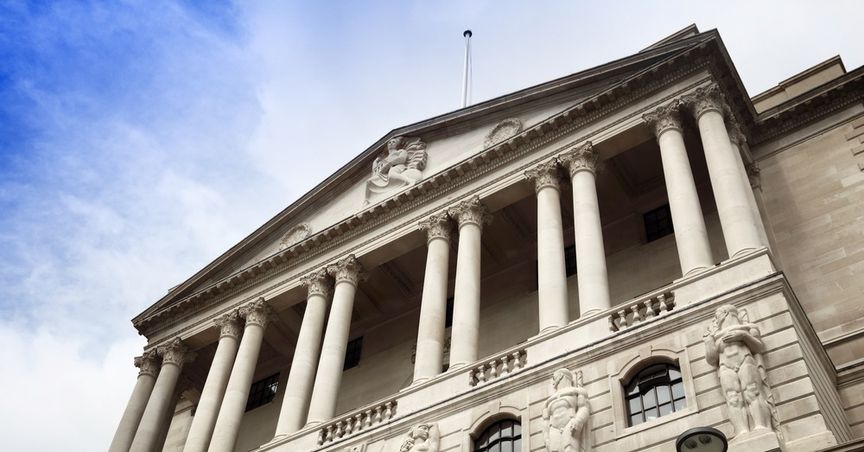
The Bank of England has decided to give another fresh stimulus package of £150bn ($194bn) for the UK economy in the wake of the second lockdown imposed by the British government to control the rise in coronavirus cases in the last few weeks.
The central bank believes that unemployment in the country will see a spike as the government support schemes could dry up in the coming days. The £150-billion package is in addition to the £100-billion cash boost it agreed upon in June.
Meanwhile, members of the Monetary Policy Committee (MPC) collectively voted for the expansion of its quantitative easing programme to a massive £895 billion but kept the interest rate unchanged at 0.1 per cent, which is the lowest in the history of the bank. The Bank of England will maintain a stock of corporate bonds worth £20bn.
BoE downgraded the country’s economic growth and believes the UK's economy will dwindle 11 per cent this year. However, the bank has predicted that the UK’s economy will grow by 7.3 per cent in 2021, which is still weak then its earlier prediction of 9 per cent.
Furlough Scheme’s extension
UK Chancellor Rishi Sunak is expected to announce the extension of the furlough scheme beyond 2 December, which marks the end of the second lockdown. The extension of the furlough scheme comes when the government is facing pressure from the country’s business community to protect their interests and jobs, which are under threat due to Covid-19 pandemic.
The extension will see the government continuing to pay 80 per cent of the workers’ wages across the UK. BoE said the extension of the furlough scheme might help to restrict the damage to some extent, but it could not fully resolve the unemployment crisis.
During the first lockdown, the UK economy slowed down by almost a fifth. Though the recovery started in early summer, it was not in full swing before the announcement of a second lockdown. The Office of National Statistics said that the GDP was 2.1% in August.
Road ahead
BoE said the coronavirus is continuing to plague the British economy, with incomes, jobs and public spending getting impacted badly. The pandemic has put a massive burden on Britain's cash flow and is posing a threat to the livelihood of millions across the UK.
Moreover, towards the end of December, the Brexit transition would also shake the UK’s economy as several businesses will be winding up their operations from the EU.
The bank has not ruled out that a last-minute deal could be signed between the UK and the EU in order to set up a comprehensive trading alliance from the start of January 2021.
