
 AUS
AUS
 NZ
NZ
 UK
UK
 CA
CA
 USA
USA
 IND
IND







Highlights
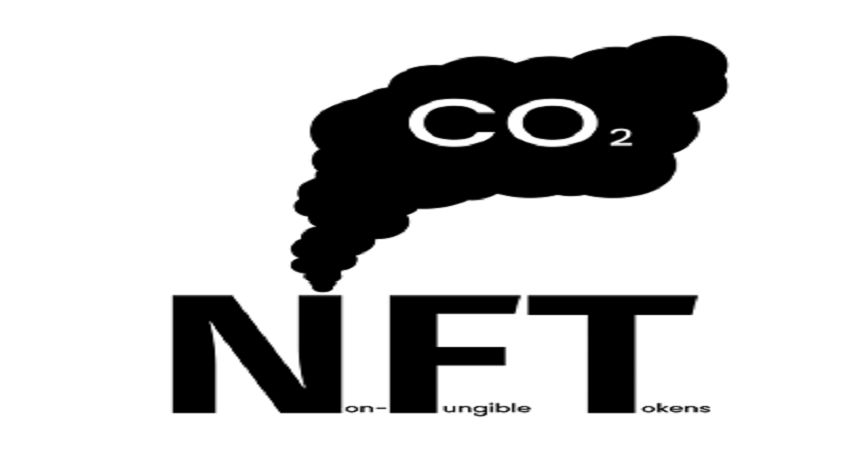
- A recent report by carbon analyst, Erin Davies, outlines that, on average, a piece of printed art results in around 2.5 kilograms of extra CO2 emissions
- The report estimates one NFT’s lifetime CO2 emissions equate to a car traveling more than 500 miles
- Many of the world’s NFTs are mined on the Ethereum network, which also uses proof-of-work
While the cryptocurrency space has gained traction throughout 2021, it has also garnered criticism regarding its impact on the environment.
Earlier this year, the mining practices of Bitcoin came under fire after it was revealed the large amount of energy required to mine the world’s largest token.
The latest corner of the crypto space to catch fire this year has been the NFT (non fungible token) space. However, much like Bitcoin, the popularity of NFT has resulted in an increase in the energy required to mine them.
The NFT Boom
A non fungible token (NFT) is a unique digital file that can contain anything from a piece of art to a video. Much like baseball cards or stamps, NFTs have become collectables for many people with popular examples including CryptoPunks and Bored Ape Yacht Club (BAYC).
The NFT space has exploded this year with everyone from celebrities to major corporations hopping on board the NFT train.
What Is Mining?
The term “mining” in the context of cryptocurrency may be confusing to some and that’s understandable. When one thinks of mining, they immediately picture something being unearthed from the ground. Of course, this is not the case with crypto mining but these coins are designed to be “released” to the public.
The way this is done with “proof-of-work” consensus digital currencies, like Bitcoin, is through several high-powered computers solving complex algorithms. When the algorithm is solved, the coin is released.
NFT mining is actually called “minting” although the process is the same. Further to that, NFTs have recently been identified as sizeable carbon emitters.
Image Source: © Irinayeryomina | Megapixl.com
NFT’s Carbon Sins
A recent report by carbon analyst, Erin Davies, outlines that, on average, a piece of printed art results in around 2.5 kilograms of extra CO2 emissions. This equates to the COS emissions of a regular petrol-powered car being driven for five miles.
While this may seem like a drop in the ocean, the report estimates one NFT’s lifetime CO2 emissions equate to a car traveling more than 500 miles
Furthermore, the CO2 emissions from the minting and auctioning off an NFT can be up to 100 times higher.
How Are NFTs Mined?
Many of the world’s NFTs are mined on the Ethereum network, which also uses proof-of-work - the same mining protocol as Bitcoin.
Ethereum’s network is the second largest and oldest platform in the crypto space. Although Ethereum’s developers are currently working feverishly to upgrade to a more environmentally friendly proof-of-stake protocol, it still currently uses the energy intensive proof-of-work consensus.
The Verdict
While it’s perhaps an oversimplification to say that NFT’s are bad for the environment, perhaps it would be more accurate to say that proof-of-work mining is bad for the environment.
As soon as Ethereum can upgrade to a more energy-saving solution to mine its tokens and NFTs, the oracle will continue to be taxing on the environment.
