
 AUS
AUS
 NZ
NZ
 UK
UK
 CA
CA
 USA
USA
 IND
IND







Highlights
- There can be fundamental differences between any two cryptocurrencies, unlike fiat currencies, which share common structural elements.
- Dogecoin was launched a few years after Bitcoin, and the former is not accepted as a legal currency in any country.
- The terms ‘coin’ and ‘token’ are often considered the same; however, the former suggests wider acceptance as a medium of exchange.
There are numerous cryptocurrencies that exist today, and there are numerous ways to look at them. For some, a cryptocurrency could be virtual money, while for others it could be a token with some inherent value, but not a currency. For some, it could be nothing more than a tradable asset, to be bought and sold for capital gains. Bitcoin’s launch has been followed by the launch of many other popular names, like Ether, Dogecoin, and BNB.
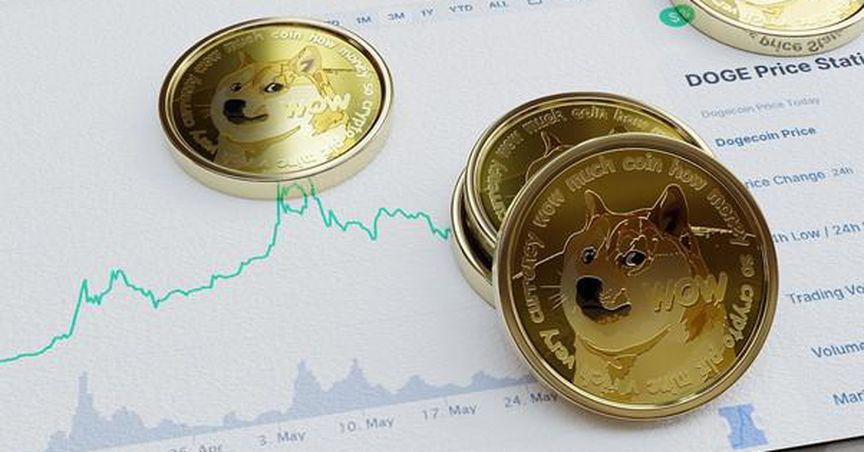
Ether or ETH is usually considered the virtual currency that underpins Ethereum’s blockchain ecosystem. But what is Dogecoin (DOGE)? Unlike Ethereum, which permits its use in development of new decentralised apps (DApps), the Dogecoin project started as a meme or Internet joke. At the time of writing this, Dogecoin is one of the top ten cryptocurrencies in CoinMarketCap’s ranking by market cap. Today, let us try to decode this so-called meme crypto and learn whether it should be classified as a coin, a token, or a currency.
Dogecoin – coin or token
In the cryptocurrency world, concepts and ideas can be a little confusing. An industry-wide recognised definition of terms like ‘coin’, ‘token’, ‘currency’, and ‘asset’ is not available. This makes it extremely difficult to provide a definite classification for any new cryptocurrency released on the market. However, if these terms were to be understood in general parlance, Dogecoin would likely fall in the category of tokens. Dogecoin’s nearest competitor cryptocurrency, Shiba Inu (SHIB), would also be a token by this measure.
This is because Bitcoin was launched with the specific goal of functioning as a virtual currency in payments without the need of any intermediary. Intermediaries like banks, according to the creator/s of Bitcoin, delay the payment process, which Bitcoin as ‘electronic cash’ can avoid. Dogecoin, on the other hand, started as an ‘accidental crypto movement’. Bitcoin has now attained the status of legal currency in a few countries; however, Dogecoin is far from any such recognition.
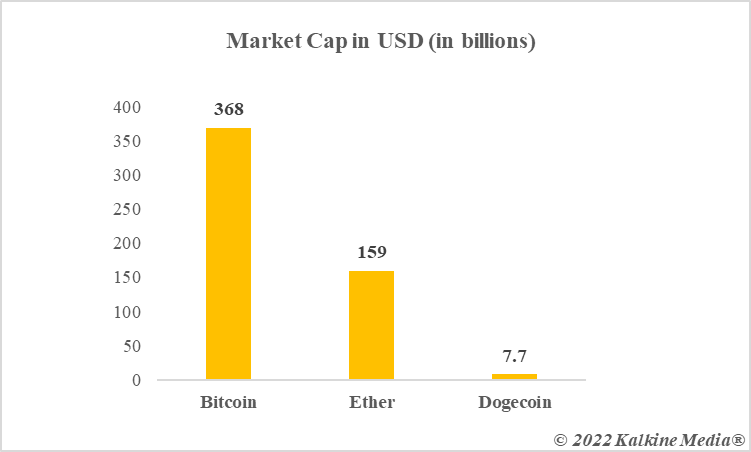
Data provided by CoinMarketCap.com
A rewarding token
The exact utility of Dogecoin is disputed. For it to serve as a virtual currency and not a mere token, Dogecoin would have to find wider acceptance in payment systems. For now, a few proponents believe that the cryptocurrency can have use in rewarding Internet users. For example, on a social platform like Reddit, a user who posts productive content can be rewarded by others using Dogecoin. By this measure – simply because Dogecoin would be largely restricted as a reward in any specific ecosystem, without broader acceptance as a medium of exchange -- it can be considered a token.
Bottom line
Lack of consensus is one primary characteristic of the cryptocurrency world. The terms ‘coin’, ‘token’, and even ‘cryptocurrency’ and ‘cryptoasset’ are sometimes considered to have the same meaning. However, the term ‘token’ gives a sense of limited and restricted use, while the terms ‘coin’ and ‘currency’ suggest wider acceptance of an asset as a medium of payment.
Risk Disclosure: Trading in cryptocurrencies involves high risks including the risk of losing some, or all, of your investment amount, and may not be suitable for all investors. Prices of cryptocurrencies are extremely volatile and may be affected by external factors such as financial, regulatory, or political events. The laws that apply to crypto products (and how a particular crypto product is regulated) may change. Before deciding to trade in financial instrument or cryptocurrencies you should be fully informed of the risks and costs associated with trading in the financial markets, carefully consider your investment objectives, level of experience, and risk appetite, and seek professional advice where needed. Kalkine Media cannot and does not represent or guarantee that any of the information/data available here is accurate, reliable, current, complete or appropriate for your needs. Kalkine Media will not accept liability for any loss or damage as a result of your trading or your reliance on the information shared on this website.
