
 AUS
AUS
 NZ
NZ
 UK
UK
 CA
CA
 USA
USA
 IND
IND






Highlights
- The Ozone-Depleting Substances and Halocarbon Alternatives Regulations (ODSHAR) were formed under the Canadian Environmental Protection Act, 1999
- ODSHAR applies to the companies that import, export, manufacture, sell, and use hydrofluorocarbons (HFCs) and ozone-depleting substances
- In Canada and worldwide, the Montreal Protocol focuses on controlling the production and consumption of around 100 substances which reduce the ozone layer
An international agreement, the Montreal Protocol helps in ensuring the earth’s ozone layer protection and focuses on reducing the production and consumption of ozone-depleting substances (ODS). Canada was one of the first countries that approved the Montreal Protocol. Through the federal Ozone-Depleting Substances and Halocarbon Alternatives Regulations (ODSHAR), Canada executed this agreement. In this article, we will learn all aspects of ODSHAR.
Through Ozone-Depleting Substances and Halocarbon Alternatives Regulations (ODSHAR), Canada is meeting its commitment towards the substances that reduces the ozone layer under the Montreal Protocol. The ozone layer is the earth’s atmospheric shield that helps in preventing humans and others from harmful UV rays. For the government of Canada, they are regulated by Environment and Climate Change Canada.
Key elements of ODSHAR
These regulations focus on the manufacturing, exporting, importing, selling and certain uses of ozone-depleting substances (ODS) and products. The regulations involve various requirements, including written authorizations for conducting certain activities and reports on ODS development, importation, and exportation. The regulations also involve a requirement for getting a permit for manufacturing, importing, and exporting of hydrofluorocarbons, and submitting a report on these activities.
History of ODSHAR
The Ozone-Depleting Substances and Halocarbon Alternatives Regulations were formed under the Canadian Environmental Protection Act, 1999. ODSHAR replaces and nullifies the Ozone-Depleting Substances Regulations of 1998 and has executed its international commitment towards ozone-depleting substances in Canada as mentioned in the Montreal Protocol.
Also read: What is Canada's Healthy Environment & Healthy Economy climate plan?
Montreal Protocol
Various gases, including methane, carbon dioxide, and other greenhouse gases are responsible for bringing climate change globally. On the other hand, certain chemicals which consist of chlorine or bromine are harming the protective stratospheric ozone layer of the earth. The stratosphere is the second layer of the earth’s atmosphere where the ozone layer is located.
The Montreal protocol helps the world to take a major step in the fight against climate change. In Canada and worldwide, it focuses on administering the production and consumption of about 100 substances which reduce the ozone layer.
Individuals can also protect the ozone layer and lower climate-warming HFC emissions in various ways as they can responsibly dispose of air conditioners, freezers, and refrigerators, check leaks in the car and home air conditioners, try to keep their rooms cool at night with ventilation without using air conditioners and park their cars in shade to reduce the use of air conditioners.
Also read: What is Intergovernmental Panel on Climate Change (IPCC)?
ODSHAR in Canadian businesses
These regulations apply to the companies that import, export, manufacture, sell, and use hydrofluorocarbons (HFCs) and ozone-depleting substances. In refrigeration and air conditioning systems, these substances are used as aerosol propellants, fire extinguishing agents, and foam blowing agents. Companies which are involved in selling, importing, and using methyl bromide as soil fumigant also come under these regulations.
Also read: What to expect from a future of climate change?
Ozone layer depletion impacts on health and environment
Exposure to UV-B radiation can affect living organisms and materials as it can cause various types of skin cancer in humans, can harm several parts of the eye and the human immune system.
UV rays not only impacts humans but also animals and plants as excessive UV-B radiation can stop the growth processes of nearly all plants. Plants help in preventing soil erosion and water loss and are the primary source of oxygen and a primary storage site for carbon dioxide. Ozone depletion can contribute to the loss of plant species. UV-B rays also affect domestic animals by causing cancer in them just like humans.
Also read: What are the impacts of climate change on human health?
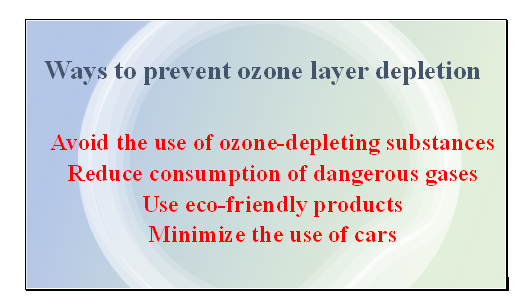
Image credit: © 2022 Kalkine Media®
Bottom line
Ozone depletion can affect human health, animals, the environment, and marine life. So, it is our responsibility to protect our earth from ozone layer depletion and harmful UV rays by minimizing the use of cars, using eco-friendly products, wearing UV-B-blocking sunglasses and maintaining ACs and refrigerators.
.
