
 AUS
AUS
 NZ
NZ
 UK
UK
 CA
CA
 USA
USA
 IND
IND







Highlights
- The ESG strategy implies a sustainable approach to investing your funds in companies that strive to make a positive difference.
- ESG is a value-based method of looking for companies that are likely to stay profitable in the long run.
- Focus on ESG policies generally help companies avoid immoral practices and inefficiencies.
As an investor, you may want to make profits on your investments. But you may also want to ensure that the investment choices you make are in line with your principles.
Investors who are concerned about environmental and social issues like climate crisis, gender inequality, etc., often opt not to put their money in companies that aggravate these problems. On the contrary, they may want to explore businesses that can not only help grow their investments but also are staying on top of such issues.
That's generally what ESG investing is all about.
What is ESG strategy?
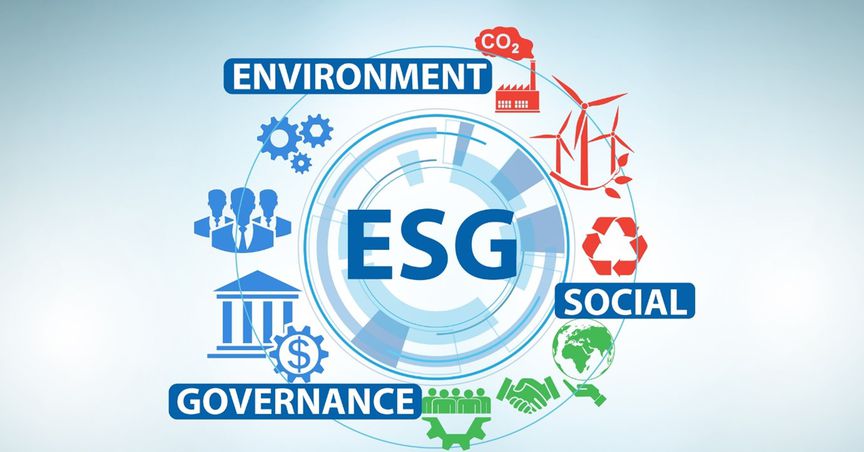
The Environmental, Social and Governance (ESG) strategy implies a sustainable approach to investing your funds in companies that strive to make a positive difference. This strategy can minimize portfolio risk and provide significant returns in the long term, while also supporting a positive movement.
Companies having high ESG ratings are likely to stand for long and at an advantageous position. However, there are also risks involved, so it makes sense to know those along with the benefits before getting knew-deep into ESG investing.
The following are some key points regarding ESG that will be helpful if you are planning on taking this approach.
Advantages of ESG investing
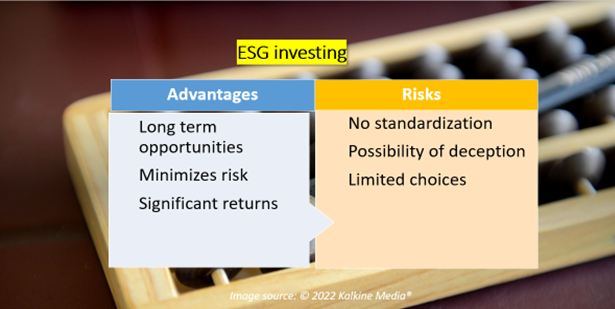
- Long-term opportunities
There is a misconception that one might have to compromise on returns by allocating their funds in sustainable and socially responsible investments. However, ESG is a value-based method of looking for companies that are likely to stay profitable in the long run.
- Minimizes risk
Focus on ESG policies generally help companies avoid immoral practices and inefficiencies that could affect their image and performance. Also, as ESG investments represent long-term profitability, they can help diversify your portfolio risk.
- Significant returns
ESG companies, aside from quarterly gains, are also known to take note of their profitability in the long term. This perception helps them attain significant organizational growth and steadily increase profitability over the years.
Also read: Do you know about Warren Buffett's dream investment? It's a small candy company
Risks to keep in mind while ESG investing
- No standardization
There are no standardized metrics for ESG compliance. Independent ESG agencies lack uniformity as they weigh ESG factors according to their own terms. While companies, in most cases, self-assess and report their ESG work.
- Possibility of deception
Corporate Social Responsibility (CSR) and other reviews generally reflect the company's ESG targets and accomplishments, but some companies may still slip out by giving misleading information.
- Limited choices
A handful of companies pass ESG metrics, giving investors limited options to choose from. And, if any company fails the ESG standards, the selection pool for investors shrinks further.
Also read: Warren Buffett’s three key investing mantras for millennials
