
 AUS
AUS
 NZ
NZ
 UK
UK
 CA
CA
 USA
USA
 IND
IND







Summary
- US President Joe Biden’s latest executive order aims to make half of all passenger vehicles sold by 2030 electric.
- The internal combustion (IC) engine vehicle industry is expected to feel the brunt of the growing shift towards electric vehicles.
- IC engine vehicles consuming gasoline are associated with generating greenhouse gases, a significant concern leading to climate change.
US President Joe Biden recently stepped the efforts up a notch to cut greenhouse emissions, with the latest executive order targeting 50% of all new passenger vehicles to be electric by 2030. As indicated by the President in his speech, the e-mobility shift would be powered by the government support that could include customer incentives for purchasing electric vehicles (EVs).
RELATED ARTICLE: Scientists update forecasts on the need of a better climate modeling
Many are now wondering if such measures, together with a growing chorus of environmental enthusiasts, would bring an end to the decades-long chapter of internal combustion (IC) engine vehicles.
ALSO READ: Here’s why net zero emission is a pressing priority
Source: Copyright © 2021 Kalkine Media
The basic principle on which an IC engine works is to use the air and fuel to produce heat, which drives the vehicles. However, at the same time, this process also generates greenhouse gases, responsible for climate change and ecological imbalance. Given the scenario, the world is looking at EVs as an alternative to environment-exhausting fuel-powered vehicles.
RELATED ARTICLE: Volkswagen shifts focus on EVs as it plans to move away from combustion engine sales
As the motor city Detroit with its range of automakers gears up for the EV revolution on a broader scale, let us cast an eye on developments in the IC engine vehicle space over the years.
The Beginning of the Era in Europe
The discovery that heat could power machines has been significant, gradually leading to steam engine-driven vehicles which used coal. However, the era of modern automobiles was not born until a series of further improvements and inventions took place.
RELATED ARTICLE: Coal- the cheapest form of energy & the most harmful one

Source: Copyright © 2021 Kalkine Media
One of the most critical landmarks in the development is often associated with significant inventions by Karl Benz, who built the first practical IC engine vehicle in 1885. Soon after, his company Benz & Cie. became the world’s first automobile manufacturer. Meanwhile, Gottlieb Daimler, too, was creating history as he patented lightweight, fast gasoline-consuming steam engine in the same year.
ALSO READ: Why are electric cars bad for the environment?
American manufacturers soon joined the race
While Europe was witnessing a significant push in the automotive space, the two brothers-Charles and Frank Duryea, gave the US its first gasoline-powered vehicles after building the first motor vehicle in 1893.
The automotive industry in the Detroit area emerged with the commencement of assembly line by Ransome Eli Olds at the beginning of the 1900s.
When vehicles become mass means of transportation
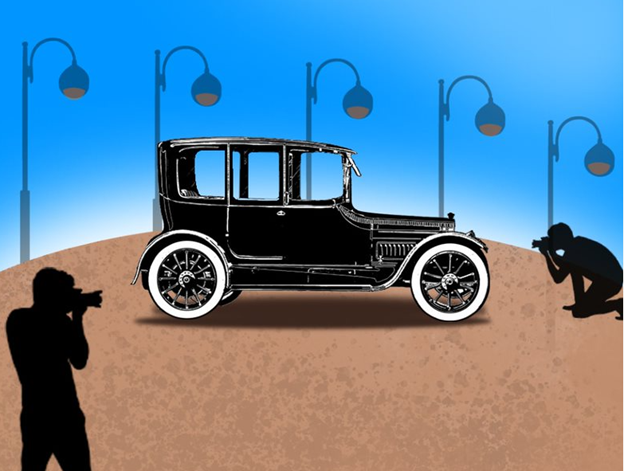
The series of discoveries in the automotive space has been critical. However, these modern means of transportation remained luxury goods until American car manufacturer Henry Ford stepped in. In around 1913-14, he installed improved assembly lines for the Model T in his factory located in Highland Park, Michigan. The development altogether allowed the manufacturer to reduce the manufacturing cost, thereby significantly decreasing the price of vehicles.
RELATED ARTICLE: Ford Motor focuses on EVs; says semiconductor chip shortage to hit Q1 production
What’s more, Henry also overturned the patent held by George B. Selden, which made all American car manufacturers pay royalties. In a nutshell, the two significant revolutions brought by Henry Ford revolutionised the auto industry and made the convenient transportation means within the affordability thresholds.
With consistent inventions and improvements, there has been no looking back for IC gas engine vehicles and the industry surrounding them.
However, not all seems peaches and cream for fuel-powered vehicles, especially when they are on the radar of environmental enthusiasts and governments. While it may be too early to tell if EVs would put these IC engine vehicles to sleep, the growing concerns indeed seem to provide tailwinds to the EV industry.
