
 AUS
AUS
 NZ
NZ
 UK
UK
 CA
CA
 USA
USA
 IND
IND







Highlights
- The global shipping industry is likely to witness a significant rise in its greenhouse gas emissions by 2050.
- Technological advancements and operational measures are required to help international shipping meet its climate goals.
- Startup Fleetzero is assessing the development of battery electric cargo ships.
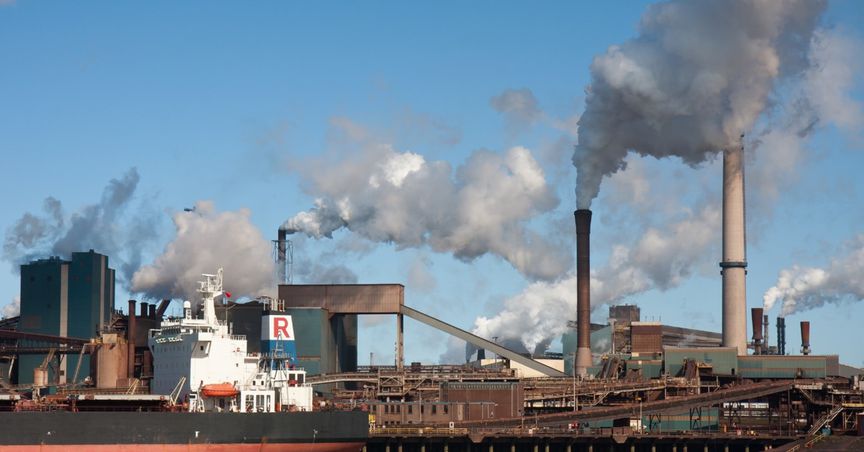
For long, the shipping industry has been under scrutiny for its greenhouse gas emissions. The industry accounts for nearly 90% of the global trade and is responsible for approximately 3% of the world’s total carbon dioxide emissions.
Now, a research report backed by industry leaders has unveiled that the global shipping industry is on course to witness an increase of nearly 20% in its greenhouse gas emissions by 2050.
In 2018, a regulatory arm of the United Nations, the International Maritime Organization set a goal for the shipping industry – to reduce its carbon emissions by 50% till 2050 relative to the levels seen in 2008.
The need for result-oriented initiatives
The industry is unlikely to meet the standards set by the Paris Agreement and the Intergovernmental Panel on Climate Change if it fails to implement result-oriented initiatives.
Decarbonisation in the industry is possible only with significant steps – be it a global carbon tax on shipping fuels or making economically viable low-carbon fuels readily available at prices competitive to that of fossil fuels. In September, leading shipping associations proposed to impose a global tax on carbon emissions from ships to accelerate the industry's efforts to go green.
Related read: How climate change plays with the Australian economy

Carbon tax | Source: © Avenger01 | Megapixl.com
Related article: What provoked the UN Chief to say, “the world is facing a dead end?”
The research work undertaken by the Clean Air Task Force (CATF) has highlighted that the shipping industry needs a transition to net-zero carbon fuels to achieve its climate goals. The task force has also indicated ammonia as an option to go green; however, it is nearly three times expensive than conventional marine fuels.
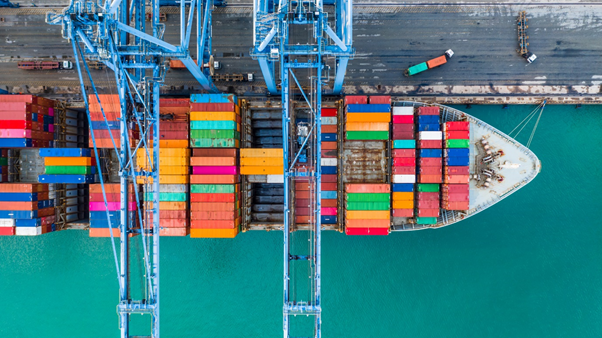
Shipping cargo | Source: © Avigatorphotographer | Megapixl.com
Fleetzero’s solution to the problem
Fleetzero, a startup, aims to provide a solution to the shipping industry’s carbon emissions woes with its focus on building electric battery-powered ships by optimising the battery cost.
Besides its objective to help the shipping industry slash its carbon emissions, Fleetzero also intends to ease supply chain bottlenecks by using more of the available ports across the world.
Fleetzero is assessing the development of battery electric cargo ships. The Company is focusing on developing batteries in standard containers (20-foot) that can be modified to power vessels in the sea. As soon as a ship comes into port, the drained batteries in the container will be swapped for new ones.
The company is engaged in building its first battery pack prototype in Alabama and aims to convert a small diesel ship for use by 2022 end.
Also read: How achieving net-zero carbon emission target is a big challenge for Australia?
Bottom Line
The global shipping industry is under pressure to clean up its emissions. To address the alarming situation highlighted by latest research, the industry needs to put in place mitigation measures swiftly.
Besides measures like carbon tax, technological advancements such as electric battery-powered ships can help the international shipping industry to address its carbon emissions.
