
 AUS
AUS
 NZ
NZ
 UK
UK
 CA
CA
 USA
USA
 IND
IND






When our parents enter their retirement years, health naturally becomes more of a priority than before. Frequent check-ups, medicines, or even a hospital visit can crop up with little warning. Having the right health insurance in place is not just helpful - it’s essential.
But here’s the tricky part: How do you choose a policy that offers good coverage without overloading your budget? Finding the best health insurance in India for senior citizens often feels like trying to solve a puzzle. Some plans offer too little. Others give you more than you need, at a steep price.
This blog breaks it all down. We'll look at how to strike the right balance between premiums and benefits so that your parents are protected, and your wallet doesn’t feel the pinch.
Why Balance Is Key When Choosing Health Insurance
Think of parents health insurance like buying a mobile plan. You wouldn’t pay for unlimited data if all your parents use the phone for is WhatsApp. The same applies here. Picking the right cover means identifying actual medical needs and matching them with suitable policy features.
Let’s say you pick the cheapest plan on offer. It might not cover common health issues faced by older adults. On the flip side, the most expensive one might include add-ons your parents will never use. That’s why you need to focus on what matters most - the practical needs.
What Factors Influence Premiums in Senior Citizen Policies?
Premiums are what you pay yearly for the coverage. The number can vary widely based on a few key things. Understanding these helps you adjust the policy to get the most out of it without paying extra.
1. Age and Medical History
The older your parents are, the higher the premium is likely to be. Also, if they already have health issues like diabetes or high blood pressure, insurance providers may apply a waiting period before those are covered.
2. Type of Coverage
A plan that offers higher cover, like ₹10 lakh or more, will obviously cost more than a basic one. But unless your parents are at high medical risk, you might not need such a large cover right away.
3. Hospital Network Access
Policies that offer cashless treatment across a wide network of hospitals might have slightly higher premiums, but the convenience they offer can be worth the cost.
4. Room Rent Limits
Some plans only cover shared or general rooms. Private rooms come with higher premiums. If your parents are comfortable with shared accommodation, you could save a bit here.
Essential vs Optional Benefits - What to Focus On?
When it comes to health insurance plans, not all features are equally important. Let’s divide them into two buckets: must-haves and good-to-haves.
Must-Have Benefits
These are the features you shouldn’t compromise on:
- Coverage for pre- and post-hospitalisation expenses
- Cashless hospitalisation facility
- A clear and reasonable waiting period for pre-existing conditions
- Support for daycare procedures (like cataract surgery or dialysis)
- A wide hospital network, ideally with hospitals near your home
Optional Add-ons
You can skip these if your budget is tight:
- Critical illness cover
- Outpatient department (OPD) coverage
- Wellness benefits like yoga sessions or diet consults
- AYUSH treatment cover (Ayurveda, Homoeopathy, etc.)
The trick is to only pay for what your parents are actually likely to use.
Comparing Plans Side-by-Side
To get a better idea of how costs relate to coverage, here's a simplified comparison. This is just for understanding. Actual premiums will vary.
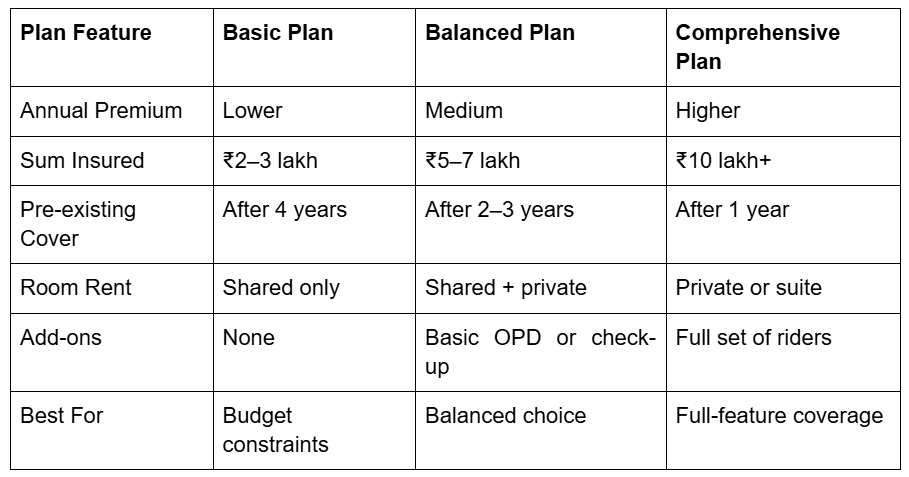
This table should give you a rough idea of what to expect. A health insurance for senior citizens plan doesn’t have to be maxed out - it just needs to be smartly selected.
Tips to Reduce Premiums Without Losing Key Features
If you’re looking to bring down the premium without losing valuable protection, these tips can help.
Choose a Voluntary Co-Pay
Many plans let you agree to pay a small part of the hospital bill (say 10 or 20%). In return, they offer a lower premium. If you can manage small expenses, this is a good trade-off.
Pick a Deductible Option
This means the insurer will only start paying after a certain amount is spent. For instance, the first ₹1 lakh is your responsibility. Beyond that, insurance kicks in. This works well if your parents don’t require frequent medical care.
Cut Unused Add-ons
It’s tempting to go for all the extras, but if your parents don’t use OPD or wellness benefits, there’s no point paying extra.
Top-Up Plans Are Your Friend
A base policy of ₹2-3 lakhs can be combined with a top-up plan of ₹5-7 lakhs. This approach keeps premiums lower while giving you higher total coverage in case of big medical events.
Mistakes to Avoid
Even when you think you're getting a good deal, some oversights can cost you later.
- Only checking the price: Don’t go for the cheapest plan without looking at what’s included and excluded.
- Ignoring exclusions: Always check what illnesses or treatments aren’t covered.
- Skipping renewal timelines: Make sure the policy offers lifetime renewability or at least till the age of 80-90.
- Choosing policies with tight room rent limits: If your parent is admitted to a room outside of the policy’s limit, the entire claim could be reduced.
When to Buy the Policy?
The earlier, the better. If your parents are in their early 60s, don’t wait. Starting early reduces premiums and helps serve waiting periods on pre-existing conditions. Also, once a major health issue develops, getting a new policy or switching becomes difficult.
If your parents are already insured, review the current policy annually. Needs change with time. So should the cover.
Key Questions to Ask Before You Decide
Before locking in on the best health insurance, ask the provider:
- How long is the waiting period for existing illnesses?
- What’s the co-payment or deductible?
- Is the cashless network wide enough near your location?
- Are there sub-limits on procedures or room rent?
- How long can the policy be renewed?
- What are the exclusions?
These help avoid surprises when a claim is made.
Final Thoughts
Balancing benefits and premiums in parents health insurance plan doesn’t have to be overwhelming. Think of it as planning for something you know will come - not something unexpected.
Don’t rush. Spend time understanding what your parents really need, what coverage gaps exist, and how much you can realistically pay every year. When you start from that place, the decision becomes much clearer.
In the end, the best health insurance is not the one with the most features; it’s the one that works for your parents, works for your budget, and keeps everyone worry-free when it matters most.
The article has been provided and sponsored by Sharat K.
