
 AUS
AUS
 NZ
NZ
 UK
UK
 CA
CA
 USA
USA
 IND
IND


_07_03_2026_03_50_21_133108.jpg)


Highlights
- Tivan has formalised Timor-Leste joint venture terms with state-owned mining partner Murak Rai Timor.
- A maiden drilling campaign at the Ossu copper-gold project is targeted for the final quarter of the year.
- The agreement adds a fresh exploration catalyst alongside Tivan’s established tungsten development strategy.
Tivan has strengthened its Timor-Leste exploration strategy through a new state-backed joint venture and upcoming drilling campaign targeting copper-gold opportunities at Ossu.
Australia’s resources sector continues attracting market attention as junior explorers pursue exposure to critical minerals, copper and gold opportunities across emerging jurisdictions. Among the companies generating renewed discussion is Tivan Limited (ASX:TVN), a diversified resources group operating within the ASX Metal & Mining Stocks category. The company has now formalised binding joint venture terms with Timor-Leste’s state-owned mining company Murak Rai Timor across the Baucau and Ossu copper-gold projects, marking a major step forward in its international exploration strategy. The development also introduces a clearly defined drilling catalyst that could shape sentiment around the company across the broader ASX 300.
Timor-Leste Strategy Moves Into A New Phase
Tivan’s latest agreement effectively unlocks the next operational stage for its Timor-Leste assets.
While the company secured ownership of the projects earlier in the year, progress within the country’s mining sector required alignment with the local mining framework and state participation structure established under Timor-Leste’s Mining Code.
The formal joint venture arrangement now provides the operational pathway needed for exploration activity to accelerate.
Under the agreement, Tivan will retain an eighty per cent interest in each joint venture company, while Murak Rai Timor will hold the remaining stake through a free-carry structure extending through to a Definitive Feasibility Study stage.
This structure is considered particularly significant for a junior exploration company operating within a frontier jurisdiction, as it allows Tivan to maintain operational control while strengthening political and regulatory alignment locally.
Why The Free-Carry Structure Matters
The structure of the joint venture is attracting strong market attention because it reduces financial pressure on the state-owned partner during the exploration phase.
Murak Rai Timor will not contribute exploration or development funding until after a Definitive Feasibility Study is completed. At that stage, the partner can choose from several participation pathways involving direct project participation or royalty-based alternatives.
For Tivan, the arrangement preserves the company’s exposure to any exploration success achieved during the early-stage drilling and development phases.
At the same time, it also means Tivan remains responsible for carrying the funding requirements associated with advancing the projects toward feasibility milestones.
This dynamic creates both opportunity and risk, particularly if exploration activity expands significantly following future drilling outcomes.
Ossu Project Becomes The Key Watchpoint
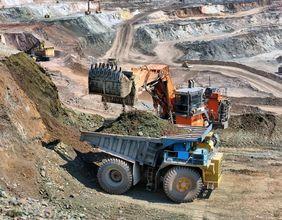
The Ossu copper-gold project is rapidly emerging as the most closely watched component of Tivan’s Timor-Leste portfolio.
Historical rock chip sampling has returned highly elevated copper, gold and cobalt results, drawing market interest due to the geological setting surrounding the project area.
Importantly, the region sits within a broader mineral belt associated with several globally recognised copper-gold systems across the Asia-Pacific region.
However, surface sampling results alone are not enough to confirm large-scale mineralisation potential. Exploration markets typically place far greater emphasis on drilling results, particularly when assessing continuity, scale and mineralised widths below surface.
This is why the planned maiden drilling campaign at Ossu later this year is becoming such a critical catalyst for the company.
Tivan has already indicated that the initial drilling phase will also serve as an operational and logistics assessment ahead of broader exploration activity in the region.
Timelines Give The Market Defined Catalysts
One reason the announcement has resonated with the market is the presence of clearly defined operational milestones.
The company is targeting incorporation of the joint venture entities by late July, followed by completion of long-form agreements by the end of September. The maiden drilling campaign is then expected to commence during the final quarter of the year.
Defined timelines can often play an important role in shaping market attention around junior exploration companies, particularly where projects are located in underexplored regions.
These milestones provide the market with tangible events capable of influencing valuation sentiment over coming months.
The upcoming drilling activity therefore represents more than just an exploration event. It also serves as the first major operational test of Tivan’s broader Timor-Leste strategy.
Molyhil Still Anchors The Broader Company Narrative
Although Timor-Leste is drawing fresh market attention, Tivan’s established Molyhil tungsten project in the Northern Territory remains central to the company’s broader market narrative.
Earlier project studies reinforced the potential for a low-complexity tungsten and molybdenum operation supported by gravity-based processing methods.
The Molyhil project has been a major contributor to the company’s recent market momentum, particularly amid growing interest in critical minerals and strategic metal supply chains.
The Timor-Leste assets now add a second growth pathway focused on copper and gold exploration rather than tungsten production.
This diversification is becoming increasingly important as market participants assess resource companies with exposure to multiple commodity themes.
Copper And Gold Themes Continue Supporting Exploration Interest
Global demand trends continue strengthening market focus on copper exploration opportunities.
Copper remains a critical material for electrification infrastructure, renewable energy systems and industrial technology development. At the same time, gold continues attracting attention during periods of heightened geopolitical uncertainty and economic volatility.
These broader commodity trends are contributing to stronger market interest in early-stage copper-gold exploration assets, particularly those located in underexplored geological regions.
Timor-Leste itself remains relatively underexplored from a modern mining perspective, adding another layer of speculative interest around the region’s resource potential.
This combination of frontier exploration and strategic commodities is helping shape Tivan’s evolving market profile.
Frontier Jurisdiction Risks Still Matter
Despite growing excitement surrounding the exploration opportunity, frontier jurisdictions naturally introduce additional complexity for junior resource companies.
Infrastructure, regulatory processes, logistics and operational execution can all influence exploration timelines and project advancement.
This makes local partnerships particularly important when operating within emerging mining regions.
Tivan’s partnership with Murak Rai Timor is therefore viewed not only as a commercial arrangement, but also as an important alignment mechanism supporting project development within the country’s regulatory framework.
Still, broader exploration success will ultimately depend on drilling outcomes, operational execution and future funding capacity.
Why Investors Are Watching The Next Phase Closely
The company now enters a period where operational milestones are expected to drive market attention more directly than corporate structuring activity.
The transition from project acquisition and agreement negotiation toward active drilling creates a much clearer catalyst pathway for the market to evaluate.
If exploration activity delivers encouraging results later in the year, the Timor-Leste assets could begin playing a much larger role within Tivan’s broader valuation narrative.
At present, the company’s tungsten strategy remains the dominant investment theme. However, the Ossu drilling campaign has the potential to introduce a second major growth narrative centred on copper and gold exploration.
That combination is what makes the next stage of Tivan’s strategy increasingly significant within Australia’s junior resources sector.
