
 AUS
AUS
 NZ
NZ
 UK
UK
 CA
CA
 USA
USA
 IND
IND






Highlights
- Ishan Wahi, an ex-employee of major cryptocurrency exchange Coinbase, has been arrested for wire fraud
- His brother and a friend are two other accused in a matter that is being termed as the first ever crypto insider trading case
- The three accused are said to have used confidential information to trade in cryptos, which fetched them at least US$1.1 million in illicit profits
In yet another blow to the cryptocurrency world, prosecutors in the US have initiated the first ever insider trading case involving cryptos.
This comes after Tesla’s announcement that the company has liquidated nearly three-fourth of its Bitcoin holding. Also, sentiments in the crypto world have already taken a hit on account of the recent collapse of big names like TerraUSD, Celsius Network, Voyager Digita l, and Three Arrows.
At the heart of the crypto insider trading scandal is Ishan Wahi, a former employee of major crypto exchange Coinbase.
Who is Ishan Wahi?
Ishan Wahi is an ex-manager of Coinbase exchange. He is accused of having used confidential information about the forthcoming listings of cryptoassets, including the XYO token, on the exchange to make illicit profits. His brother, Nikhil Wahi, is a co-accused, and the Wahi brothers were arrested on Thursday in Seattle, US. Wire fraud charges have been brought against the two.
Another accused in the fraud is one Sameer Ramani, a Houston resident, who is a long-time friend of Ishan Wahi. The Wahi Brothers are mentioned as Indian citizens in the document released by the Securities and Exchange Commission (SEC). They were residing in Seattle for the past many years.
The related civil proceedings by the SEC shine the light on insider trading. The SEC’s document mentions how the three used insider information on soon-to-be-listed cryptoassets and traded these assets ahead of the listing to book profits. They are said to have made US$1.1 million in illicit wealth by engaging in such unlawful activities.
What is crypto insider trading?
The modus operandi of an insider trading case resembles that of any typical securities fraud. The perpetrators use the confidential information about soon-to-happen events for their own advantage. To preserve the interests of investors, the SEC and other regulators across the world have very stringent provisions on dealing with confidential information that any company and its employees have on tradable assets.
A few people from inside the cryptocurrency industry allege that cryptoassets are not securities that fall under the ambit of regulating agencies. By this measure, the SEC’s insider trading charges against the Wahi brothers do not hold water. Notably, an ex-employee of NFT marketplace OpenSea was also charged with insider trading a few weeks back.
Separately, Bitcoin, the biggest asset in the crypto world is losing sheen this year due to multiple factors including a blow to sentiments after the fall of Celsius and Voyager. As of writing, Bitcoin’s price is nearly US$23,000.
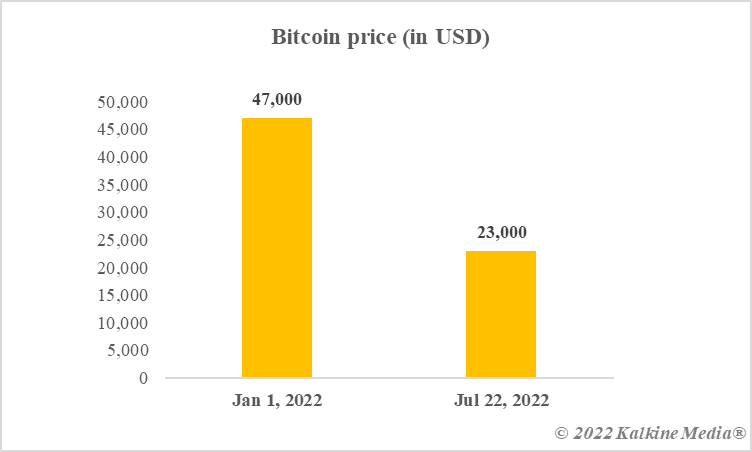
Data provided by CoinMarketCap.com
Bottom line
For now, the Wahi brothers and the other accused Sameer Ramani face charges related to misusing their access to confidential information about the listing of new cryptocurrencies on Coinbase. Sameer Ramani is yet to be arrested. How the SEC proceeds with this case might set the stage for how civil and criminal proceedings progress in crypto-related matters.
Risk Disclosure: Trading in cryptocurrencies involves high risks including the risk of losing some, or all, of your investment amount, and may not be suitable for all investors. Prices of cryptocurrencies are extremely volatile and may be affected by external factors such as financial, regulatory, or political events. The laws that apply to crypto products (and how a particular crypto product is regulated) may change. Before deciding to trade in financial instrument or cryptocurrencies you should be fully informed of the risks and costs associated with trading in the financial markets, carefully consider your investment objectives, level of experience, and risk appetite, and seek professional advice where needed. Kalkine Media cannot and does not represent or guarantee that any of the information/data available here is accurate, reliable, current, complete or appropriate for your needs. Kalkine Media will not accept liability for any loss or damage as a result of your trading or your reliance on the information shared on this website.
