
 AUS
AUS
 NZ
NZ
 UK
UK
 CA
CA
 USA
USA
 IND
IND






Highlights
Production economics remain central to long-term iron ore profitability across commodity cycles.
Reserve quality and mine life continue shaping operational sustainability for major Pilbara operators.
Capital allocation discipline increasingly separates resilient miners from weaker performers.
Australia’s major iron ore miners continue navigating changing commodity cycles shaped by production economics, reserve sustainability, Chinese demand exposure and capital allocation discipline across the Pilbara region.
Australia’s iron ore sector has long been one of the defining forces behind the local market, but changing commodity dynamics are forcing investors to look deeper than headline iron ore prices alone. Mining giants including BHP Group (ASX:BHP), Rio Tinto Limited (ASX:RIO), Fortescue Ltd (ASX:FMG), and Mineral Resources Limited (ASX:MIN) continue dominating attention across the ASX 200, yet understanding what truly drives long-term performance now requires closer examination of production costs, reserve sustainability, Chinese demand exposure and capital discipline.
Iron Ore Still Powers Australia’s Mining Engine
Few commodities hold the same influence over Australia’s economy as iron ore.
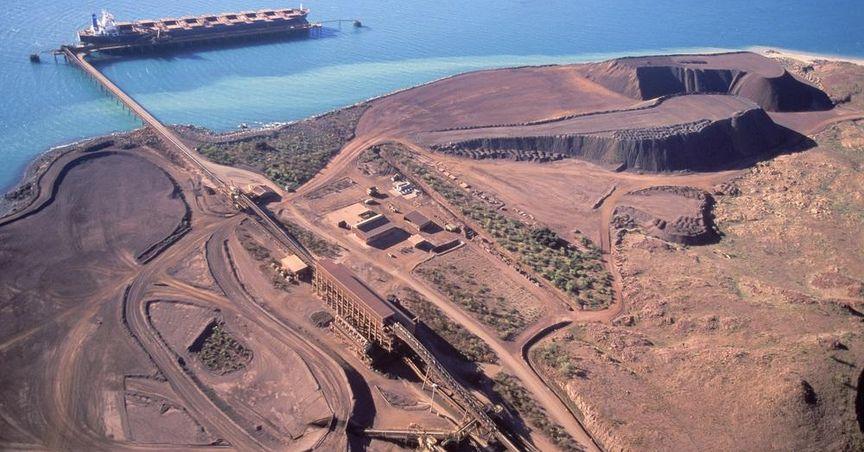
The Pilbara region remains one of the world’s most significant iron ore hubs, supplying vast quantities of material into global steel production chains. The sector has supported export revenues, infrastructure development and broader market strength for decades.
Yet iron ore investing is no longer simply about whether commodity prices rise or fall.
Modern evaluation increasingly focuses on operational resilience across cycles, especially during periods of weaker global demand or softer commodity pricing.
That shift has become increasingly important across ASX Metal & Mining Stocks, where operational quality often matters more than short-term market sentiment.
Why Production Costs Matter So Much
Iron ore companies operate within highly cyclical environments.
During strong pricing periods, even higher-cost operators may generate strong cash flows. However, when prices weaken, production economics quickly become the defining factor separating resilient businesses from vulnerable operators.
Pilbara producers generally benefit from strong infrastructure networks, established logistics systems and large-scale mining operations supporting globally competitive production.
Rail systems, export terminals and integrated operational structures help major Australian miners maintain cost advantages against many international competitors.
BHP Group maintains extensive Pilbara operations supported by large-scale infrastructure and diversified mining exposure across multiple commodities.
Rio Tinto also operates one of the world’s largest integrated iron ore systems, with established export capacity and long operating history across Western Australia.
Fortescue remains heavily focused on iron ore production while continuing to evolve operational efficiency across its broader business structure.
Mineral Resources combines iron ore exposure with mining services and lithium operations, creating a different operational profile compared with pure-play producers.
Reserve Life Shapes Long-Term Strength
Reserve quality and mine life remain essential in evaluating mining businesses.
Iron ore operations require enormous upfront investment, meaning companies with longer reserve visibility generally maintain stronger long-term operational certainty.
Large reserve bases allow companies to plan infrastructure spending, optimise production schedules and maintain stable customer relationships across extended periods.
Reserve quality matters just as much as reserve quantity.
Higher-grade ore can command stronger realised pricing and may improve operational efficiency across mining and processing activities.
Companies operating shorter-life assets often face more pressure to replace reserves through exploration or acquisitions, creating additional operational risk over time.
This is one reason major Pilbara operators continue investing heavily in sustaining projects and resource expansion initiatives.
China Still Drives The Global Story
China remains central to the global iron ore market.
The country’s steel production sector consumes enormous volumes of iron ore, making Chinese construction activity, infrastructure investment and manufacturing trends critical demand drivers for Australian miners.
This concentration creates both opportunity and risk. Periods of strong Chinese industrial activity often support broader iron ore demand, while weaker construction or industrial conditions can pressure commodity markets rapidly.
Australian producers therefore remain heavily exposed to shifts in Chinese economic momentum. The concentration also means iron ore companies frequently move in response to Chinese policy decisions, infrastructure spending plans and steel sector developments.
For Australian mining companies, Chinese demand exposure continues shaping operational planning and broader market perception.
Capital Discipline Has Become More Important
Mining history includes numerous examples of poor capital allocation during commodity booms. Aggressive acquisitions, overexpansion and projects approved under optimistic pricing assumptions have historically damaged shareholder value during later downturns.
This history has pushed investors to place greater emphasis on disciplined capital management. Companies that balance shareholder returns with operational sustainability often maintain stronger long-term credibility.
Dividend strategies, project approvals and infrastructure spending are now closely analysed across the sector. Recent market conditions have highlighted how miners are adjusting capital allocation decisions in response to changing commodity environments and operational requirements.
The industry’s approach toward disciplined spending has therefore become a defining theme across major iron ore operators.
Diversification Changes The Risk Profile
Not all iron ore companies carry identical risk structures. BHP Group operates across copper, nickel, potash and metallurgical coal alongside iron ore, providing broader commodity diversification.
Rio Tinto similarly maintains exposure across aluminium, copper and industrial minerals beyond its Pilbara operations. Fortescue remains more concentrated toward iron ore despite expanding interest in green energy and future infrastructure themes.
Mineral Resources operates across mining services and lithium in addition to iron ore exposure. These differences significantly affect how each company responds to commodity cycles.
Diversified miners may experience more balanced earnings across weaker iron ore environments, while concentrated producers often move more directly alongside iron ore pricing conditions.
Infrastructure Creates A Competitive Advantage
Pilbara infrastructure remains one of Australia’s biggest mining advantages.
Export ports, rail systems and integrated logistics networks create major operational barriers for new entrants while supporting scale efficiencies for established producers.
Building entirely new infrastructure systems in remote mining regions requires enormous capital and operational expertise.
Established operators therefore maintain advantages that are difficult to replicate quickly.
This infrastructure strength supports Australia’s position as one of the world’s leading iron ore suppliers and continues reinforcing the long-term importance of Pilbara operations.
Sustainability Pressures Continue Growing
Environmental and sustainability expectations are increasingly influencing mining companies globally.
Iron ore producers now face growing pressure around emissions management, energy efficiency and broader operational sustainability.
Steelmakers are also exploring lower-emission production pathways, which may eventually influence future iron ore demand characteristics.
Mining companies capable of adapting to evolving environmental expectations may maintain stronger strategic positioning over time.
Operational sustainability has therefore become another important layer within broader iron ore evaluation frameworks.
Balance Sheet Strength Still Matters
Strong balance sheets remain essential across cyclical sectors like mining.
Commodity downturns can emerge quickly, placing pressure on weaker operators carrying excessive debt or limited financial flexibility.
Major Australian iron ore companies have generally strengthened balance sheet positioning following previous commodity cycles.
Maintaining liquidity and operational flexibility allows miners to continue sustaining projects and navigate weaker market periods more effectively. Balance sheet resilience also supports confidence during volatile commodity environments.
Iron Ore Still Commands Global Attention
Despite changing economic conditions and shifting commodity themes, iron ore remains one of Australia’s most strategically important resource sectors.
The Pilbara continues supplying global steelmaking industries, while Australian miners remain deeply embedded within international industrial supply chains.
Yet modern iron ore investing increasingly requires detailed evaluation rather than simple commodity optimism.
Production efficiency, reserve quality, Chinese demand exposure, capital discipline and diversification all contribute to broader operational resilience.
As commodity cycles continue evolving, these deeper operational factors are likely to remain central in determining which iron ore operators maintain long-term strength across Australia’s mining landscape.
