
 AUS
AUS
 NZ
NZ
 UK
UK
 CA
CA
 USA
USA
 IND
IND





Summary
- The UK’s conventional cinema is likely to open soon with new safety protocols
- The online content providers and OTT platforms have emerged as a parallel industry
- Many new releases are looking forward to online streaming services
In a short span of six-year, the UK’s film industry has nearly tripled in since 2014. This incredible growth has been achieved because of generous public funding, vast studios, and major expertise in visual technologies. In the past half-decade or so, the global film industry has ventured into online streaming web applications and OTT (over-the-top) platforms, whose use became visible during the Covid-19 induced lockdown.
Expected changes in the film industry in the post-Covid era
The recent catastrophe caused by the pandemic has led to a seismic shift in the way content is consumed today. With home entertainment as the only viable option, the demand for online content has increased drastically in the grown spaces. There are many content providers in the UK such as Netflix, Amazon Prime video, Disney+, ITV Hub, iPlayer, Apple TV, BritBox, and many others.
The unprecedented crisis has been favourable for these content providers. One of the advantages to these online streaming providers is that they operate in the Business to consumer segment, which helps in connecting to a larger audience. They have the flexibility to access the content at the comfort of their home and as per their time schedule. Secondly, most of the OTT platforms are not regulated, which means that any kind of curated content could be broadcasted with very less permissions, which is not the case with the conventional cinema. Recently, Artemis Fowl, an American science-fiction movie, was released on Disney in UK.
Similarly, Universal's ‘Trolls World Tour’ made nearly €91.9 million in its first three weeks as it released on digital rental platforms last month. According to some reports, this figure was higher than that of showcasing movies for five months through conventional platforms.
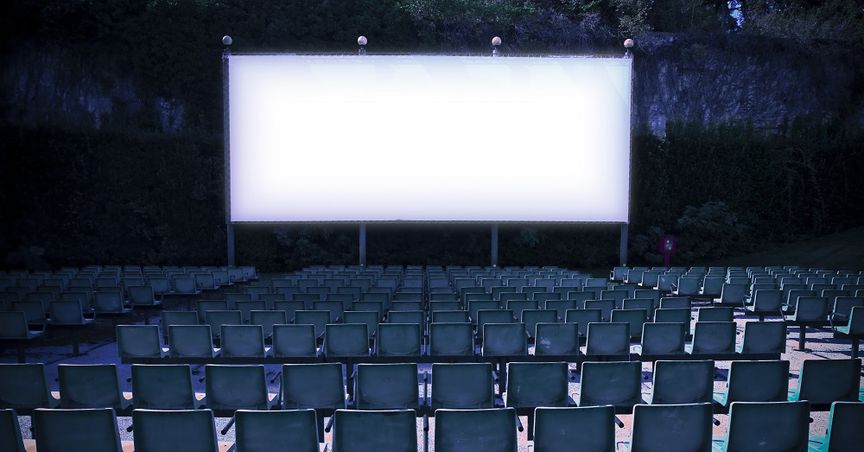
Now it is reportedly being said that the cinema houses could also consider an option of showcasing movies in open places on giant screens where people could just drive-in to watch them.
The film and the television industry are likely to resume operations with safety guidelines in accordance with the UK’s government as restriction are eased. The industry is trying to develop a roadmap of framework so that every aspect of the film & television industry could contribute to the resurrection of the industry. We can expect some changes on the production side of things as well. The actors are more likely to practice social distancing while acting. In addition, they are likely to do their own makeup and dress up themselves.
The cast of the movie might be asked to wear their own clothes. Personal items sharing is likely to be prohibited. The extra crew members in an acting sequence might be replaced by the use of visual effects and technology. Moreover, foreign actors would have to undergo mandatory health check-ups and quarantine procedures.
As the UK begins to ease lockdown measures, the conventional cinema houses and theatres need to implement social distancing and hygiene measures.
The outbreak of the novel coronavirus has severely dented the entertainment sector. The pandemic caused the film industry to shut down in the UK. Since 20th March onwards, cinemas were banned in the UK. The cinema houses are looking forward to July re-opening and actively seeking a directive from the government. Most of the movies have been postponed until the end of this year. High-value investments in production are currently sitting suspended around the UK due to the unprecedented crisis caused by the novel coronavirus.
The cinema houses are making changes to the infrastructure such as spaced-out seating, installation of acrylic screens and many other small alterations which could increase the confidence level of consumers and mark their return to cinema houses. The conventional cinema has always held a firm stance against the challenges posed by the Spanish Flu, technological advancements such as DVD and OTT platforms. The cinema houses believe that if the reproductive rate (R) remains less than one, and if the UK manages to avoid a second wave of the pandemic, things will change drastically with the change in perception.
The cinema houses are currently struggling for income generation. In addition, fixed costs such as utilities, security, insurance, and many of other recurring expenses are burning a hole in the pockets of the entertainment houses. The main issue for these entertainment houses is to implement social distancing rules in old buildings and auditoriums. Even if these rules are implemented, this would lead to a decrease in capacity by at least 20 per cent, which could raise questions on the viability of the project. The businesses in this sector are currently chalking out refurbishment plans and working on optimisation of costs.
Food and beverage outlets within the premises of cinema houses contributed significantly, which has completely got stopped. However, the running costs in the form of wages & composition is still denting the finances of the cinema houses. Not just the exhibitors, the production is also affected due to the pandemic. Let us discuss a few businesses operating in this sector.
- Cineworld Group Plc (LON:CINE)
The cinema chain, Cineworld Group Plc attained a CAGR (compounded annual growth rate) of 76.27 per cent as its total revenue grew from USD 797.80 million in FY16 to USD 4,369.7 million in FY19.
To withstand the current crisis caused by the pandemic, Cineworld Group secured additional liquidity of USD 110 million through its revolving credit facility. In addition, the cinema chain is likely to apply for an additional USD 45 million under CBILS loan scheme launched by the British government.
Cineworld Group Plc shares were trading at GBX 78.04 at the time of writing before the market close (at 11:33 AM GMT+1) on 15th June 2020, were up by 1.80 per cent versus the previous day closing price. Stock's 52-weeks High is GBX 285.80, and 52-weeks Low is GBX 21.38.
- ITV Plc (LON:ITV)
ITV Plc is into broadcasting of content through various platforms such as ITV Hub. The broadcaster reportedly furloughed nearly 800 people and suffered a 42 per cent plunge in advertising revenues.
ITV Plc shares were trading at GBX 76.34 at the time of writing before the market close (at 11:44 AM GMT+1) on 15th June 2020, down by 3 per cent versus the previous day closing price. Stock's 52 weeks High is GBX 156.50, and the 52-weeks Low is GBX 54.42.
