
 AUS
AUS
 NZ
NZ
 UK
UK
 CA
CA
 USA
USA
 IND
IND






Summary
- The Oxford University-AstraZeneca COVID-19 vaccine shows 90 per cent effectiveness under one dosing regimen. Overall, the vaccination has an average efficacy of 70 per cent.
- AstraZeneca will now prepare for submission to regulatory authorities for “conditional or early approval”.
- The development comes days after Moderna and Pfizer-BioNTech reported over 95 per cent efficacy for their vaccines.
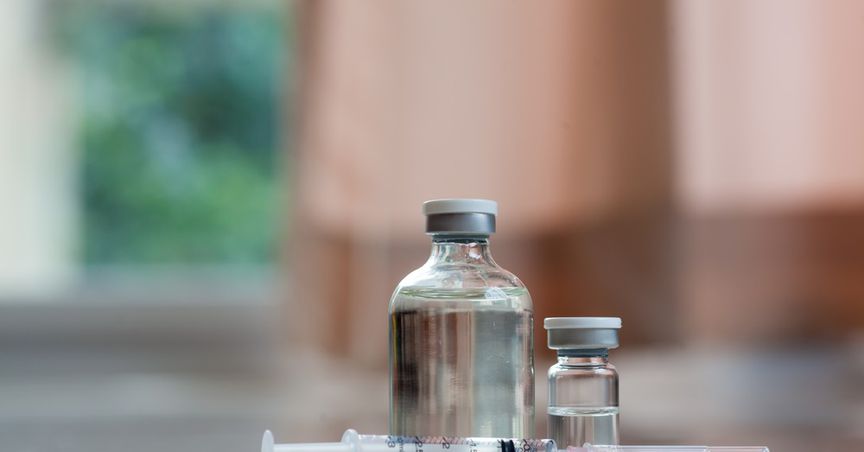
November is proving to be a super month for global stock markets. The COVID-19 vaccine being developed by the Oxford University and British-Swedish biopharmaceutical firm AstraZeneca (NASDAQ:AZN, AZNCF:US) could be about 90 per cent effective under one dosing regimen. Overall, the vaccination has shown an average efficacy of 70 per cent.
The development comes days after Moderna and Pfizer-BioNTech reported over 95 per cent efficacy for their coronavirus vaccines.
The breakthrough results from interim clinical trials of AZD1222 was announced by drugmaker AstraZeneca on Monday morning. The vaccine can be stored, transported and handled at normal refrigerated temperatures of 2 degrees Celsius to 8 degrees Celsius (or 36 to 46 degrees Fahrenheit) for at least six months.
The biopharmaceutical giant will now prepare for submission to regulatory authorities for “conditional or early approval”. The drugmaker will also seek Emergency Use Listing (EUL) from the World Health Organization to ensure quick availability of the vaccine in low-income countries
It aims to produce up to 3 billion doses of the vaccine in 2021 on a rolling basis, pending regulatory approvals.
Oxford-AstraZeneca Covid-19 Vaccine Details
One (n=2,741) of the two-dosing regimens showed 90 per cent efficacy when administered as a half dose initially, followed by a full dose a month later. The other one (n=8,895) showed 62 per cent efficacy when two full doses were administered a month apart.
Combined results of both the dosing regimens (n=11,636) resulted in an average efficacy of 70 per cent, added AstraZeneca.
A total of 131 COVID-19 cases were studied in the Oxford University-AstraZeneca study. The full interim results’ analysis will be submitted for publication in a peer-reviewed journal, it added.
AstraZeneca Chief Executive Officer Pascal Soriot said that the vaccine will be highly effective against COVID-19 and “will have an immediate impact on this public health emergency”. AstraZeneca's no-profit pledge and simple supply chain will ensure timely and affordable access of the vaccine to millions across the world, he added.
Apart from the UK and Brazil, the vaccine clinical trials are also being conducted in the US, Japan, Russia, South Africa, Kenya and Latin America. Planned trials will also be implemented in European and Asian countries.
Vaccine Breakthroughs
In the second week of November, US-based pharmaceutical giant Pfizer (NYSE: PFE, PFE:US) and its German research partner BioNTech claimed that its vaccine candidate is over 94 per cent effective in preventing COVID-19. Last week (on November 19), the companies released the final results from the ongoing Phase 3 trials that showed 95 per cent efficacy.
On November 16, US biotech firm Moderna Inc (NASDAQ:MRNA) also announced a breakthrough in its experimental vaccine against COVID-19, claiming it is 94.5 per cent effective.
Pfizer and BioNtech have applied for regulatory approval in the US on November 20.
Challenges Ahead
The biggest challenge right now is the storage, supply, and distribution of all these vaccines.
The Pfizer-BioNTech vaccine needs to be stored at -70 degree Celsius (+/-10 degree Celsius), which is colder than the winter in Antarctica. This requires specialized freezers and high-cautious handling of the vaccine.
Both Moderna and Oxford-AstraZeneca vaccine is said to remain stable between 2° to 8° Celsius or 36° to 46° Fahrenheit, which makes handling of these doses relatively less complicated.
However, there could be several production and demand and supply snags, especially with limited vaccine doses available initially.
Moderna and Pfizer have said that the first batch of their vaccines will be available by 2020-end.
