
 AUS
AUS
 NZ
NZ
 UK
UK
 CA
CA
 USA
USA
 IND
IND







Summary
- Governments are encouraging the adoption of electric vehicles to address climate change issues.
- Many automakers are transitioning to the EV space.
- The battery industry is also evolving to support the EV space, and the plastics industry is expected to play a crucial role in the transition to low-carbon transportation.
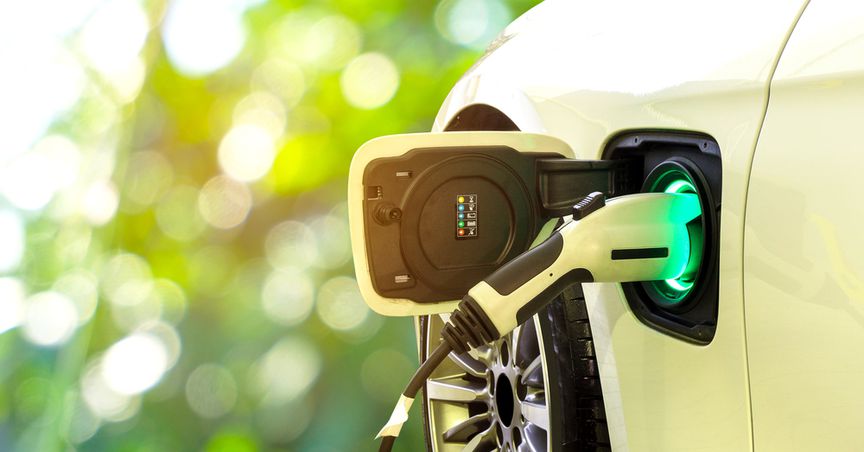
Climate change is an existential threat for most lives on our planet. In an attempt to minimise many consequences of climate change, governments across the globe are pushing environmentally friendly solutions to save our planet earth. One such trend, which is highly supported by the authorities, is the transition of the automotive industry into electric vehicles (EV).
To meet the global goals on climate change, EVs are expected to play an important part. Globally, governments and automakers are encouraging the use of EVs to curb oil use and fight climate change.
The transportation sector contributes the maximum to greenhouse gas emissions. EVs are more efficient than fossil fuel-driven cars as they do not burn fuel and release CO2.

Image source: © Moth | Megapixl.com
Good read: Electric Vehicles Then & Now: Tracing The Near 200-Year History
What Are The Latest Government Efforts In The EV Space?
The recently announced Joe Biden administration's USD 2-trillion infrastructure plan in the US includes USD 174-billion investment in electric vehicles for developing a national-level infrastructure to aid the transition.
The US government is not alone to support the electric vehicle space, as many countries are injecting funds to develop infrastructure for EVs. South Korea is also eyeing to capitalise on the emerging trends related to the EV sector. The Asian country is all set to ramp up its efforts for promoting a domestic charging technology for EVs.
In South Korea, the Technology and Standards Agency held a virtual meeting to foster the wireless charging technology with a 50-kilowatt capacity. The innovative technology will help EVs to get charged quickly with 80% of their capacity within an hour.
Also read: Electric Vehicles: 6 Stocks To Watch Out For in 2021 Apart From Tesla
How Automakers Are Responding To Government Push
Automakers all across the globe seem committed to reducing dependency on fossil fuels for consumer transportation. They are expanding their EV fleets and making bold commitments towards this shift.
Image source: © Gynane | Megapixl.com
By 2030, Volvo is planning to become a fully electric car company, while GM has committed to produce 30 new EVs by 2025.
To meet the rising demand, the plastics industry is expected to be a key partner in the transition to low-carbon transportation. Besides making vehicles lightweight, plastics enables excellent fuel efficiency and extended BEV range, and leads to increased lifespan, enhanced performance, and improved safety.
With regulatory bodies expected to implement more stringent emission standards in the coming time, weight reduction would be an essential factor in reducing fuel consumption. The lightweight plastics are expected to make up to 50% of vehicle volume, especially in hybrid and electric vehicles.
To know more on leading automakers’ plan in the EV space, please read: The EV race has begun: Why are automakers going electric?
EV Boom Reshaping The Battery Industry
The lithium-Ion battery industry is also gaining traction, on the back of the booming EV sector. In fact, the biggest market of lithium-Ion batteries is expected to be the EV industry in the coming time.
Must read: How are Australian battery minerals empowering world’s EV revolution?
For instance, as the EV boom gathers momentum, Canadian start-up Li-Cycle Corp has big plans when it comes to batteries. The company intends to set up a third battery-recycling facility in North America. The significant step would double Li-Cycle's capacity in the region.
The facility will be near Phoenix and would be capable of processing a huge amount of battery-manufacturing scrap and end-of-life batteries annually.
EV Space Remains Immune to COVID-19 Impact
During the pandemic-stricken year 2020, plug-in hybrid and battery electric vehicle sales saw a sharp rise. Even while the lockdown began last year, EV sales continued growing.
As per data from the Resources and Energy Quarterly December 2020, globally, the electric vehicle industry clocked sales growth of 68% in the September 2020 quarter, touching 2.3 million units for the year 2020.
