
 AUS
AUS
 NZ
NZ
 UK
UK
 CA
CA
 USA
USA
 IND
IND








Summary
- After a significant increase in exports to the U.S., the Chinese Yuan gained against USD. Since May this year, the appreciation in CNY has been notable, but we could also say USD has depreciated during the period.
- China is doing all it can to prevent the scars left by the epidemic, which turned into pandemic after inadequate control by Chinese Authorities. And the world is increasingly looking to diversify supply chains from China.
The Chinese Yuan has been appreciating against USD since the beginning of this year. The initial spread of the virus within China was controlled effectively, and the Chinese economy started functioning again much before many countries could.
When lockdowns peaked in most of the world, the economic activity in china resumed gradually and since then it has been growing swiftly. In the second quarter, the Chinese economy grew by 3.2% while most of the countries have reported drastic contraction.
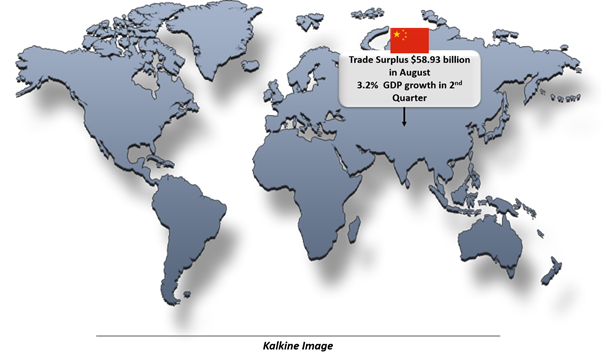
On 07 September 2020, Chinese Yuan gained further against USD after China released trade data. China recorded a trade surplus of over $34 billion, following exports to the US registering $44.4 billion – an increase of 20% compared to a 1.5% increase in imports. The U.S has remained one of the major buyers of Chinese goods, despite the sour bilateral relations between the two countries.
In August, China has recorded an overall trade surplus of $58.93 billion compared to $62.33 billion in the previous month.
Yields and geopolitical isolation of China
Chinese debt is also yielding higher than most of the developed markets. Given it is an emerging market, the interest rates are likely to remain elevated compared to the developed markets. Market participants are pegging that Yuan-denominated financial assets will be in demand over the next decade.
It is being reckoned that Chinese Yuan will account for a substantial part of global foreign exchange reserve assets by the end of next decade. Although this seems rosy, it could be quite possible driven by larger trade share of Chinese goods.
But it is also important to note that the world has grown uneasy with China since the epidemic broke, and the response by Chinese policymakers was not enough to prevent the epidemic taking the shape of a pandemic.
With Australia leading the proposal for an independent enquiry in the origination of COVID-19, following which China and Australia relationship have been in troubled waters.
Australia was not alone in the proposal for an independent enquiry, and several nations around the world also moved the proposal. President Donald Trump also raised concerns on the handling of the epidemic by the World Health Organisation in China.
China’s geopolitical situation continues to remain volatile as countries are increasingly turning agnostic. Large foreign manufacturers in China have presented their consent to leave manufacturing zones.
Over the past years, the manufacturing base of China has also shifted towards other South Asian nations like Thailand and Vietnam. Businesses are inclined to find suppliers outside China even before the pandemic broke driven by China-US trade disputes.
Policymakers around the world have been proposing to manufacture goods domestically instead of importing from other nation. A precipitate supply chain shock inflicted by the pandemic has now given more reasons for businesses to move away from China.
As a result of tariffs imposed by China and the US on their respective goods, the margins of businesses have suffered as importing for both nation’s firms have become dearer. Trade war has disrupted the pricing and cost for many businesses in both countries.
Japan is running a subsidy program to enable Japanese companies to move out of Chinese manufacturing hubs. Regionally, the incumbent policymakers of the Indo-pacific region are inclined to have a resilient supply chain by lowering dependence on Chinese goods.
Earlier last week, trade ministers from Japan, Australia and India met to discuss supply chains and stressed on the need for resilient supply chains that are fair and free. They also urged other countries to join the force.
It is well seen how the US has been threatening China to impose sanctions in the wake of increasing domestic tensions in the country like nationalisation of Hong Kong, human right violations in Xinjiang province etc.
Chinese policymakers, on the other hand, have been focused on developing Shanghai as a Yuan-denominated financial hub, incorporating cross border payments systems, and introduction of digital currency.
Despite Yuan designated as nominal international status by IMF in 2016, the volume of and application of the Yuan has been minimal. However, Yuan has gained market share for international trade, but it lags USD by a wide margin.
Given that China is growing unlike most of the world, the funds are finding inflows to the Chinese economy. Moreover, the market participants are witnessing optimism in the Chinese market, driving up its exchange rate.
More importantly, a rising CNY against USD is not favourable for importers of Chinese goods since they are required to pay more. Over the past, it is well known how Chinese policymakers can depreciate CNY to support exports.
This recent appreciation of the Chinese currency is somewhat reflective of the comparatively low growth world against China’s pick-up in economic activity after the pandemic. But the medium-term picture continues to remain bouncy given the increasing stress on supply chains originating from China.
(All currencies in USD)
