
 AUS
AUS
 NZ
NZ
 UK
UK
 CA
CA
 USA
USA
 IND
IND







Summary
- Vaccine progress is increasingly making a case for economists to factor the impact of a potential medical breakthrough.
- RBA Governor Philip Lowe noted that the main challenge for Australia economy currently is job creation.
Earlier this month, Pfizer gave hope to the world in terms of a medical breakthrough via a vaccine. Now Moderna has also said that its vaccine showed over 90% efficacy. Both vaccines are based on messenger RNA (mRNA) technology.

Image Source: © Kalkine Group 2020
But Moderna stepped ahead of Pfizer in terms of mobility as its vaccine can be stored at normal fridge temperature, unlike Pfizer’s candidate that calls for deep freezing.
The economic damage has been caused by the virus already, and the latest outbreak in South Australia underscores the fact that testing and tracking is the only way until a vaccine is commercialised.

Image Source: © Kalkine Group 2020
Central Banks globally have started buying sovereign debt in order to keep the yields aligned with the interest rates. They also intend to keep the borrowing costs lower for the economy and provide support amid this downturn.
In November, the news flow regarding vaccines had already sent yields soaring higher as markets sold bonds because the economic picture could be less bleak with a vaccine in place.
Although a vaccine may not be available rapidly, the psychological impact of the pandemic would be much lesser in a scenario with vaccines.
If economic conditions improve over the near term with a vaccine, Central Bank Governors may be forced to give a second thought on their sovereign debt buying spree.
Fiscal dominance in macroeconomic stability
Reserve Bank of Australia Governor Philip Lowe spoke at Committee for Economic Development of Australia (CEDA) annual dinner.
Mr Lowe said that Australia economy has fared better than others, virus containment had been more effective, public institutions rose to the occasion to support the economy. Australia’s public sector balance sheets had been strong to cushion the blow.
After three decades, the economy is in a recession. RBA’s latest economic projections forecast a 5% growth in GDP in 2021 and 4% in 2022.
Its forecast for unemployment is now better by two percentage points. Now the bank is expecting unemployment to peak at 8% from 10% earlier.
Governor Lowe acknowledged that fiscal policy had played a crucial role in macroeconomic stabilisation this time. This was partly due to a low-interest rate world, and the magnitude of shock wrought by the pandemic.
Over the next few years, the challenge faced by Australia is to create jobs, which would eventually lower the forecast unemployment rate of 8%.
It is also important to note that when more people join the workforce and remain unemployed, it would also add to the unemployment rate.
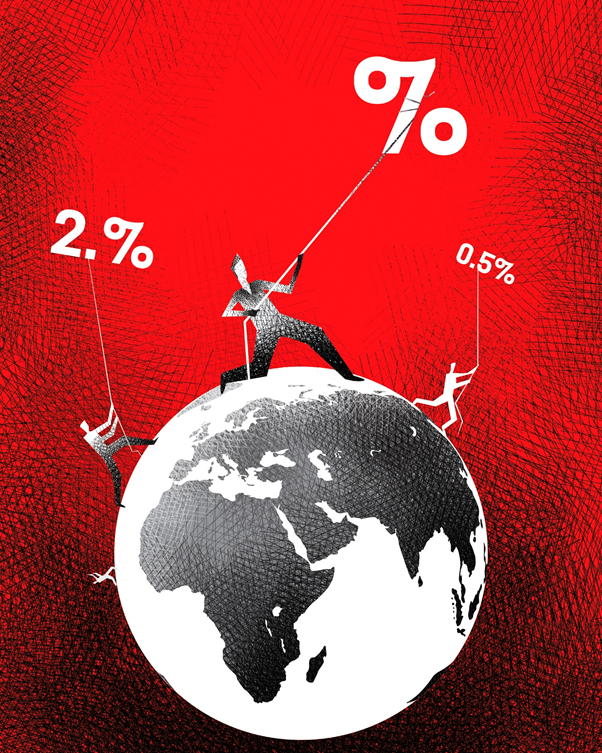
Image Source: © Kalkine Group 2020
He said that the ‘gravitational pull’ of lower interest rates across the world also forced the bank to move towards record low interest rates and quantitative easing (QE). Otherwise, the exchange rate implications would have been adverse to the country.
If the RBA had not moved to QE, the yields on Australian sovereign debt would have been higher (they are still higher in most cases), thus attracting inflows in AUD and making the Aussie Dollar stronger.
A stronger dollar may not bode well for buyers of Australian goods. Australia may need to play a crucial role in the event of global recovery as demand for commodities will likely pick-up over the near-term.
With a stronger Aussie Dollar, the buyers may find it relatively expensive to buy from Australia, not just commodities but other goods and services as well.
