
 AUS
AUS
 NZ
NZ
 UK
UK
 CA
CA
 USA
USA
 IND
IND







Summary
- Current account deficit (CAD) reached $5 billion for New Zealand in the March quarter of 2021.
- Rise in imported goods and services deficit was the reason behind widening of the CAD.
- International investment position of the country narrowed.
New Zealand’s current account deficit (CAD) reached $5 billion (seasonally adjusted) in the March quarter, as per the latest data released by Stats NZ. A $1.6-billion movement in the goods balance from surplus to deficit, as well as a $945-million increase in the services deficit, led to an increase in the CAD.
Before the March quarter, the country had recorded the biggest deficit of $4.3 billion in the June quarter of 2008, at the time of global financial crisis.

Source: © Maxsomma Megapixl.com
New Zealand’s annual CAD stood at $7.2 billion for the year ended March 2021.
Balance of Payments (BOP) is a statement that accounts for all the monetary transactions that were done between parties of a country and the rest of the world during any given period. It divides transactions into 2 accounts - current account and capital account.
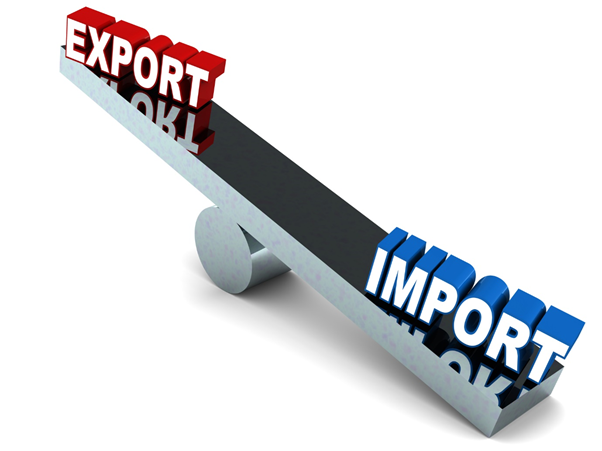
BOP reveals if a country is in a surplus (when exports are more than imports) or deficit (when imports surpass exports).
Imports more than exports, services deficit rose
New Zealand’s value of imported goods was higher than the value of exported goods in the March quarter of 2021 (first time since the March quarter of 2020), leading to $1.5-billion goods deficit.
ALSO READ: New Zealand’s Exports Drop, Oil and Logs Resist Trade Price Decline
While seasonally adjusted goods imports witnessed a rise of $1.3 billion, reaching $16 billion in the March quarter, seasonally adjusted goods exports saw a decline of $251 million to $14.5 billion.
Source: © Artistashmita | Megapixl.com
The country’s services deficit reached $1.6 billion in the quarter, which was $945 million more than the previous quarter.
International statistics senior manager Darren Allan stated that the value of imported products had returned to pre-COVID-19 levels, while the value of exported products had not. Subsequently, CAD has widened so dramatically.
He also added that the expansion of the deficit was also partly driven by increases in service imports and decreases in service exports.
International Investment position narrowed
Between December 31, 2020, and March 31, 2021, New Zealand's foreign investment position (the gap between its financial assets and liabilities with the rest of the world) altered considerably.
DO READ: New Zealand Government’s Accounts In Better Shape, But Yet To Attain Pre-Pandemic Level
New Zealand stayed in a liability position, which means it owes more to the rest of the globe than it owns.
The country’s international assets stood at $326 billion and international liabilities reached $487 billion at March 31, 2021. This led to a net liability position of $160.9 billion, $17.4 billion smaller than at December 31, 2020, and the smallest since September 2018.
The reason behind smaller liability position was due to the underperformance of New Zealand equities, while international equities fared well in the quarter, driving assets up.
(NOTE: Currency is reported in NZ Dollar unless stated otherwise)
