
 AUS
AUS
 NZ
NZ
 UK
UK
 CA
CA
 USA
USA
 IND
IND








Summary
- International trade data for November shows a surplus of over $5 billion.
- Goods imports rose in November as the economy continued recovery with substantial gains in capital goods.
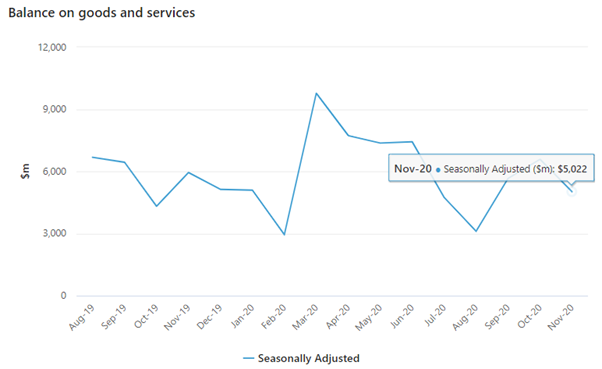
Australian Bureau of Statistics (ABS) has released International trade data for November 2020. On a seasonally-adjusted basis, the Australian trade surplus trimmed by around $1.5 billion to $5.02 billion against the previous month.
Source: ABS, 7 Jan. 21
In November, the import of goods and services jumped 10% to $31.37 billion, while the export of goods and services increased by 3% to $36.4 billion, both against October 2020.
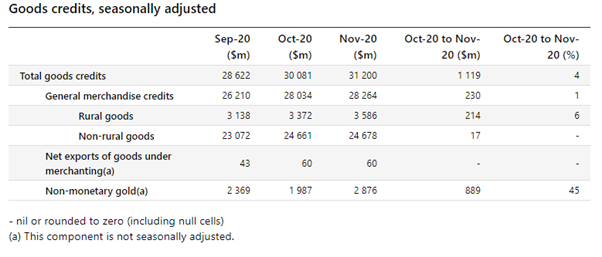
Australian goods export came at $31.2 billion in November, up by 4% to around $1.12 billion over the previous. Services export increased by 2% to about $5.2 billion for the month.
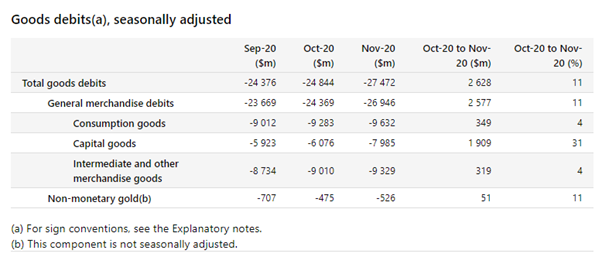
The country imported goods worth $31.37 billion in November, which increased by 10% or $2.77 billion over the previous month. Services imports increased by 4% to around $3.9 billion from a month earlier.
Export goods analysis
Exports of rural goods were 6% over October. There was a 45% increase in exports of cereal grains and cereal preparations against the previous month. Export of wool and sheepskins were up by 13%, while meat and meat preparation were 3% higher from October.
Source: ABS, 7 Jan. 21
Trade in non-rural goods was flat over October. Metal ores and mineral, which is the largest contributor in non-rural goods, fell 2% to $13.43 billion. Leading gains were recorded in machinery, which increased by 19% over October.
Transport equipment export fell 10% to $324 million in November. Coal, coke and briquettes exports were down by 4% in November. But the export of other mineral fuels increased by 8% over the previous month.
Import goods analysis
Australian good import rose by 11% over the previous month. Consumption goods contributed to around $9.63 billion for the import of the total goods. Import of household electrical items and food and beverage increased by 4% each, while trade in non-industrial transport equipment rose 10%.
Source: ABS, 7 Jan. 21
Within capital goods, the imports rose by 31% or ~$2 billion. This was led by increased demand for other capital goods, telecommunications equipment, industrial transport equipment, machinery and industrial equipment.
